


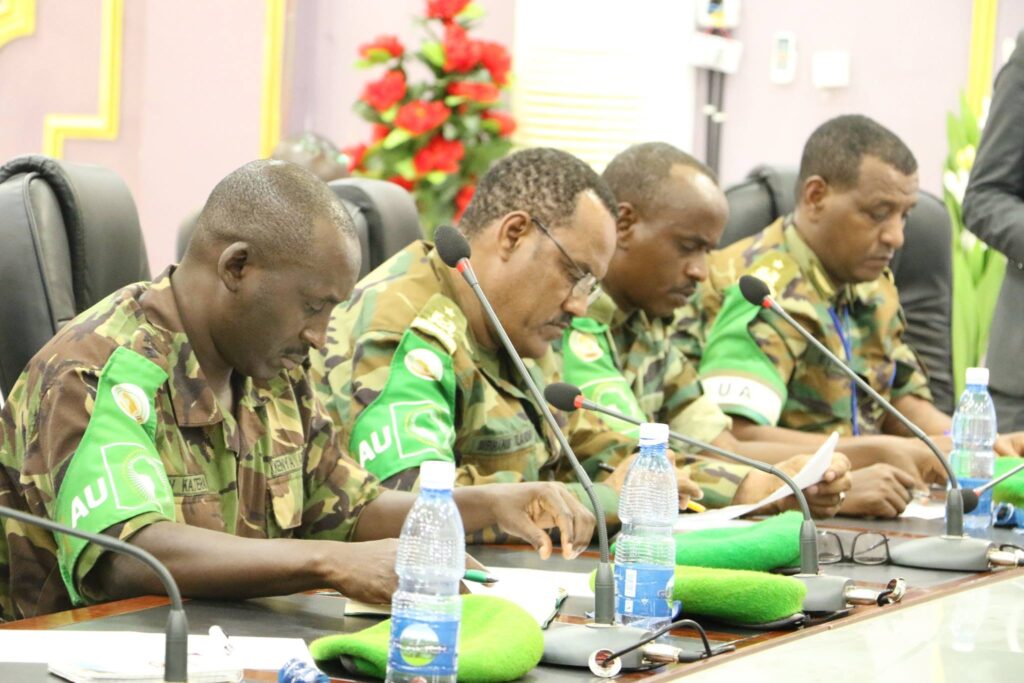


Military experts from African countries contributing troops to the AUSSOM are meeting to discuss the future of the mission as uncertainty grows over funding needed to sustain operations beyond 2026.
The discussions are focused on key questions surrounding the mission’s future, including whether AUSSOM should continue in its current form, how to secure long-term financing, whether troop numbers should be reduced, or whether contributing countries should begin planning for a phased withdrawal of their forces.
The meeting builds on a series of consultations that began on July 8, with its recommendations expected to be combined with outcomes from other discussions taking place throughout July.
The final recommendations will be presented to senior military and political leaders before a high-level summit.
Leaders of the troop-contributing countries are scheduled to meet on July 31 in Kampala, Uganda, where they are expected to review the recommendations and issue a joint communiqué outlining the future direction of the AU mission, according to sources familiar with the discussions.
AUSSOM currently consists of troops from Djibouti, Egypt, Ethiopia, Kenya, and Uganda, countries that have maintained a military presence in Somalia for years in support of security and stabilization efforts.
The mission, which replaced ATMIS in January 2025, continues to face significant financial uncertainty following concerns over future international funding.
Somalia is also expected to present its own roadmap during the consultations, outlining plans to strengthen the capacity of the Somali National Army, identify areas where additional international support is required, and appeal to international partners to continue backing the African Union mission, which has supported Somalia’s security efforts since the first AU deployment in 2007.