

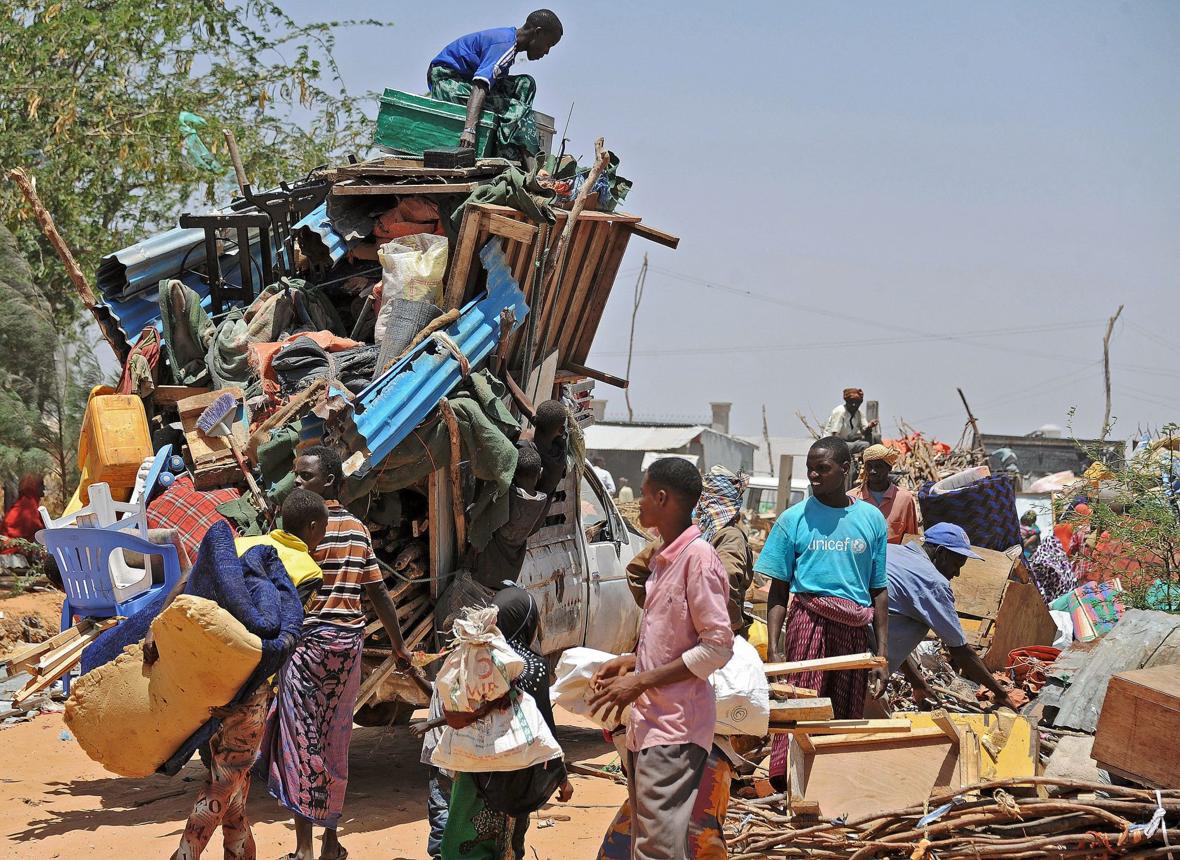

Families who have lived in parts of Boondheere district in Mogadishu for many years are facing eviction, raising concerns about their housing security and the future of residents being forced to leave their homes.
The ongoing evictions have created uncertainty among affected households, many of whom may have to abandon neighbourhoods where they have established their lives over an extended period.
The situation has also raised questions about how the families will secure alternative accommodation and continue supporting themselves.
The developments have renewed concerns about forced evictions affecting low-income communities across Mogadishu, particularly households that cannot afford to rent other properties or build new homes.
Those facing eviction are confronted with several challenges, including finding alternative shelter, protecting their belongings and maintaining their livelihoods.
Families dependent on small businesses and informal economic activities could face additional difficulties if they are forced to relocate away from their established neighbourhoods.
There are also concerns about the impact on children, particularly possible interruptions to their education and access to other essential services they have relied on in their communities.
The situation in Boondheere comes amid recurring disputes in Mogadishu over land ownership, the recovery of government property and the demolition of homes occupied by vulnerable communities.
A June 2026 report by the European Union Agency for Asylum (EUAA) described forced evictions in Mogadishu as a widespread problem, with vulnerable households and people living in areas without secure land tenure among those most affected.
The report noted that some evictions are carried out by government institutions, while others arise from disputes involving private property owners and land development projects.
Forced evictions in the Somali capital have repeatedly raised questions about citizens’ housing rights, the legality of land claims and the responsibilities of authorities towards people being removed from their homes.
Human rights organisations have previously stressed that affected residents should receive adequate notice and that evictions must follow lawful procedures.
They have also called for particular consideration to be given to vulnerable households and the need to ensure access to alternative accommodation.
The latest developments in Boondheere are likely to renew scrutiny of the Banadir regional administration and the measures being taken to protect families affected by the evictions.
The authorities have yet to provide details in the information available about the reasons for the current operation, the legal basis for removing residents or arrangements for those losing their homes.