


Questions are mounting over the international community’s response to Somalia’s deepening political crisis, as tensions between the federal government, opposition groups and some federal member states continue to escalate over constitutional changes, the mandates of state institutions and the country’s electoral process.
Many observers are asking why Western governments, the United Nations, the African Union and regional organisations have not issued public statements or applied diplomatic pressure on the scale seen during previous political disputes.
The questions have become more pressing following a controversial Supreme Court ruling that has added another dimension to the crisis.
However, a review of earlier diplomatic statements and recent developments suggests that the international community has not completely disengaged from Somalia.
Rather, its approach appears to have changed, with less visible public intervention and greater emphasis on a Somali-led political settlement.
At the beginning of this year’s political crisis, international partners spoke openly about the dispute between the federal government and the Somali Future Council.
In June 2026, several countries and institutions, including the United Kingdom, United States, France, Germany, the European Union and the United Nations, issued a joint statement urging the parties to resume negotiations and reach an agreement on the electoral framework.
The statement also expressed the international community’s readiness to support a Somali-led dialogue if the parties requested assistance.
The United Nations and African Union separately raised concerns over political tensions and violence in Mogadishu, calling for civilians to be protected and warning against actions that could further inflame the situation.
In the weeks and months that followed, however, public statements from international partners became less frequent, even as political divisions deepened.
One of the most significant developments was the conclusion of the United Nations Transitional Assistance Mission in Somalia (UNTMIS) at the end of October 2026.
For years, the mission played an important role in supporting Somalia’s political process, facilitating dialogue and helping strengthen state institutions.
Its closure came while major disagreements over the constitution, elections and the mandates of government institutions remained unresolved.
The Associated Press reported that the mission ended without a clearly established arrangement to take over its political mediation responsibilities.
UNTMIS had been among the international structures regularly monitoring political developments, engaging with Somali stakeholders and supporting efforts to reach national agreements.
Its departure could therefore reduce the level of continuous international political engagement in Mogadishu, although other UN agencies and programmes remain active in the country.
The international community’s current approach appears to place greater responsibility on Somali political leaders to resolve their differences through negotiations.
Foreign governments and international organisations have repeatedly offered to support dialogue, but have generally avoided publicly deciding which side is right or determining who should lead the country.
This cautious approach may partly reflect lessons from previous political disputes, particularly the 2021 electoral crisis, when disagreements over presidential term limits and the election timetable triggered armed confrontations and deep political divisions.
Nevertheless, leaving the dispute to Somali stakeholders does not mean international partners lack influence.
They retain several instruments, including diplomatic engagement, financial assistance, security cooperation and political support, which could be used to encourage compromise.
Somalia’s security situation is another factor that may be influencing the international community’s response to the political crisis.
The campaign against Al-Shabaab, support for Somali security forces and the future of the African Union Support and Stabilization Mission in Somalia (AUSSOM) remain major priorities for countries backing the government.
A November report by Security Council Report highlighted unresolved political disagreements over constitutional amendments, extensions of mandates and the electoral framework. It also pointed to challenges facing AUSSOM.
Meanwhile, the Associated Press reported that Uganda’s troop withdrawal and financial difficulties affecting the African Union mission had raised concerns about the future of security arrangements, including responsibility for key military positions and the risk that Al-Shabaab could exploit gaps left by departing forces.
These developments suggest that security priorities and the financing of AUSSOM are likely to occupy a significant place in the diplomatic calculations of Somalia’s international partners.
Tensions between the federal government and opposition groups intensified after negotiations between the government and the Somali Future Council ended without an agreement.
On May 16, 2026, the African Union expressed concern over the failure of talks in Mogadishu and urged the parties to return to inclusive negotiations.
In September, the Somali Future Council also wrote to the UN Security Council, requesting closer international engagement in Somalia’s political dispute and electoral process.
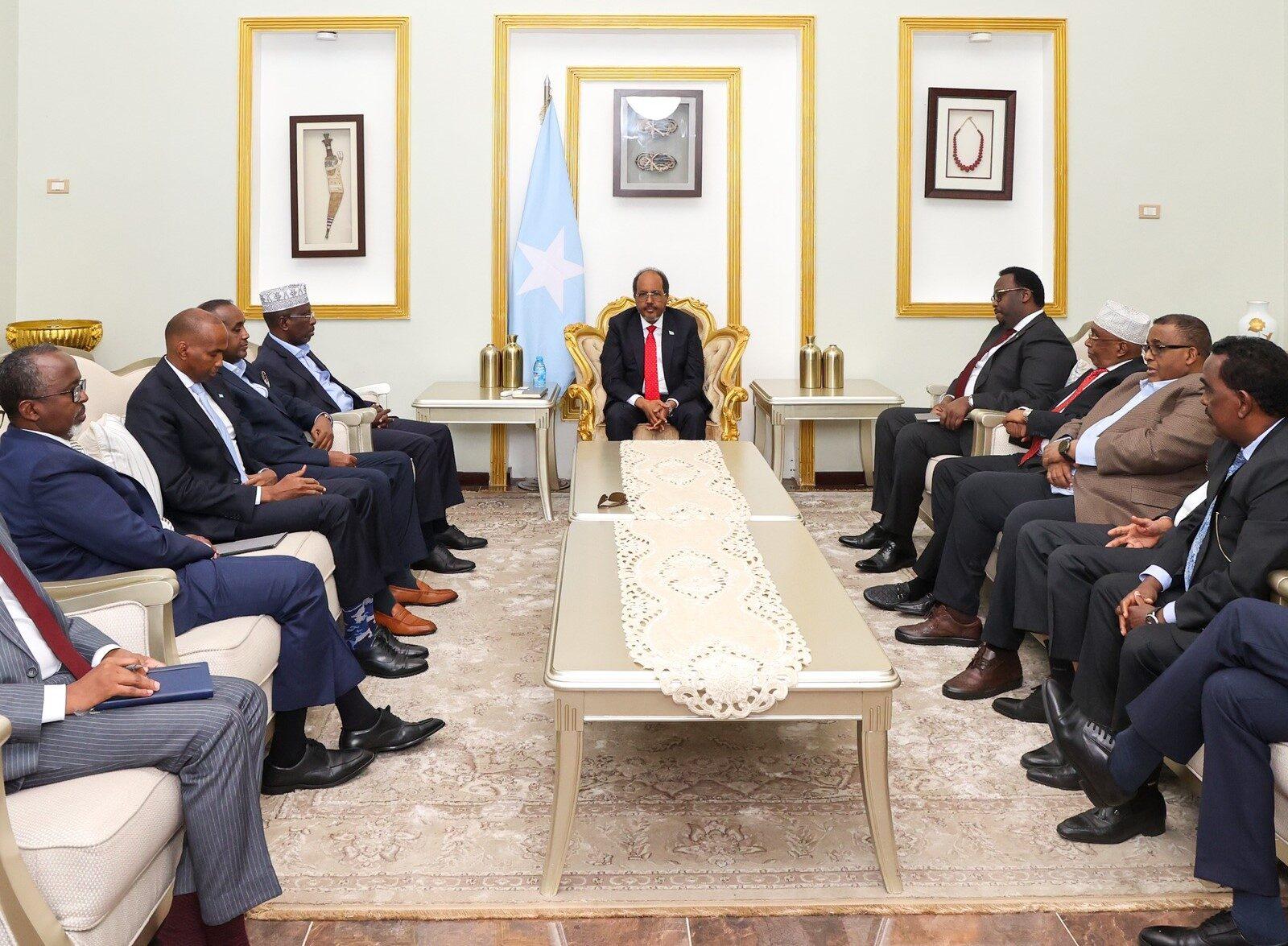
President Hassan Sheikh Mohamud, meanwhile, invited political stakeholders to a consultative conference scheduled to take place in Mogadishu from November 14 to 18, 2026, with elections expected to be among the main issues under discussion.
The planned meeting indicates that efforts to bring the opposing sides together have not completely stopped, even though sustained public diplomatic pressure has become less visible.
The Supreme Court’s decision on November 5, 2026, pushed the political dispute into a new and more complicated phase.
The court issued a ruling addressing disagreements over the constitution and the mandates of government institutions.
It also rejected the removal of Chief Justice Baashe Yusuf Ahmed, adding to questions about the independence of the judiciary, presidential powers and the handling of constitutional disputes.
The ruling attracted attention from international media, which highlighted the growing political and constitutional tensions in Somalia.
Continued restraint by international partners could be interpreted by rival Somali political groups in different ways. Some may view it as tacit support for one side, while others could see it as a sign that foreign governments are stepping back from their traditional mediation role.
However, without explicit statements from those governments, such interpretations remain speculative.
Several factors may help explain the cautious approach adopted by Somalia’s international partners, although these are analytical possibilities rather than officially stated reasons.
First, foreign governments may be seeking to avoid appearing aligned with either the federal government or the opposition. Maintaining working relations with all major political stakeholders is important to their diplomatic and security interests.
Second, international partners may be concerned that strong public statements could be misinterpreted or further escalate tensions, particularly when disputes involve state institutions and security forces.
Third, they may prefer not to impose an externally designed political settlement. International partners have consistently emphasised that Somalia’s electoral arrangements should emerge from a process led by Somalis themselves.
Security considerations may also be influencing their decisions. The fight against Al-Shabaab and the future of the African Union’s military presence remain significant concerns, while the planned mid-November consultations could offer another opportunity for political compromise.
The question of whether Somalia is losing international backing requires a distinction between political engagement, security assistance and humanitarian support.
A reduction in public statements about the political dispute does not necessarily mean that international assistance to Somalia has ended. UN agencies, the African Union and foreign partners continue to have security, humanitarian and diplomatic responsibilities in the country.
However, the closure of UNTMIS and the financial difficulties facing AUSSOM point to changes in the structure and scale of international engagement.
The evolving situation places greater responsibility on Somalia’s leaders to strengthen state institutions, reach a political agreement and ensure that disputes are resolved through constitutional and legal processes rather than confrontation.
The international community’s apparent restraint should therefore not automatically be interpreted as indifference. It may instead reflect a shift towards quieter diplomacy, security priorities and a preference for a settlement negotiated by Somali political leaders.
But with disagreements over constitutional authority, institutional mandates and judicial independence continuing to deepen, Somalia’s international partners face growing pressure to ensure that their reduced public profile does not leave the country’s political crisis without meaningful diplomatic engagement.