

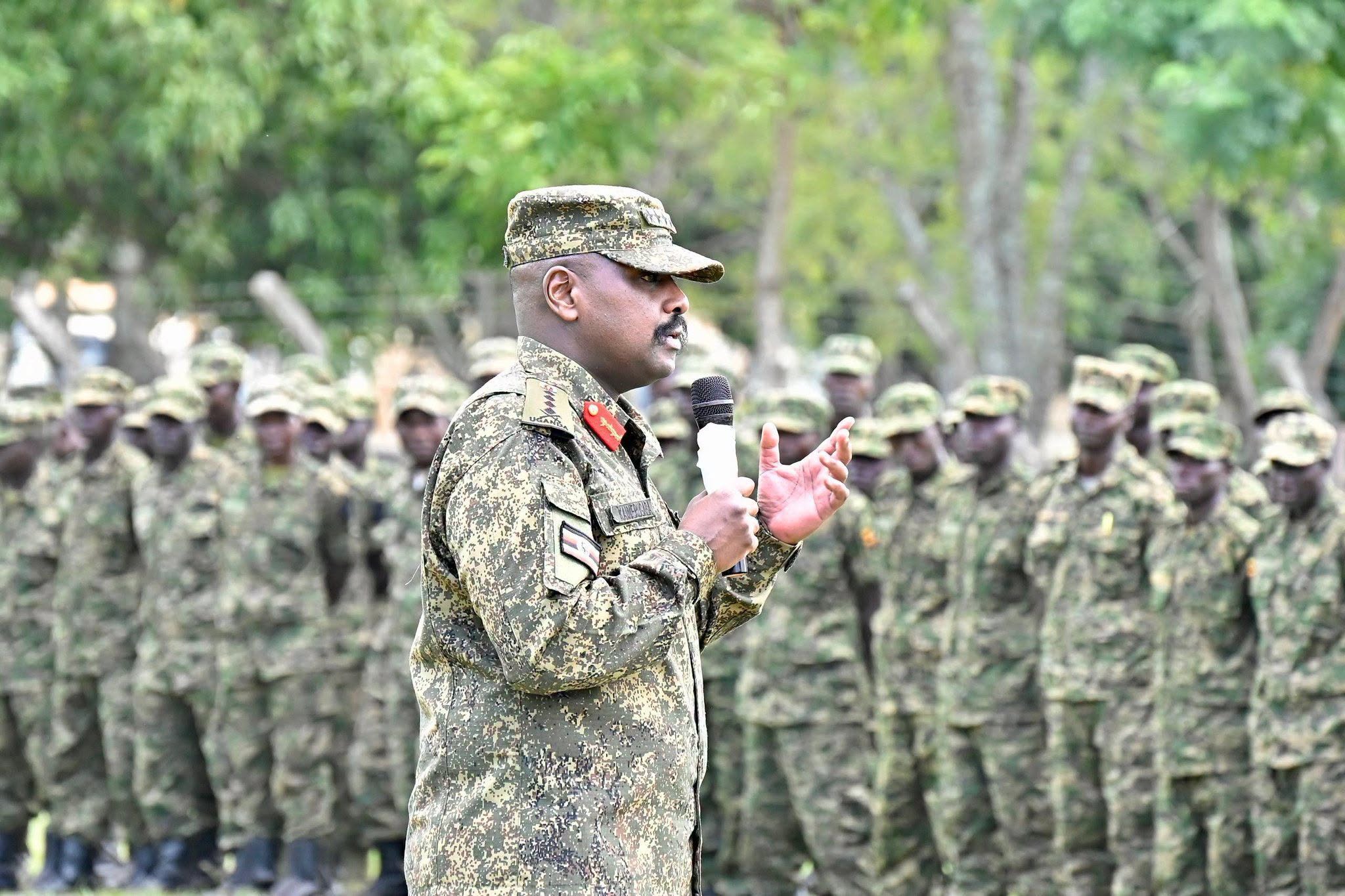

Uganda’s Chief of Defence Forces, General Muhoozi Kainerugaba, has issued a stern warning to members of parliament, saying politicians must obtain explicit authorisation before publicly discussing matters concerning the military and national security agencies.
Muhoozi warned that anyone who violates the directive would face consequences, describing his statement as a final warning to politicians against involving themselves in military affairs.
His remarks have raised concerns about the limits of parliamentary oversight and the military’s role in Uganda’s political affairs.
In a statement posted on social media on November 5, 2026, the UPDF chief said political interference would not influence military decisions and warned that those attempting to intervene in matters concerning the armed forces could face serious repercussions.
The warning comes amid growing controversy in Uganda over the detention of several former senior military officers, the treatment of detainees and parliament’s ability to scrutinise the conduct of security institutions.
The latest parliamentary dispute centres on the reported detention of retired generals Abel Kandiho and Charles Bakahumura, both of whom previously held senior positions in Uganda’s military intelligence apparatus.
Paul Mwiru, an opposition parliamentary leader, raised concerns about the whereabouts and circumstances surrounding the detention of the two officers.
He told parliament that their families and the public had not received clear information about where they were being held or the reasons for their detention.
Mwiru appealed to the Speaker of Parliament for clarification, urging authorities to explain the grounds for the arrests and ensure that the officers’ constitutional rights were respected.
However, Speaker Jacob Oboth-Oboth declined to allow an open parliamentary debate on the matter, arguing that military affairs could not be discussed during general parliamentary proceedings.
He indicated that the Defence Minister could potentially be summoned to address concerns raised by the officers’ families.
The controversy has gained further attention because both Kandiho and Bakahumura previously headed Uganda’s military intelligence service.
Kandiho served as its director before Bakahumura, and both were retired from active service in August 2026. Reports from Uganda indicate that they were detained several weeks after leaving the military.
Their arrests have reportedly been linked to military investigations involving allegations of fabricated intelligence and other security-related matters.
Although authorities have indicated that investigations are ongoing, limited official information about the allegations and the officers’ detention has fuelled concern among lawmakers and relatives.
Muhoozi’s warning also comes amid wider unease among politicians from both the ruling party and the opposition over security developments in the eastern Teso region.
Some lawmakers representing the area have called for a meeting with President Yoweri Museveni and Muhoozi to obtain explanations about the detained officers and reports of security threats in the region.
Muhoozi did not specifically mention the detention of Kandiho, Bakahumura or another former senior commander, General Peter Elwelu, in his social media statement. His comments instead focused broadly on what he described as political interference in military affairs.
Elwelu, who previously served as deputy commander of the Uganda People’s Defence Forces, was arrested on November 2, 2026. The military accused him of involvement in alleged plans to destabilise security in the Teso region.
A military spokesperson said weapons and military equipment had been recovered in connection with the investigation. However, the allegations against Elwelu have yet to be established through a legal process and should not be treated as proven offences.
The developments have renewed debate over the balance between national security requirements and parliamentary accountability in Uganda.
The military may argue that certain operational details must remain confidential to protect ongoing investigations and security operations.
However, lawmakers maintain that they have a constitutional responsibility to scrutinise government institutions, raise concerns over arrests and ensure that citizens’ rights are protected.
The dispute therefore highlights broader questions about the relationship between Uganda’s political leadership, the armed forces and the legislature, particularly the extent to which parliament can exercise oversight over security agencies.
Attention is now likely to focus on whether the government and military authorities will provide clearer information about the detained officers, the allegations against them and the legal procedures governing their cases.
Parliament’s next steps will also be closely watched, particularly whether lawmakers pursue their request for the Defence Minister to provide an official explanation.
The handling of the controversy could have wider implications for public confidence in Uganda’s institutions and the accountability of the country’s security forces.