

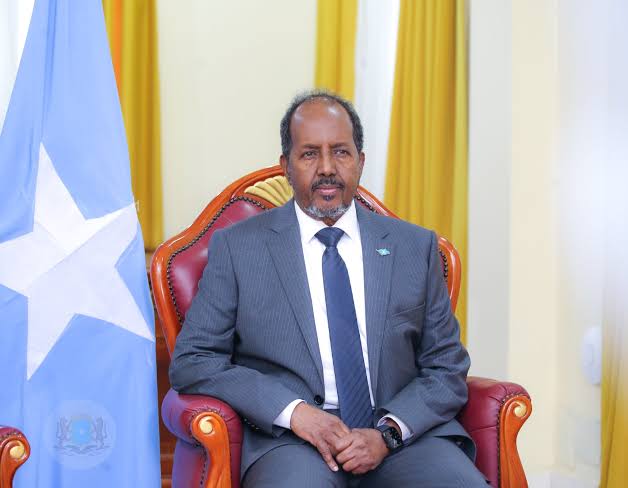

Somalia’s deepening political tensions and the dispute over Hassan Sheikh Mohamud’s tenure are raising concerns about the country’s political stability and security.
As disagreements over constitutional changes, elections and the transfer of power continue, questions are emerging over whether the crisis could eventually lead to the formation of a new armed movement.
The possibility cannot be ruled out, but the emergence of a new insurgency is neither inevitable nor an established outcome.-
Political disputes can escalate into armed confrontation when competing groups lose confidence in dialogue, legal institutions and agreed mechanisms for resolving disagreements.
Whether Somalia moves in that direction will depend largely on how its political leaders manage the current crisis.
At the centre of the dispute is the disagreement over the terms of office of the president and the Federal Parliament.
In March 2026, Somalia’s parliament approved constitutional amendments extending the terms of federal institutions from four to five years.
The federal government argues that the changes provide a legal basis for Hassan Sheikh to remain in office until May 2027.
Opposition leaders reject the application of the amended Constitution to the current leadership.
They maintain that the previous terms have expired and that the country needs a political agreement establishing an acceptable election process and timetable for the transfer of power.
The disagreement has also moved into the legal arena, with opposition figures filing a case before the Supreme Court seeking a review of the constitutional amendments and the government’s announced electoral timetable.
The outcome of the dispute remains central to efforts to establish a mutually accepted political framework.
Somalia has already experienced how disagreements over elections and political authority can spill into violence.
In June 2026, armed clashes broke out in Mogadishu between government forces and fighters aligned with opposition politicians. The confrontations heightened insecurity and forced families to flee parts of the capital.
Those clashes demonstrated that the current political divisions are not confined to statements, negotiations and competing constitutional interpretations.
They have also involved armed actors, creating the possibility of further confrontations if political tensions remain unresolved.
However, isolated clashes or the mobilisation of armed supporters do not, by themselves, amount to the formation of a new national insurgency.
Several factors could contribute to the emergence or expansion of armed groups if the crisis deteriorates.
One concern is the possibility that opposition supporters could lose confidence in peaceful political participation if they believe there is no credible legal or electoral route through which they can challenge the government.
If political mobilisation increasingly becomes linked to armed organisation, groups initially formed around political grievances could develop into more structured fighting forces.
This risk would become greater if influential political figures provided them with financial, logistical or organisational support.
The unity of Somalia’s security institutions is another critical factor. The national armed forces are intended to protect the country and its population, not serve competing political interests.
If security personnel become divided along government and opposition lines, the effectiveness and cohesion of the institutions could be seriously weakened.
Such fragmentation could create opportunities for armed groups to expand their influence, particularly in areas where state authority is already limited.
It could also make it more difficult for the federal government to coordinate security operations and maintain control over strategic locations.
Relations between the federal government and federal member states could further influence the situation.
If some regional administrations reject federal decisions and pursue separate political and security arrangements, national coordination could become increasingly difficult.
A prolonged breakdown in cooperation would complicate efforts to maintain a unified approach to elections, constitutional governance and national security.
Foreign involvement could add another dimension to the crisis.
If competing Somali political actors seek military, financial or diplomatic backing from countries with conflicting regional interests, domestic disagreements could become entangled with wider geopolitical rivalries.
That would make negotiations more complicated and potentially deepen divisions within the country.
Somalia’s experience since the collapse of the central government in 1991 offers a reminder of the consequences of prolonged political fragmentation.
The country endured civil war, competing armed factions and the emergence of rival centres of authority. A renewed breakdown in political consensus could create conditions in which armed groups mobilise around competing visions of governance and political power.
However, today’s Somalia is not identical to the country of 1991. It has a federal government, regional administrations, national security institutions and established international relationships.
These structures provide channels through which disagreements can be addressed, provided political leaders are willing to use them. The greater danger would be allowing the existing institutions themselves to become divided by the political confrontation.
Al-Shabaab is among the groups that could benefit from a prolonged crisis. If federal forces become preoccupied with internal political disputes, fewer resources and less attention may be available for operations against the militant group.
A breakdown in cooperation between the federal government and regional administrations could also weaken intelligence-sharing and joint security operations.
Political instability could therefore affect more than the struggle over presidential authority. It could undermine the wider security framework, disrupt military campaigns and give armed groups opportunities to exploit gaps in government control.
Another important development is the conclusion of the United Nations Transitional Mission in Somalia (UNTMIS), which officially ended on October 31, 2026, following a transition process that began in 2024.
The mission had supported Somalia’s political transition, institution-building and engagement with international partners.
Its departure places greater responsibility on Somali political institutions and leaders to manage disagreements through domestic mechanisms.
Although the end of UNTMIS does not mean that all United Nations engagement in Somalia has ceased, the country will need effective national and regional arrangements to sustain political dialogue and resolve disputes.
The current crisis does not necessarily have to result in a large-scale armed conflict. The disagreement could continue through political negotiations, legal proceedings and competing electoral arrangements without developing into a nationwide confrontation.
Localised clashes involving armed supporters are another possible outcome, while deeper divisions within security institutions could create conditions for more organised armed opposition.
The distinction is important: the formation of a new insurgency would require more than political dissatisfaction.
It would generally involve sustained armed organisation, leadership, recruitment, resources and the capacity to conduct operations over time.
Whether such conditions emerge will depend on the decisions of political actors and the strength of the country’s institutions.
Ultimately, preventing further instability will require an agreed political process that addresses the constitutional dispute, establishes a credible electoral framework and provides clarity over the transfer of power.
Both the government and opposition have a stake in ensuring that political competition does not become a contest between armed groups.
Somalia’s central challenge is therefore not simply whether a new insurgency could emerge, but whether its political institutions can contain the current dispute before armed confrontation becomes a more established feature of the crisis.
A negotiated settlement, respect for lawful processes and the preservation of unified security institutions will be essential to preventing further fragmentation.