

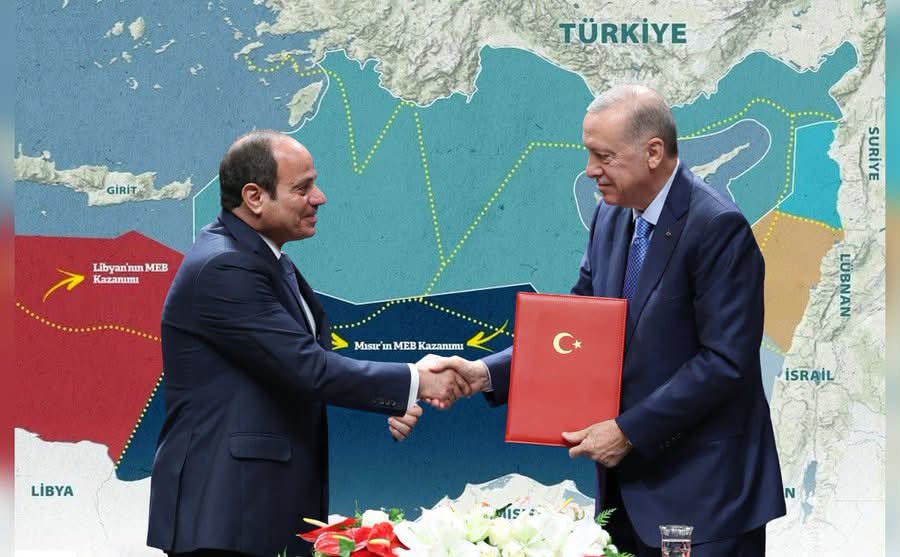

A maritime agreement between Turkey and Libya has reignited political disputes in the eastern Mediterranean Sea, after the eastern Libyan parliament ratified on October 20, 2026, the agreement signed by the two countries in 2019.
This step generated opposition and concerns expressed by Egypt, Greece, Cyprus, Israel, and the European Union, who contend that the agreement could impact their maritime rights and regional economic interests.
The agreement defines maritime boundaries claimed by Turkey and Libya, particularly Exclusive Economic Zones (EEZs) and rights associated with natural resource exploration in the sea.
Turkey argues that the agreement is legal and protects the mutual interests of both nations, whereas Greece and Egypt oppose the boundary definitions, arguing that the maritime rights of their countries were not adequately considered.
Israel also voiced opposition to the move, while the European Union stated that the agreement does not align with its perspective on international maritime law.
This dispute forms part of a broader competition over political influence, maritime corridors, and energy resources in the Eastern Mediterranean.
Regional states are eyeing oil, natural gas, and trade routes connecting Europe, Africa, and the Middle East.
Turkey has strengthened its ties with Libya in recent years, seeking to safeguard its strategic and economic interests.
The ratification of the agreement by the eastern Libyan parliament represents a notable political step, though debate persists regarding the agreement’s legality and operational feasibility.
Tensions between Turkey and Egypt also merit monitoring, as both countries hold diverging interests in Libya and the wider region.
Should the dispute escalate, it could impact diplomatic relations and cooperative frameworks between these states and other regional actors.
Somalia also collaborates closely with Turkey, particularly in defense, military training, economics, and maritime security.
Consequently, shifting regional politics could carry diplomatic and security significance for Mogadishu.
However, there is no evidence indicating that the Turkey-Libya agreement has directly impacted Somalia.
The Somali government remains focused on maintaining its political sovereignty, strengthening partnerships with international allies, and protecting its maritime rights.
The maritime accord dispute is expected to remain a prominent regional issue as affected nations attempt to secure their economic and strategic priorities.
Ultimately, how Turkey and Libya manage the agreement and respond to opposing nations will shape diplomatic relations and energy cooperation in the Eastern Mediterranean, while Somalia can continue safeguarding its national interests while avoiding entanglement in regional disputes.