

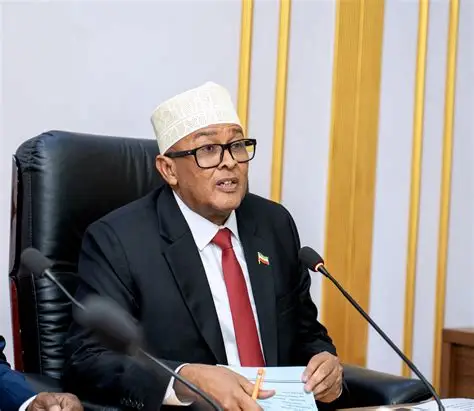

Somaliland is stepping up its long-running campaign for international recognition, with President Abdirahman Mohamed Abdullahi “Irro” expected to travel to the United States in the coming days as Hargeisa seeks to build on recent diplomatic gains.
The planned visit comes less than a year after Israel became the first United Nations member state to formally recognize Somaliland as an independent country in December 2025, a move that significantly altered the diplomatic landscape surrounding the self-declared republic.
According to reports, Irro is expected to visit Washington and New York, where he may hold meetings with members of the U.S. Congress and Senate.
Reports have also suggested he hopes to meet President Donald Trump, although no such meeting has been officially confirmed.
The trip is widely viewed as part of Somaliland’s effort to persuade the United States to consider a policy shift similar to Israel’s recognition.
For more than three decades, Somaliland has sought international recognition while operating with its own government, security forces, currency, and institutions despite lacking formal recognition from most countries.
Somaliland is expected to highlight its strategic location along the Gulf of Aden and near the Bab el-Mandeb Strait, one of the world’s most important maritime trade routes.
Officials in Hargeisa have also emphasized the importance of Berbera Port, which they view as a major economic and security asset that could strengthen cooperation with international partners.
Since Israel’s recognition, ties between Hargeisa and Jerusalem have deepened rapidly.
Israeli Foreign Minister Gideon Sa’ar visited Somaliland in January 2026, while President Irro traveled to Israel in June and opened a Somaliland embassy in Jerusalem, marking a new phase in relations between the two sides.
However, recognition by the United States would represent a far more significant diplomatic breakthrough.
Washington remains a key security and political partner of Somalia and has long supported Somalia’s sovereignty and territorial integrity.
Any shift in U.S. policy would therefore have major implications for the Horn of Africa and could reshape regional diplomacy.
Somalia has strongly opposed international recognition of Somaliland, arguing that the territory remains an integral part of the Federal Republic of Somalia.
Mogadishu condemned Israel’s recognition and has warned that similar moves by other countries would undermine Somalia’s unity and sovereignty.
Analysts say Irro’s visit will test whether Somaliland can convert its recognition by Israel into broader international support.
While the trip itself does not indicate that Washington is preparing to recognize Somaliland, it reflects Hargeisa’s growing diplomatic confidence and its determination to secure support from influential global powers.
If Somaliland were to gain recognition from a major power such as the United States, it could significantly strengthen its international standing, attract greater foreign investment, and open the door to wider diplomatic engagement.
For now, however, attention is focused on Washington and whether Irro’s visit will produce new commitments or closer ties between the United States and Somaliland.