

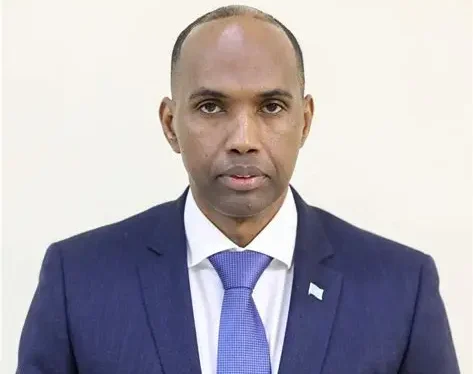

Former Somali Prime Minister Hassan Ali Khayre has launched a strong criticism of the government led by Hassan Sheikh Mohamud, accusing it of forcibly displacing hundreds of thousands of people from parts of Mogadishu during its time in office.
Khayre claimed that around 500,000 people have been displaced within the capital, saying they were removed from more than 150 locations where they had previously lived.
He described the alleged evictions as a major humanitarian and political issue, particularly given the large number of families affected.
His remarks come amid growing tensions between the Federal Government and opposition figures over land ownership, demolitions and forced evictions in Mogadishu.
Disputes over land have repeatedly brought residents into confrontation with landowners and government authorities, while the destruction of homes has raised concerns about the protection of civilians and property rights.
The impact of large-scale displacement can extend beyond the loss of housing.
Families may be forced to leave schools and workplaces, while small businesses can lose their premises and sources of income.
For vulnerable households, repeated displacement can also increase dependence on humanitarian assistance.
Khayre’s accusations form part of broader criticism from opposition politicians who have accused the Hassan Sheikh administration of mishandling land issues in the capital and using government authority in ways that serve particular interests.
The government, however, has maintained that efforts to regulate land and organize the capital are part of broader efforts to improve urban management and address long-standing land disputes.
The figure of 500,000 displaced people and the claim involving more than 150 locations have not been independently verified in the information provided.
The allegations therefore require clarification and supporting evidence, particularly regarding the number of people affected, the locations involved and the circumstances surrounding their displacement.
The government now faces pressure to respond directly to Khayre’s allegations and provide its own figures and explanation of the evictions.
With land disputes already contributing to political tensions in Mogadishu, the issue could become an increasingly important point of confrontation between the government and its opponents.