

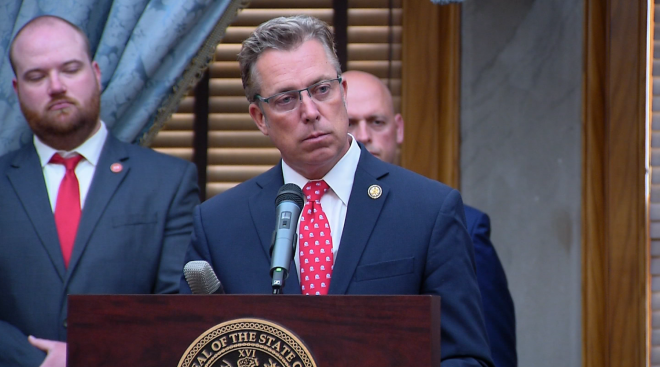

U.S. Congressman Andy Ogles has introduced articles of impeachment against U.S. District Judge Allison Burroughs after she temporarily blocked the Trump administration’s effort to end Temporary Protected Status (TPS) for Somali nationals, escalating a growing clash between the executive branch and the federal judiciary over immigration policy.
Judge Burroughs issued a temporary order preserving TPS protections and work authorization for approximately 1,100 Somali beneficiaries while a federal court considers a lawsuit challenging the administration’s decision to terminate the humanitarian program.
Ogles accused the judge of exceeding her constitutional authority and disregarding a previous U.S. Supreme Court ruling that limited lower courts’ ability to halt executive immigration actions.
He described her decision as an example of “judicial activism” and argued that unelected judges should not be allowed to override presidential authority on immigration matters.
The lawsuit filed on behalf of Somali TPS recipients argues that the Trump administration’s decision to end the program was motivated by discrimination based on nationality and race, rather than an objective assessment of conditions in Somalia.
Judge Burroughs ruled that those claims warranted further judicial review before the protections could be withdrawn, allowing beneficiaries to retain their legal status and employment authorization while the case proceeds.
The dispute began after the U.S. Department of Homeland Security (DHS) announced in January that Somalia no longer met the legal requirements for TPS designation, with the administration planning to end the program on March 17, 2026.
The decision formed part of a broader effort by the Trump administration to scale back humanitarian immigration programs and tighten immigration enforcement.
Temporary Protected Status (TPS) is a humanitarian immigration program that allows nationals of designated countries experiencing armed conflict, natural disasters, or other extraordinary conditions to live and work legally in the United States for limited periods.
Somalia has remained under TPS designation since 1991 because of decades of armed conflict, political instability, terrorism, and recurring humanitarian crises.
The legal battle over Somalia’s TPS designation follows months of nationwide litigation surrounding the administration’s attempts to terminate protections for several countries.
Federal courts have repeatedly been asked to determine whether the administration followed the legal procedures required under U.S. immigration law and whether its decisions were influenced by discriminatory motives.
Although Ogles has formally introduced impeachment articles, the effort faces significant legal and political obstacles.
Under the U.S. Constitution, federal judges are generally removed only for “high crimes and misdemeanors,” such as corruption, abuse of office, or other serious misconduct—not simply because lawmakers disagree with their judicial rulings.
Historically, impeachment of federal judges has been rare, and efforts based solely on controversial court decisions have seldom succeeded.
The outcome of the TPS lawsuit could have major implications for Somali nationals living in the United States, determining whether thousands of beneficiaries will be allowed to continue living and working legally in the country while broader challenges to the administration’s immigration policies continue to move through the federal courts.