

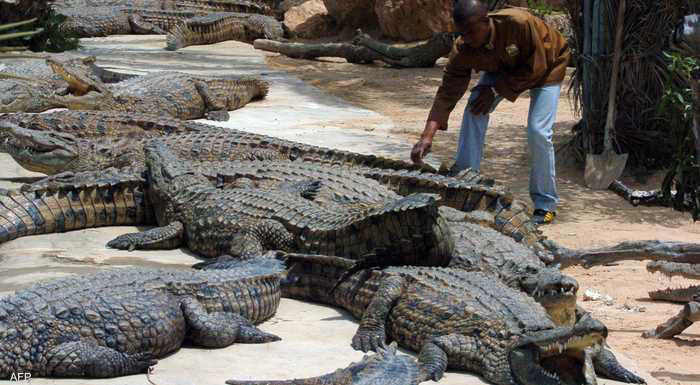

A sudden surge in the number of Nile crocodiles appearing in villages and communities along the Nile River has triggered widespread fear across Sudan, following a series of alarming encounters, including a fatal attack on a farmer in the country’s north.
Panic intensified after a large crocodile attacked a farmer working along the banks of the Nile on Sai Island in northern Sudan. Witnesses said the reptile seized the man, dragged him into the river, and submerged him before killing him.
The growing presence of crocodiles is no longer confined to northern Sudan.
Residents have also reported sightings in Al-Kalakla, a neighborhood south of the capital, Khartoum, raising concerns that the reptiles are spreading into more populated areas.
Although crocodiles have inhabited the Nile for centuries, residents and wildlife experts say the current wave of sightings is unusually widespread, with significantly higher numbers being reported in multiple locations along the river.
Communities living near the Nile have expressed growing anxiety over the increasing danger.
Residents of Masri village said they had seen several crocodiles close to the riverbanks, heightening fears for farmers, fishermen and families who rely on the river for their daily activities.
Communities Launch Safety Campaigns
In response to the growing threat, youth groups in several Nile-side villages have launched awareness campaigns aimed at protecting local communities from crocodile attacks.
Images and videos circulating on social media show volunteers organizing patrols and encouraging residents to remain vigilant.
However, Sudan’s Wildlife Police have warned against indiscriminately killing crocodiles, cautioning that such actions could create further environmental problems.
Mohamed Nasir, a resident of Dongola in northern Sudan, described the situation as increasingly dangerous.
“We have recently seen many crocodiles along the riverbanks in several towns across the region,” he said, warning that farmers and children are particularly vulnerable during the early morning hours when agricultural work, fishing, and water collection are most common.
Experts Link Increase to Environmental Changes
Dr. Mohamed Al-Makki Ali Al-Badawi, a wildlife specialist at Sinnar University, said habitat disruption is one of the main reasons behind the increased crocodile activity.
According to Al-Badawi, the expansion of farmland and the constant noise from irrigation pumps have reduced the reptiles’ traditional basking areas along the riverbanks, forcing them into closer contact with people.
He also noted that Sudan lacks accurate data on crocodile populations, breeding rates, and distribution, making it difficult for authorities to fully assess the scale of the problem.
The expert explained that rising water levels and muddy riverbanks increase crocodile movement, while lower water levels expose sandy areas that provide ideal breeding conditions, contributing to population growth.
Authorities Issue Public Safety Warning
Sudan’s Wildlife Protection Police have urged residents to avoid swimming in rivers during this period and advised communities living near the Nile to stay away from the riverbanks whenever possible.
Officials said patrols have been intensified around islands and vulnerable sections of the Nile, while awareness campaigns are being expanded to educate the public about the dangers posed by crocodiles, particularly during the current breeding season when young crocodiles are more common.
Authorities emphasized that the Nile crocodile remains an important part of Sudan’s natural heritage and stressed the need for coexistence through public education.
They also suggested that regulated crocodile farming projects could, in the future, generate economic benefits while helping manage the species responsibly.
The Nile River, long regarded as Sudan’s lifeline, is increasingly becoming the scene of dangerous encounters between humans and one of Africa’s most formidable predators, highlighting the growing impact of environmental changes on both wildlife and local communities.