

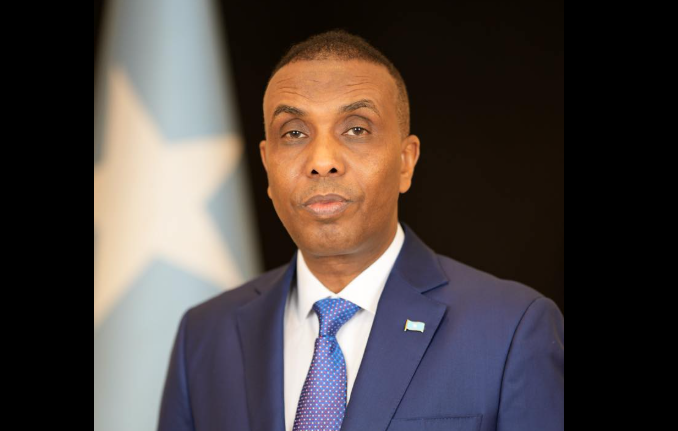

Somali Prime Minister Hamza Abdi Barre has announced a wide-ranging package of reforms aimed at integrating Islamic education into the country’s formal education system, standardizing religious institutions, and strengthening oversight of Quranic schools as part of broader efforts to modernize governance and public administration.
The reforms were unveiled during the graduation ceremony of the first master’s cohort in Da’wah and Judiciary at the Higher Institute for Da’wah Affairs and Islamic Studies of Somali National University.
Addressing graduates, academics, and religious scholars, Barre described the initiative as a historic step toward improving the quality, accountability, and recognition of Islamic education across Somalia.
Under the new policy, the Federal Government will formally recognize Quranic schools as part of Somalia’s national education system for the first time.
The schools will be required to follow standardized curricula, obtain official accreditation, issue recognized certificates, and operate under government supervision.
Prime Minister Barre said responsibility for overseeing Quranic schools has been transferred from the Ministry of Endowments and Islamic Affairs to the Ministry of Education, a move intended to integrate religious education into the country’s broader education framework and improve regulatory oversight.
The government also plans to introduce national standards for Quranic school teachers, requiring instructors to receive formal training and recognized professional qualifications before teaching.
Officials say the reforms are designed to improve the quality of religious instruction while ensuring greater consistency in educational standards nationwide.
As part of the reforms, the Prime Minister announced plans to establish a Supreme Council of Somali Scholars, a national body tasked with issuing unified religious rulings (fatwas).
The council is intended to replace what the government describes as fragmented interpretations issued by individual clerics.
According to Barre, legislation establishing the council has already been approved by the Council of Ministers and is awaiting parliamentary approval.
The government is also constructing a permanent headquarters for the council, which will include offices, research facilities, and libraries for Somali Islamic scholars.
Barre said the initiative aims to strengthen institutional religious leadership and provide coordinated guidance on religious matters.
In another major initiative, the Prime Minister announced the creation of a digital registration system covering Quranic schools, Islamic institutes, and universities.
The system will be used to verify students’ academic records and educational credentials while improving transparency and accountability across Somalia’s education sector.
Barre also called on universities to produce graduates with specialized expertise in fields critical to Somalia’s future development, including marit-ime law, petroleum and natural resource disputes, financial crime investigations, auditing, and Islamic jurisprudence.
He said Somalia requires professionals capable of addressing emerging legal and economic challenges while providing sound Islamic legal guidance on contemporary issues.
The Prime Minister described the education reforms as part of a broader state-building agenda focused on strengthening public institutions, improving governance, and implementing long-term national development plans.
He acknowledged that the reforms would face implementation challenges but said the government remained committed to carrying them forward.
The announcement represents one of the most significant overhauls of Somalia’s Islamic education system in recent years, as the Federal Government seeks to bring religious education under a unified national framework while strengthening institutional oversight and aligning Quranic education with the country’s formal education system.

