


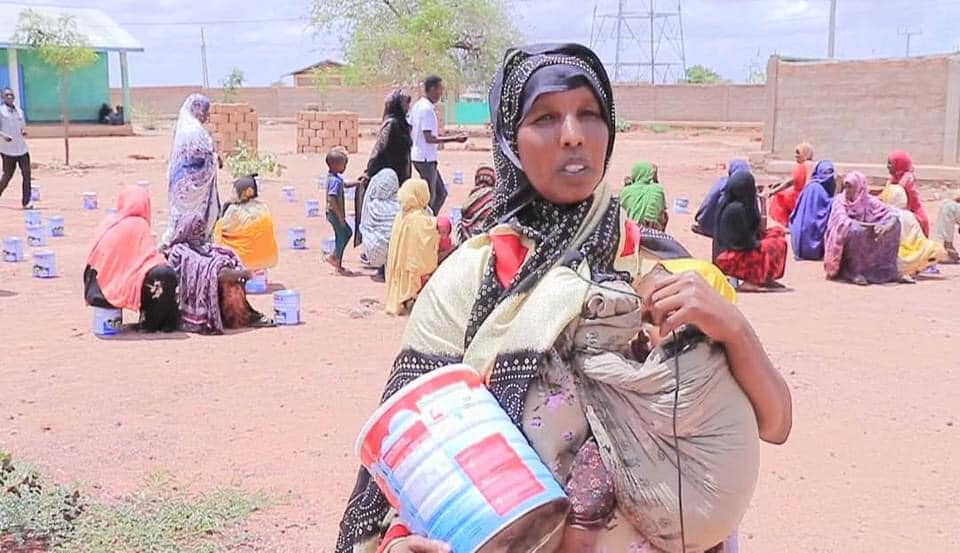


MOGADISHU (Kaab TV) — As the world marks World Breastfeeding Week under the theme “Create Sustainable Support Systems,” Somali mothers continue to navigate some of the most difficult conditions globally to raise and nourish their children.
In a country repeatedly ranked among the worst places to be a mother, Somalia’s fragile health system, limited workplace protections, and widespread poverty create immense barriers to breastfeeding — one of the most vital actions for child survival and maternal health.
Despite these realities, government officials and health agencies gathered in Mogadishu on Monday to call for stronger national efforts to support breastfeeding.
At an official event, Somalia’s Minister of Health, Ali Haji Adam, acknowledged the critical role breastfeeding plays in a child’s development.
“Breastfeeding is vital not only for the survival and development of our children but for the well-being of mothers, families, and entire communities,” said Dr. Adam.
“The government is committed to creating sustainable systems to support mothers — from health services to workplace accommodations. Every mother should feel empowered to breastfeed.”
But for many Somali mothers, empowerment remains out of reach.
Conflict, displacement, malnutrition, and lack of access to health facilities all contribute to extremely poor maternal and child health outcomes.
Even in peaceful areas, societal and economic structures often fail to protect and support breastfeeding mothers.
Dr. Kamil Mohamed, Deputy Representative of WHO Somalia, stressed that breastfeeding is one of the most effective interventions to improve infant health — yet mothers cannot do it alone.
“From cognitive development to immune protection, the benefits of breastfeeding are profound,” said Dr. Mohamed. “But without quality health services, maternity protection, and regulation of commercial influence, Somali mothers are left without the support they need.”
UNICEF’s Somalia Representative, Sandra Lattouf, echoed the urgency, pointing to the long-term costs of neglecting support systems for mothers.
In Somalia, 6 in 10 babies are breastfed within the first hour of birth
“We owe it to the next generation to ensure every child has the healthiest possible start,” she said. “Breastfeeding must be protected not just by words, but by actions — policies, education, and resources that make it possible even in the hardest conditions.”
In Somalia, 6 in 10 babies are breastfed within the first hour of birth, but only 1 in 3 infants are exclusively breastfed for the first six months — a rate far below global recommendations.
Experts cite the aggressive marketing of infant formula and the lack of legal protections as major obstacles.
The International Code of Marketing of Breast Milk Substitutes, a global standard to prevent unethical advertising of formula, remains largely unimplemented in Somalia — despite the country’s ratification of the UN Convention on the Rights of the Child in 2015.
This gap continues to leave mothers vulnerable to misinformation and commercial pressure.
World Breastfeeding Week 2025 presents a stark contrast between the global call to action and the everyday realities for Somali mothers. While the week promotes awareness and collective responsibility — including paid maternity leave, breastfeeding breaks, and community support — many of these provisions are missing from Somali law and practice.
As the government renews its promises, advocates stress that only bold, structural reforms — from legislation to investment in maternal health — can shift Somalia from being one of the toughest places to be a mother to one where every child can thrive.
Without urgent action, the theme of “Create Sustainable Support Systems” will remain out of reach for the millions of Somali women doing their best to care for their children under the harshest conditions.