




The recent wave of U.S. engagement with Somalia’s federal member states has raised a fundamental question about Washington’s future approach toward Somalia: Is the United States quietly returning to a dual-track policy that engages both the Federal Government in Mogadishu and regional administrations directly?
Over the past months, senior U.S. officials have intensified contacts with Puntland, Somaliland and Jubaland, focusing on security cooperation, counterterrorism, maritime security and the growing strategic importance of the Horn of Africa and the Red Sea.
The renewed engagement comes at a time when Somalia’s security transition has faced serious setbacks. Despite billions of dollars in international assistance, the Somali Federal Government has struggled to deliver decisive progress against Al-Shabaab, while political disputes between Mogadishu and federal member states have weakened national cohesion and diverted attention from the fight against extremist groups.
For Washington and its allies, the security environment is becoming increasingly complex. The threat is no longer limited to Al-Shabaab. ISIS-linked militants in Puntland, piracy concerns in the Gulf of Aden, instability around the Red Sea, and geopolitical competition among global powers have increased the strategic importance of Somalia’s coastline and regional actors.
U.S. Engagement with Puntland: Counterterrorism and Maritime Security
The latest U.S.-Puntland engagement has been among the most significant.
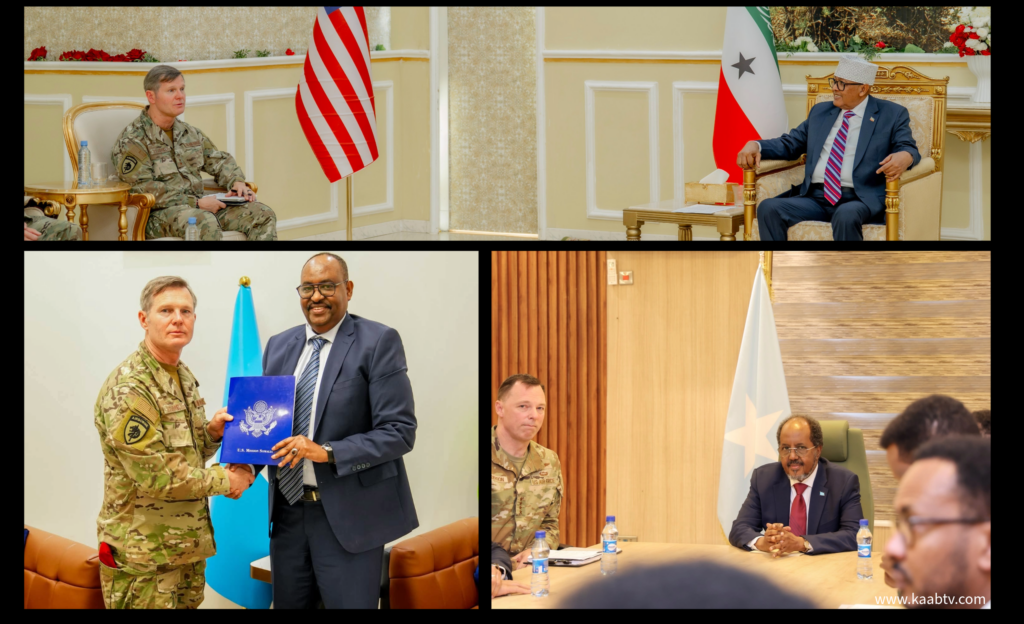
A U.S. delegation led by Major General Claude K. Tudor Jr., the commander of special operations for U.S. Africa Command (AFRICOM), met with Puntland President Said Abdullahi Deni in Bosaso.
During the visit, Puntland and the United States signed a security cooperation agreement allowing Washington to expand its facility in Bosaso to support counterterrorism operations and maritime security.
The agreement comes after years of U.S. support for Puntland’s campaign against ISIS militants in the Cal Miskaad mountains of Bari region.
From 2024 to 2025, U.S. assistance included airstrikes, intelligence sharing and logistical support to Puntland forces fighting ISIS. Puntland forces later announced that they had recaptured several areas previously controlled by ISIS after months of operations supported by international partners.
The President of the #Puntland State, @HESaidADeni , together with ministers, military officers, and advisors, held a meeting in Bosaso with a delegation from the #USA especially @USAfricaCommand , led by Major General Claude Tudor, Commander of #AFRICOM Special Operations. pic.twitter.com/xC4b63LACx
— Puntland State House (@Plstatehouse) August 2, 2026
The U.S. focus on Puntland reflects the region’s strategic importance. Puntland sits along the Gulf of Aden, close to one of the world’s most important maritime chokepoints, the Bab al-Mandab Strait, where instability could affect global shipping and energy supplies.
Somaliland: Strategic Maritime Partnership
Major General Tudor also met Somaliland President Abdirahman Mohamed Abdullahi (Irro) during his Horn of Africa tour.
The discussions focused on security cooperation, maritime security and shared strategic interests in the Red Sea and Gulf of Aden.
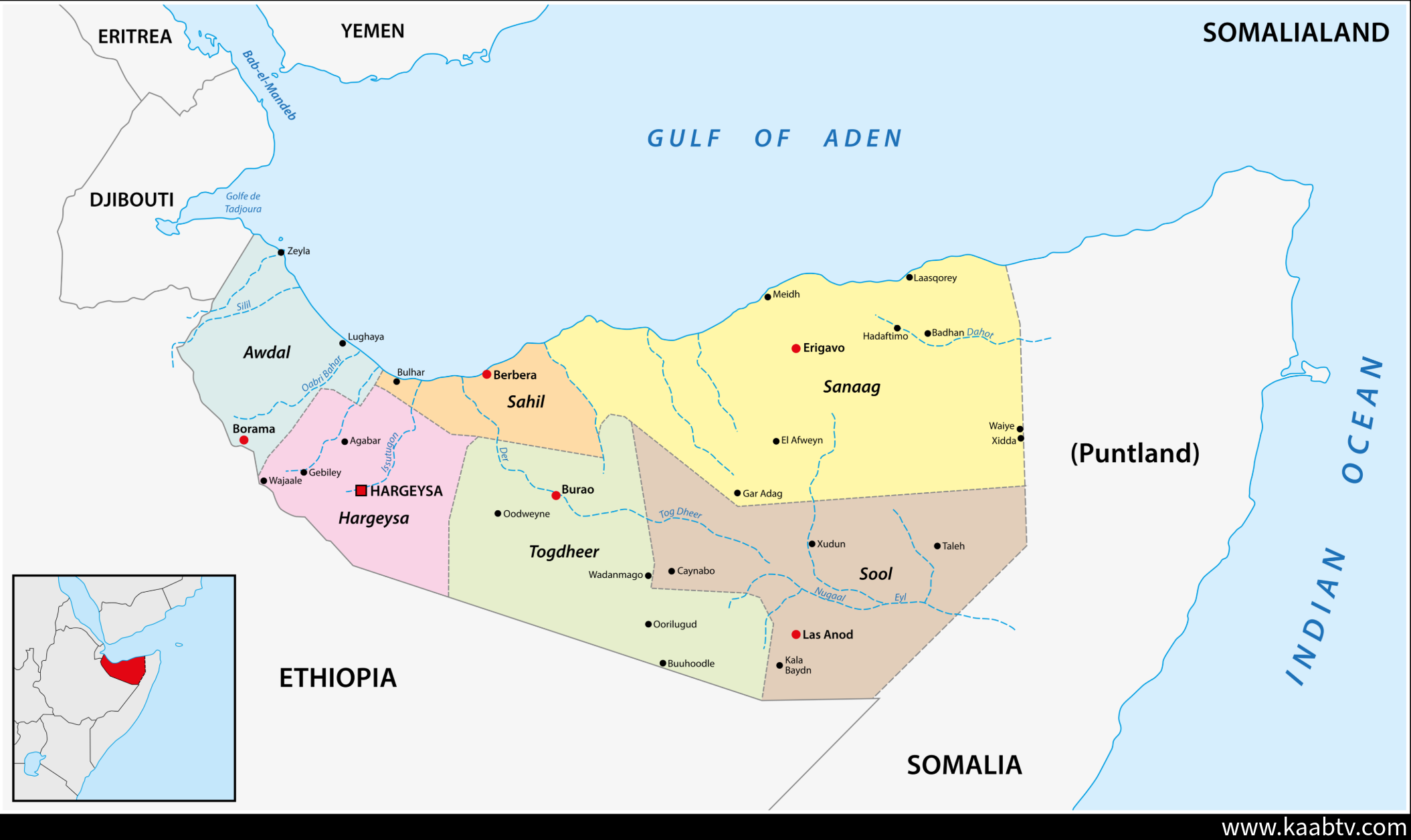
Somaliland emphasized its more than 850-kilometer coastline and the strategic importance of Berbera, which sits near major international shipping routes.
The engagement highlights Somaliland’s growing importance in regional security calculations. While Somaliland remains internationally unrecognized as an independent state, its geographic position and relative stability have made it increasingly relevant to discussions about maritime security, counterterrorism and regional stability.
The United States has previously assessed the strategic value of Berbera as part of broader efforts to improve maritime awareness and monitor threats in the Red Sea and Bab al-Mandab.

Jubaland and the Return of Regional Security Partnerships
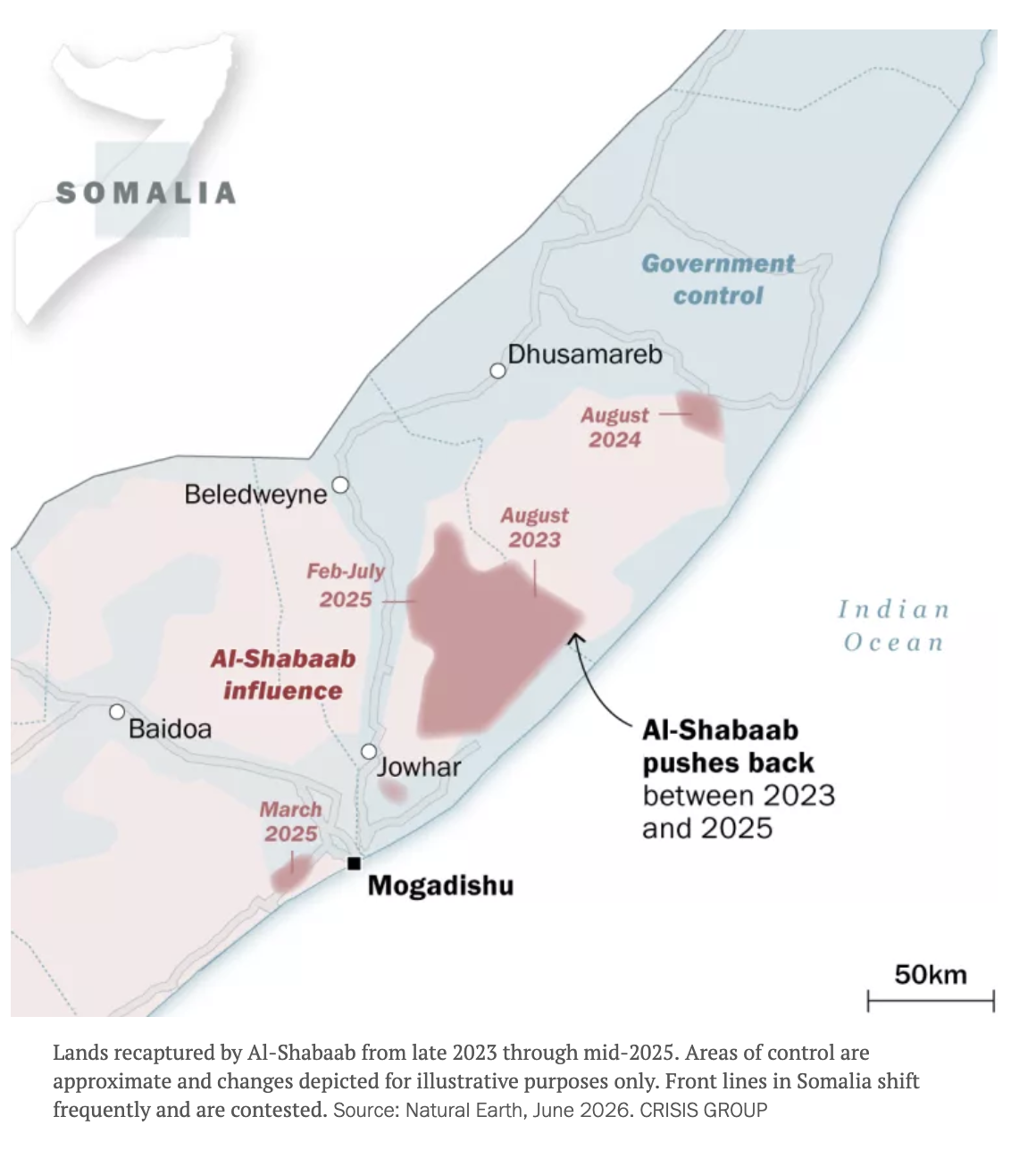
Jubaland has also remained an important security partner for the United States due to its location along the Kenyan border and its role in countering Al-Shabaab.
The region has historically been a frontline in Somalia’s fight against the militant group, particularly in areas around Lower Juba and Kismayo.
U.S. engagement with Jubaland has traditionally focused on security cooperation, including support for local forces fighting Al-Shabaab and efforts to prevent extremist networks from exploiting border areas.
As Al-Shabaab continues to adapt its strategy, maintaining relationships with capable regional security actors has become increasingly important.
Why a Dual-Track Approach Could Be Necessary
For years, international partners have invested heavily in strengthening Somalia’s Federal Government as the central authority responsible for defeating Al-Shabaab and rebuilding state institutions.
However, the results have been disappointing.
Al-Shabaab remains a powerful insurgency with significant territorial influence, taxation networks and the ability to carry out major attacks. Somalia’s national security forces have struggled with coordination problems, political interference and limited operational capacity.
At the same time, relations between Mogadishu and federal member states have deteriorated. Political disputes over constitutional reforms, elections and resource-sharing have weakened cooperation between the federal and regional levels.
The result has been a security strategy built around a government that has not yet developed the political and institutional capacity required to manage Somalia’s complex security environment.
This reality has forced international partners to reconsider whether a Mogadishu-only approach is sufficient.
The emerging pattern of U.S. engagement has led some analysts to argue that Washington is once again embracing a dual-track approach in Somalia.
As Nairobi-based analyst Rashid Abdi noted, “The U.S. military is actively stepping up ‘dual-track diplomacy’ to deepen cooperation with strategic Somali territories — Somaliland, Puntland and Jubaland.”
The three are crucial US partners and deemed more active in the fight against terrorist groups in the Horn,” Rashid wrote.
Puntland has been at the forefront of operations against ISIS-linked militants in the Cal Miskaad mountains, while Jubaland remains a key frontline region in the fight against Al-Shabaab due to its location along Somalia’s southern border. Somaliland, meanwhile, has gained strategic importance because of its long coastline, the port of Berbera and its proximity to the Red Sea and Bab al-Mandab maritime corridor.
The growing U.S. focus on these regions reflects a broader security calculation: defeating terrorist networks and protecting strategic waterways requires cooperation with actors that have operational presence on the ground.
Rather than replacing engagement with Mogadishu, a renewed dual-track model would acknowledge Somalia’s federal reality and allow Washington to work simultaneously with national and regional institutions to address increasingly complex threats.
The dual-track approach is not a rejection of Somalia’s federal government. Instead, it recognizes the reality that Somalia’s regions possess different security capabilities, political dynamics and strategic importance.
During previous years, the United States engaged directly with regional administrations while maintaining relations with Mogadishu. That approach allowed Washington to support security actors on the ground while encouraging Somalia’s federal system to develop.

A renewed dual-track model could provide several advantages
First, it could strengthen counterterrorism operations.
Regional forces in Puntland, Jubaland and other areas have direct knowledge of local terrain, communities and militant networks. Supporting capable local partners could improve the fight against Al-Shabaab and ISIS.
Second, it could improve maritime security.
With piracy risks returning and instability spreading around the Red Sea, coastal regions such as Puntland and Somaliland have become critical partners in protecting international shipping routes.
Third, it could respond faster to emerging threats.
The Horn of Africa is increasingly affected by competition involving regional and global powers, arms trafficking, extremist networks and instability linked to the Red Sea crisis.
A New Reality in the Horn of Africa
The Horn of Africa is entering a new strategic era. The Red Sea has become a major arena of geopolitical competition, while extremist groups continue exploiting weak governance and security gaps.
The international community cannot afford a security strategy based only on political preferences in Mogadishu while ignoring realities on the ground.
A balanced dual-track approach could allow the United States and its partners to work with all capable Somali actors while continuing to support Somalia’s federal institutions.
The goal should not be to weaken Somalia’s national government, but to strengthen the country’s ability to confront threats that no single institution can defeat alone.
The recent U.S. engagements with Puntland, Somaliland and Jubaland suggest a recognition that Somalia’s security future depends on broader partnerships. After years of limited progress against terrorism and growing instability around the Red Sea, revisiting a dual-track approach may no longer be a political choice — it may be a strategic necessity.