


How displacement is told in Somalia, and who it is told for
There is a moment in a lot of writing about Somali crisis where a person stops being a person and turns into a case. Nobody sets out to do this. It happens through habit, through the shape a report is expected to take before anyone sits down to write it, and through who gets asked what and who does not. Two tellings of the same nine days in one woman’s life make the shift visible.
The case file
The other day, a virtual field visit connected 48 donor representatives to 600,000 internally displaced persons in Baidoa. The Norwegian Refugee Council organised the call to show the hunger crisis in Somalia and the impact of its resilience programming in Baidoa and Kismayo.
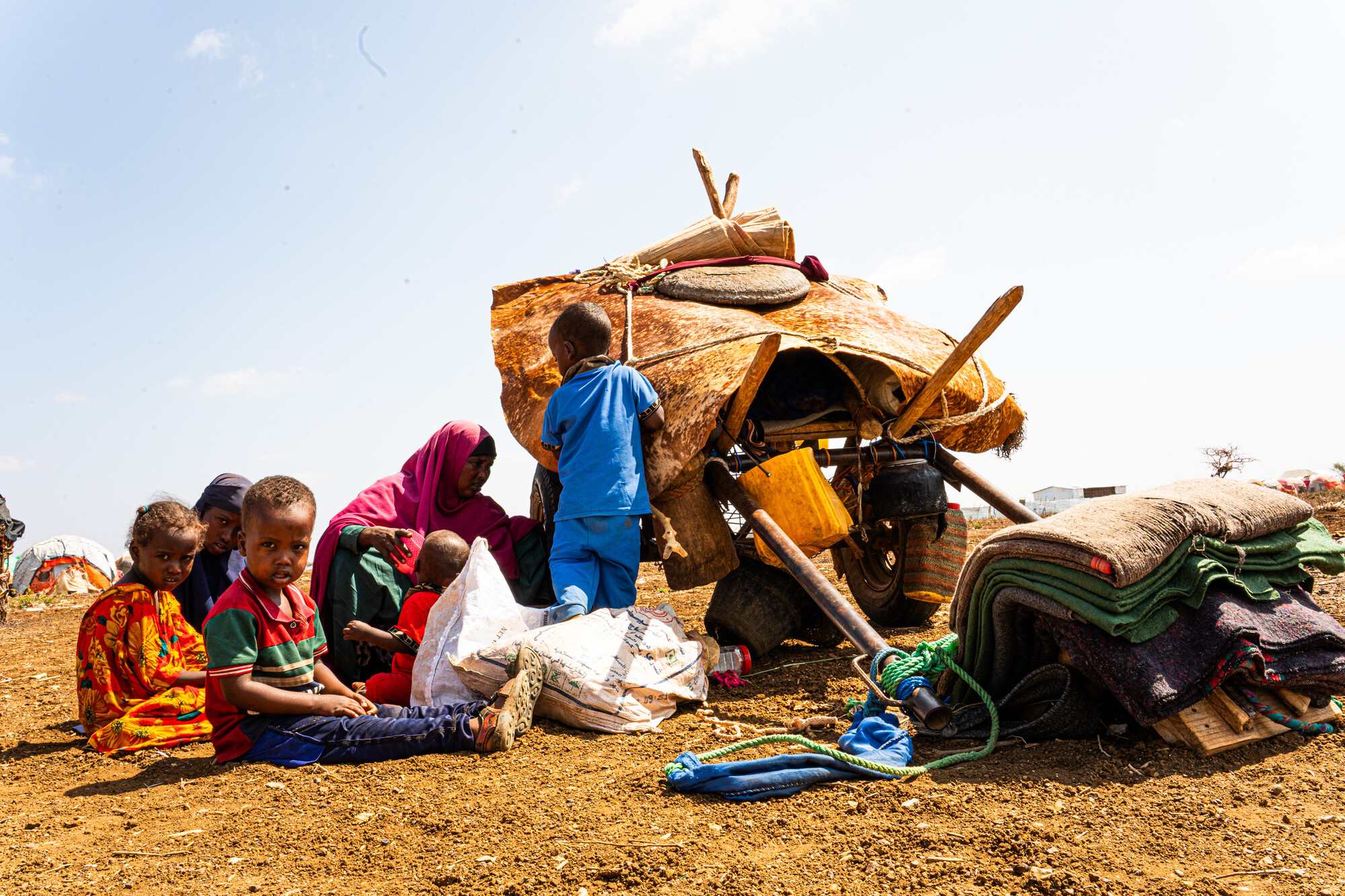
It was heartbreaking to share the story of Yasmin, recently displaced from Hareera-jiife village in Bay region with five children. Three are her own, two belong to her late sister. Three of the children show signs of malnutrition and measles.
Yasmin has been in the camp for nine days and does not know where to take them for treatment. Her husband stayed behind to tend the farm, but the rains failed and the harvest will be poor. She walked for 72 hours to reach Baidoa, believing she would find assistance and protection there.
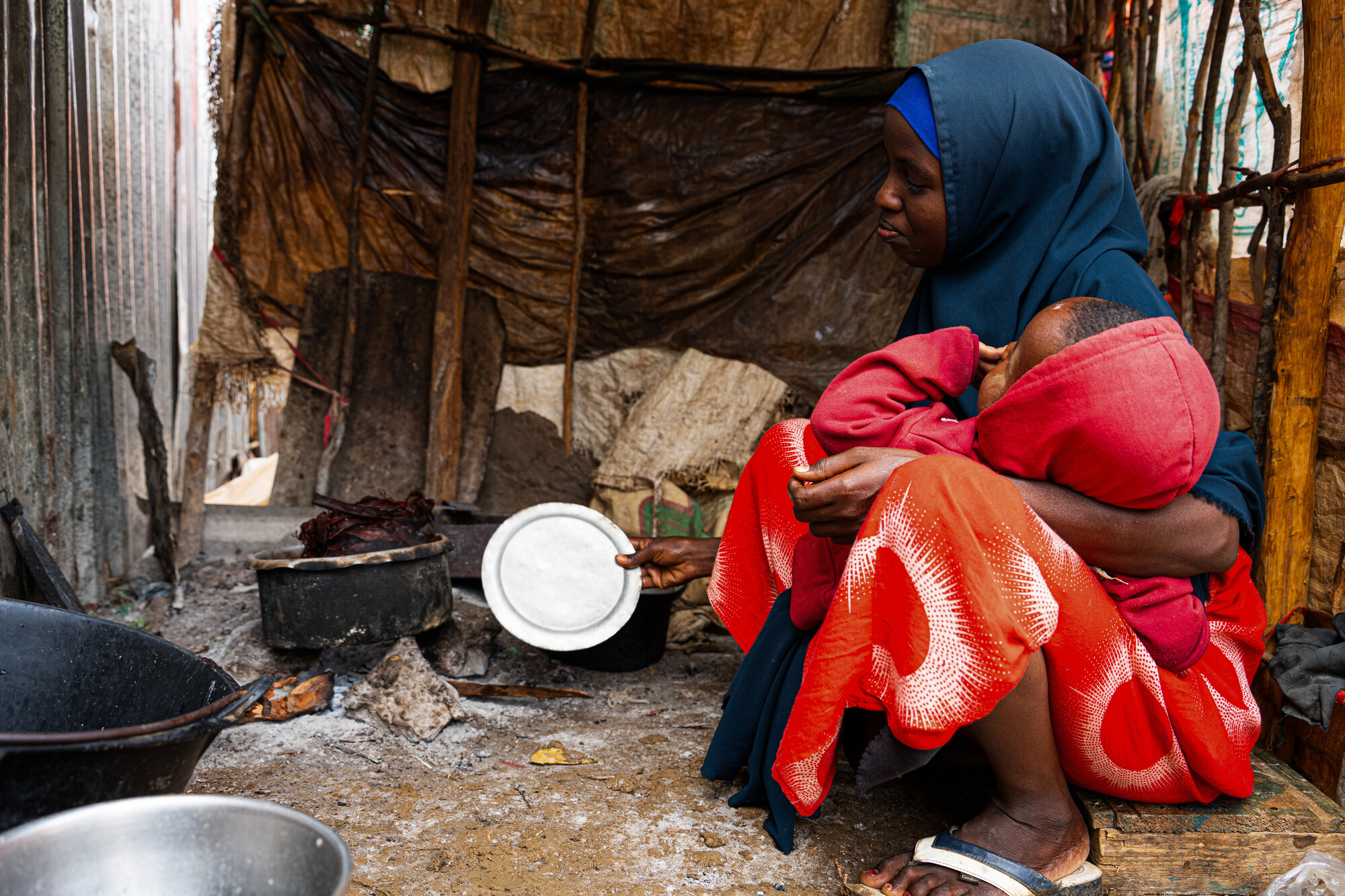
Yasmin and her children live under torn cloth and tent scraps. They have no food. The camp leader managed to find three kilos of rice, contributed by fellow residents. Yasmin has no relatives in Baidoa. She knows no one there.
The visit also highlighted nature-based solutions in Kismayo, ecosystem restoration, water harvesting, permagardens, helping communities strengthen food security and prepare for future shocks. While immediate humanitarian assistance is urgently needed to save lives, investment in resilience is equally urgent to help communities break the cycle of recurring crises. Thank you to all partners for joining the visit and for your continued commitment to supporting vulnerable communities across Somalia.
Nobody who wrote this meant Yasmin, her children, the camp, or Somalia itself any harm. But look at where the sentences point. Yasmin never speaks. Neither does anyone else named in this story, not her children, not the camp leader, not one of the human beings whose lives it claims to describe.
Every fact about her and the children in her care arrives already filtered through someone else’s eyes and folded into someone else’s summary, on its way to an audience of forty eight donor representatives she will never meet, deciding things about her life and the lives of everyone in that camp in a room none of them will ever enter. Her husband’s absence and the failed rains, the actual causes of her walk, get a sentence each and then vanish, background detail in a story whose real subject, by the end, is not Yasmin at all. It is a donor call, and by extension Somalia itself, reduced to a case still waiting to be funded. The detail that should have mattered most, that a camp leader with almost nothing organised his neighbours to find three kilos of rice for a woman they had never met, gets one line and is never returned to. It reads like a nice touch. It should have been the finding.
FURTHER READING: Conflict and Hunger Deepen Humanitarian Crisis in Somalia’s South West State
Donor writing has a shape to it, and Yasmin’s story was poured into that shape rather than the other way around. A number up front to establish scale. One person, chosen and arranged to carry emotional weight. Then a pivot into the vocabulary that actually moves institutional money: resilience, nature-based solutions, breaking cycles.
The malnutrition, the measles, the torn cloth, these details survive the edit because they do the work of moving a donor audience toward continued funding. The rice barely survives it, maybe because a community already feeding itself is a slightly awkward fact for an appeal built on the premise that outside help is what is missing.
The last line gives it away. Thank you to partners, for joining the call and for their continued commitment. A piece written for Yasmin would not end there. A piece written for the Somali public she belongs to would not end there either.
Somali people turn up constantly in writing like this, as the 600,000, as Yasmin, as the family in the camp, cited and described and counted. What they almost never do is speak as the authority on their own lives. Nobody asks Yasmin, on the page, what she thinks happened to her and why.
Yasmin’s crossing
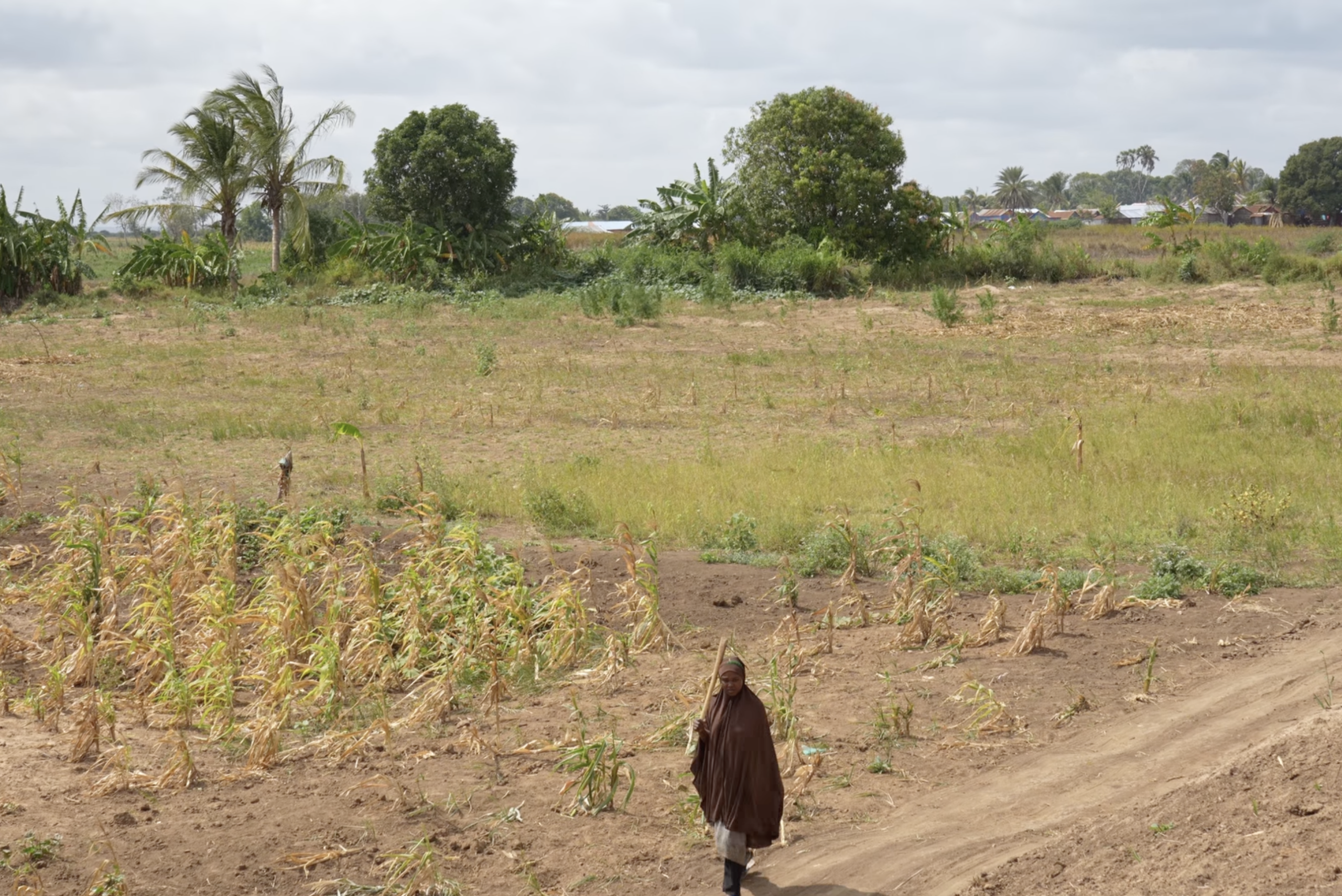
Yasmin left Hareera-jiife on foot. She does not remember exactly which day, only that it took three nights and most of three days, and that by the second night her youngest was crying from thirst in a way she had not heard before.
“I was not walking to Baidoa,” she says. “I was walking away from what the rain did not do.”
Her husband stayed on the farm. Somebody had to, in case the harvest came. It has not, not yet, and she does not expect it will. Before she left, her younger sister died and left two children with nowhere else to go. Yasmin did not weigh this decision. There was no decision to weigh. “They are mine now,” she says. “That is not a question anyone asks in my family.”
She arrived in Baidoa nine days ago knowing no one. Three of the five children show signs of malnutrition, one has measles, and every one of those nine days has gone into trying to find out where a woman with no money and no relative in the city takes a sick child.
What found her instead was the camp leader. He had nothing of his own to give, but within a day of her arrival he had gathered three kilos of rice from families who already had almost nothing, and brought it to a stranger.
This did not come from nowhere. It is Danwadaagaha, the Somali architecture of mutual obligation that was working long before any programme arrived proposing to build resilience into a community that had never stopped practicing it. Nobody trained the camp leader for this. Nobody funded it. It happened because it is what people owe each other, and it reached Yasmin faster than anything organised from outside the camp did.
What she says she needs is not complicated. Treatment for three children. Word of whether her husband is safe and whether the rains will come next season. And, though she would not put it this way herself, some acknowledgment that what caught her when she arrived with nothing was not a donor programme. It was her neighbours, most of them also displaced, most of them also with almost nothing.
What this version is for
This telling exists to record what happened to Yasmin the way she understands it, for a reader who wants the truth of her situation rather than a reason to keep funding a call center full of donors. There is no funding case to build, so nothing needs to be shaped around persuading anyone of anything. The rice can sit at the center of the story because nothing here requires it to bow to a resilience narrative written for somebody else’s report.
The audience is different too, and that changes what the writing has to answer for. Aadmi writing is built for a Somali public first, not only for outsiders looking in. Danwadaagaha does not need explaining to a Somali reader the way it would to a donor. It can be named and left to carry its own weight. And writing for that audience raises the stakes in a way donor writing never has to face: Yasmin, or her community, might actually read this. That is a different kind of responsibility than writing for a funder who will never meet her and has no way of knowing whether the story was fair.
Reading both through the Aadmi lens
Aadmi gives a working way to tell dehumanization and humanization apart in practice, and it is worth spelling out rather than leaving it implied.
Dehumanization is not about unkind words. It shows up in structure. A person becomes an object in a story rather than its subject when she is spoken about in the third person with none of her own reasoning quoted. When her suffering is folded into a statistic before it is ever individualised, so she arrives on the page already standing in for 600,000 others. When her needs are named by the institution reporting on her instead of by her.
When the community capacity that actually reached her first, the neighbours who fed her before any outside actor did, gets a sentence and nothing more, while the institution’s own programming gets paragraphs. And when the piece signs off by thanking the room it was written for, rather than closing on the person it claims to be about. The case file hits every one of these marks. Not because anyone meant harm. Because donor reporting is built to do exactly this.
Humanization asks for something specific too. It asks the writer to listen first, to let a person’s own explanation of what happened to her carry the story rather than decorate a narrator’s summary of it. It asks that her reasoning about her needs, her family, her choices, be reported in her own terms rather than translated into the language of an outside programme. And it asks that existing capacity inside her own community, in this case a camp leader collecting rice from people who have almost nothing, be treated as the actual news rather than a footnote to somebody else’s intervention.
Yasmin’s crossing tries to meet that standard. She reasons in her own voice. Her decision about her sister’s children needs no outside explanation because it makes complete sense inside her own family’s logic. The rice is named as the system that worked, not a charming aside.
The two tellings are not simply gentler and harsher versions of the same story. One treats Yasmin as evidence in an institution’s case to its funders. The other treats her as the person who knows what happened to her, and treats her neighbours’ response as the actual event worth reporting.
How Danwadaagaha was administered, organized and programmed before the civil war, 1991.
What the camp leader did in Baidoa did not appear from nowhere, and it did not appear because Somalis are naturally generous in a vague, cultural-stereotype sort of way. It came out of a system that Somali society administered, organised and ran on a schedule long before anyone proposed resilience building as a new idea.
Administration sat with elders and lineage authorities operating under xeer, the customary law governing obligation between kin groups.
Xeer set out, with real precision, who owed what to whom and under what circumstances, and how disputes over those obligations got resolved. Diya-paying groups, the kinship units bound to share liability and support in death, injury or crisis, had recognised leadership and clear rules, not loose sentiment. When a member of the group faced catastrophe, whether debt, death or displacement, what the group gave was not charity offered at anyone’s discretion. It was owed.
Organisation ran along lines of lineage and residence, through reer and jilib groupings that determined who belonged to which support network and what that network was on the hook for.
That structure was flexible enough to stretch toward strangers in shared hardship too, which is exactly what happened when residents of the Baidoa camp, most of them unrelated to Yasmin, folded her into their support within a day of her arrival. That is not a departure from Danwadaagaha. It is the system doing what it has always done, reorganising around new arrivals the way it has reorganised around births, deaths, marriages and disasters for generations.
Programming is the part outsiders miss most often, because it does not look like a programme from the outside. Qaraan, the collective levies raised for weddings, funerals, debts and emergencies, ran on a schedule and a formula that the group understood, with social consequences for anyone who failed to contribute. This was social protection with rules, thresholds and a delivery mechanism, running as systematically as any donor logframe, except administered by Somali people for Somali people, with no proposal document required to justify its existence.
Seen this way, the rice gathered for Yasmin was not an improvised kindness sitting outside any system. It was delivery, under a system a camp leader was administering in a role elders have filled for generations, extended through obligation to a person in acute need, funded through the same collective-levy logic that has paid for funerals and dowries and debts for as long as the institution has existed.
The difference between this and the Baxnaano cash transfer or the BRCIS activities on the same call is not that one is organic and the other planned. Both are planned. The difference is which planning gets written up as a programme worth studying, and which gets compressed into a sentence about a kind camp leader and left there.
The line between narrated and narrating
Set the two tellings side by side and tone is not really where they diverge. Both were written by people who meant well. Where they diverge is who holds the pen inside the sentence, who the sentence answers to, and what counts as the finding.
In the case file, Yasmin gets described, counted, and thanked by proxy, through the thanking of the partners who came to hear about her. Her own reasoning about her displacement, her own sense of what she needs, the mutual aid that actually reached her first: all of it is present, technically, but minor, sitting in the background of a piece whose argument is really about a programme. The camp leader’s rice gets a sentence. The resilience work gets the weight.
In her own telling, that balance flips. Yasmin narrates her own crossing. Her explanation of the rain, her decision about her sister’s children, her own words about what she needs, these carry the story rather than decorate it. The rice stops being an anecdote and becomes the point: proof that a Somali system of mutual obligation was already running, at full capacity, before anyone from outside arrived.
Somali people are narrated constantly, in numbers, case studies, donor updates, appeals. They become the object a narrative is about rather than the subject a narrative belongs to. Fixing that is not a matter of warmer adjectives layered onto the same structure. It is a matter of who organises the story, what gets to count as the finding, and who the writing is finally answerable to. Change those three things and the same nine days produce a different story, not because the facts changed, but because the person telling it finally gets to be its author.
A pattern, not an exception
None of this is one writer’s failing. It is the standard register of donor communications, partner updates, and most of the field reporting produced about Somalia by international organisations, repeated so often it no longer registers as a choice. It reads as neutral. That is exactly the problem. The same way of reporting, aggregate number, individualised case, thank you to partners, shows up across appeals, sit-reps and highlight posts from one crisis to the next, attached to different names in different regions, structure untouched.
When an entire sector narrates a population this consistently as evidence for somebody else’s funding case, the effect outlasts any single post. It trains donors, some journalists, and eventually Somali institutions themselves to expect suffering to be marshalled as proof, and Somali voices to surface only when they are useful to someone else’s fundraising argument. That is dehumanization running as convention rather than intention, which is exactly what makes it hard to spot from inside the sector producing it, and exactly what makes it durable.
Fixing this is not about softer language layered onto the same donor format. It means changing what the reporting is actually for. Writing built to keep a donor funding a programme will always subordinate a person’s own telling of her/his life to that funding case, no matter how much compassion sits on the surface of it. Writing built to inform a public, Somali and otherwise, about what is actually happening and who is actually responding, can put the person and the institutions already doing the work at the center, because it answers to a different purpose altogether. The focus has to move from proving a programme’s necessity to getting the reality right. The audience has to grow past a room of donor representatives to include the people the story is actually about.
None of this argues against keeping donors informed. It argues against building every telling of Somali life around the shape of a donor appeal, as if that were the only form crisis reporting could take.
______________
Wilo Abdulle is a gender equality, human rights, and social inclusion expert and independent Journalist