


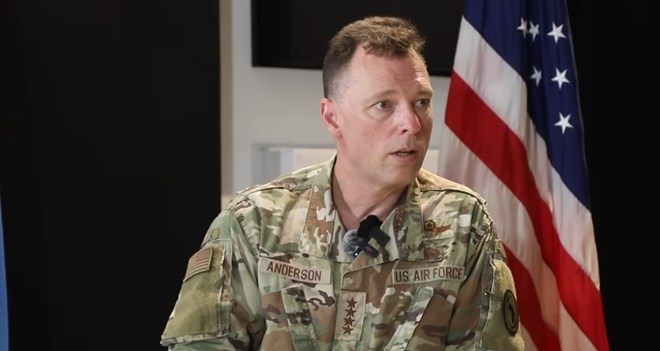


MOGADISHU (KAAB TV) – The United States Africa Command (AFRICOM) has confirmed that its personnel were subjected to an indirect fire attack near the city of Kismayo, the administrative capital of the Lower Jubba region in southern Somalia.
In an official statement released Thursday via its X (formerly Twitter) account, AFRICOM clarified that the attack caused no casualties or damage.
“There are no U.S. casualties reported, and no damage to the base or coalition assets has been reported so far,” the statement read.
The incident marks another security challenge in the region where U.S. forces, alongside Somali and international partners, continue to support counterterrorism operations against the Al-Shabaab militant group.
In response, Al-Shabaab claimed responsibility for the attack, releasing a statement through its affiliated media outlets. According to the group, the assault specifically targeted the section of Kismayo airport believed to house American forces. The militant group alleged that the attack resulted in casualties among U.S. troops and other personnel present at the base. However, these claims have not been independently verified and directly contradict AFRICOM’s account.
Al-Shabaab further stated that the attack was a “planned and coordinated operation” and framed it as part of a broader campaign to retaliate against what it described as American and Israeli actions in Gaza. The group linked its assault in Kismayo to what it called a “massacre” of Palestinians, suggesting an ideological motive rooted in transnational grievances.
The Kismayo base, which reportedly came under attack, is considered a strategic hub for joint operations in southern Somalia. It plays a significant role in coordinating airstrikes and ground missions targeting Al-Shabaab positions in Jubbaland — a region where the group still controls significant territory despite ongoing military offensives.
While AFRICOM has downplayed the impact of the attack, it underscores the persistent threat posed by Al-Shabaab, a group that continues to adapt its tactics and messaging, particularly in connecting local operations to global narratives.
The situation remains fluid, and further developments are expected as both AFRICOM and Somali authorities assess the security implications of the incident.