


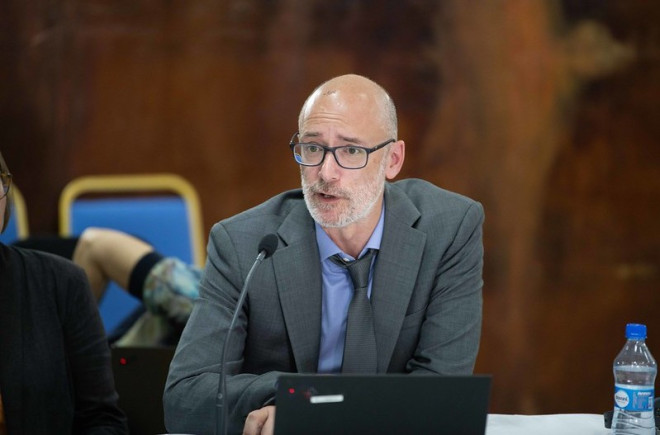


The United Nations Humanitarian Coordinator for Somalia, George Conway, has called for an immediate de-escalation of tensions and hostilities in the city of Baidoa, the administrative capital of the Bay region.
He warned that recurrent conflict is exacerbating the country’s dire humanitarian situation, particularly for internally displaced persons (IDPs) and vulnerable communities.
The UN Humanitarian Coordinator stated that ongoing clashes in Baidoa are compounding the hardships faced by civilians, who are already grappling with severe food insecurity, displacement, and limited access to essential basic services.
He urged all parties involved in the conflict to exercise maximum restraint, cease fighting immediately, and implement proactive measures to protect civilian lives.
He specifically emphasized that women, children, the elderly, persons with disabilities, and displaced families remain among the hardest hit by the violence.
These vulnerable populations face heightened risks, including conflict-inflicted injuries, homelessness, acute food shortages, and lack of access to emergency healthcare services.
Furthermore, the UN Coordinator underscored the vital imperative of safeguarding civilian infrastructure and guaranteeing humanitarian agencies safe, unhindered access to reach populations in desperate need of aid.
He noted that active hostilities and security impediments threaten to paralyze the delivery of food, medical supplies, and other life-saving emergency assistance.
The medical international humanitarian organization Médecins Sans Frontières reported that clashes occurring on September 28 resulted in at least three fatalities, while 69 injured individuals were admitted to the Bay Regional Hospital in Baidoa for emergency trauma care.
Among the wounded were five children, highlighting the severe toll of the conflict on non-combatant civilians.
Children remain exceptionally vulnerable to trauma injuries, forced displacement, and disruptions in access to emergency healthcare, education, and other fundamental basic services.
MSF further reported that a healthcare facility sustained damage and an ambulance was looted during the hostilities.
Damage to medical infrastructure and emergency response vehicles severely hinders life-saving interventions for casualties by restricting timely transport to hospitals and health centers.
Protecting healthcare infrastructure, relief personnel, and emergency medical transports is critical to safeguarding civilian lives.
International Humanitarian Law (IHL) mandates the absolute protection of civilians and medical personnel, explicitly prohibiting intentional targeting of healthcare facilities that satisfy legal protection criteria.
The United Nations has also warned that acute food insecurity in Baidoa could reach catastrophic thresholds, with approximately 26,000 internally displaced persons facing catastrophic hunger levels (IPC Phase 5) between October and December.
Internally displaced persons represent the most vulnerable demographic within the humanitarian emergency, as many have lost their homes, primary livelihoods, and access to adequate food supplies.
Numerous families rely entirely on humanitarian assistance, but ongoing hostilities and security impediments severely hamper aid delivery.
The United Nations warning further indicates that impending seasonal floods and escalating conflict could compound the crisis.
Flooding threatens to devastate farmlands, wash out transport corridors, and destroy local economic lifelines, while active fighting triggers fresh displacement, disrupts commercial supply chains, and restricts food access across affected communities.
If these compound drivers converge, families already facing acute food insecurity could confront even more severe crises.
Consequently, scaling up emergency humanitarian assistance and ensuring that the most vulnerable populations receive food, potable water, shelter, and medical care remains critical.
The hostilities in Baidoa stem from a prolonged political and military power struggle involving the Federal Government of Somalia, the South West State administration, and supporters of the former president of that regional state, Abdiaziz Hassan Mohamed ‘Laftagareen’.
This conflict centers on political rivalries and ongoing disputes regarding executive governance and the broader political trajectory of South West State.
Recurrent tensions have directly compromised security in Baidoa and surrounding districts, leaving local populations facing profound uncertainty over their security and the region’s political future.
While competing political factions hold divergent perspectives regarding governance architectures and power-sharing frameworks, active fighting inflicts direct humanitarian harm on non-combatant civilians.
Casualties resulting from the clashes, displacement, and disruptions to vital public services further worsen conditions for vulnerable households.
Achieving a durable resolution requires key stakeholders to prioritize political dialogue and refrain from measures that exacerbate conflict dynamics.
Ceasing hostilities and protecting civilians are equally essential for enabling relief agencies to reach communities in dire need of emergency assistance.
George Conway’s call comes at a time of mounting concern over Somalia’s overall humanitarian posture, particularly across regions heavily impacted by armed conflict, displacement, and food insecurity.
The United Nations and partner relief organizations continue to stress the urgent necessity of protecting civilians and facilitating unhindered humanitarian delivery.
These steps remain paramount to mitigating loss of life and preventing conditions among vulnerable populations from deteriorating to catastrophic levels.
The warring factions are called upon to cease actions that jeopardize civilian safety, protect healthcare facilities and civilian infrastructure, and ensure that humanitarian personnel can safely execute their duties.
The situation in Baidoa illustrates how political and military conflicts inflict widespread devastation on civilian lives, particularly when coinciding with severe food insecurity and forced displacement.
Consequently, an immediate cessation of hostilities, civilian protection, and unhindered emergency relief access remain the most critical imperatives facing affected populations.