

Mogadishu (Kaab TV) – Nearly 6.5 million people in Somalia are facing severe hunger as worsening drought, ongoing conflict, and cuts to international aid intensify the country’s humanitarian crisis, the federal government and U.N. agencies reported on Tuesday.
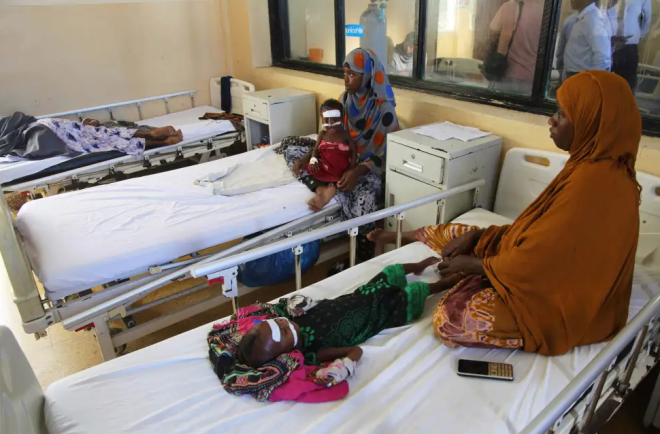
New data from the Integrated Food Security Phase Classification (IPC) indicates that 6.5 million people are projected to experience crisis or worse levels of food insecurity by the end of March. The report also estimates that 1.84 million children under the age of five are expected to suffer from acute malnutrition in 2026, including nearly 500,000 who will be severely malnourished.
Officials said the food security situation is deteriorating due to water shortages, insecurity, conflict, and historically low levels of humanitarian assistance linked to global funding cuts.
The intensifying drought, caused by below-average rainfall, has led to widespread food insecurity, crop failures, livestock losses, rising food prices, and displacement.
“The drought emergency in Somalia has deepened alarmingly, with soaring water prices, limited food supplies, dying livestock, and very little humanitarian funding,” said George Conway, the U.N. Humanitarian Coordinator for Somalia.
He stressed that urgent lifesaving assistance is critical in the coming months, with no rainfall expected until the main rainy season, which runs from April to June.
Even if rainfall during the upcoming season is at average levels, 5.5 million people are expected to remain in crisis or worse later in 2026. Officials said recovery from the extreme drought will take time.
Water shortages are worsening in southern and central Somalia and are unlikely to improve significantly, even if rainfall is average.
Between July and December, drought and conflict displaced about 278,000 people, disrupting agricultural production, market access, and aid delivery, according to U.N. estimates.
“The severity of this drought is undeniable and deeply alarming,” said Mohamud Moallim Abdulle, Commissioner of the Somalia Disaster Management Agency. He called on international partners, the Somali diaspora, businesses, and civil society to scale up immediate support.
The United Nations and the Somali government also warned that significant funding cuts have forced humanitarian partners to reduce or suspend critical lifesaving programs, including those related to food security, health, nutrition, and water and sanitation.