


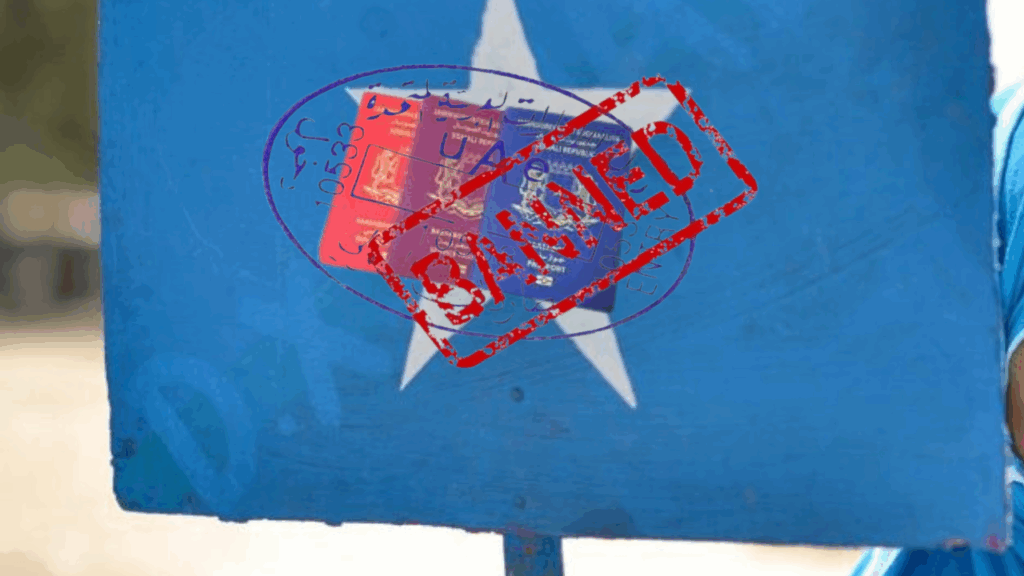


DUBAI/HARGEISA (Kaab TV) — The United Arab Emirates (UAE) announced on Saturday a decision to suspend the issuance of tourist and work visas for citizens of nine countries beginning in 2026.
According to the UAE’s official visa portal, the restrictions apply to nationals of Sudan, Libya, Yemen, Lebanon, Afghanistan, Uganda, Somalia, Cameroon, and Bangladesh.
New applications for entry visas from these countries will not be accepted until further notice.
Authorities have not given an official explanation for the move.
The announcement comes at a time when the UAE continues to expand its strategic footprint in the Horn of Africa, particularly through its investments in Somaliland, a self-declared republic that restored its sovereignty in 1991 following Somalia’s civil war.
Somaliland was briefly recognised by more than 35 countries in 1960, including the US, UK, and all five permanent members of the UN Security Council, before voluntarily joining Somalia in pursuit of Somali unity — a project that collapsed under dictatorship and decades of conflict.
Since then, Somaliland has built a reputation for relative stability, democracy, and peace, though it remains internationally unrecognised.
For years, the global community deferred to Mogadishu, isolating Somaliland despite its geostrategic location on the Gulf of Aden.
A turning point came in 2015, when the UAE signed a landmark deal with Somaliland to modernise Berbera Port, rehabilitate Berbera Airport, and construct the Berbera Corridor.
It was the first major investment agreement between an Arab state and Somaliland, bypassing Mogadishu’s authority.
The Somali federal government reacted angrily, with parliament passing a resolution to block the deal and even escalating the matter to the UN Security Council, claiming it violated Somalia’s sovereignty.
Those efforts failed, and the UAE–Somaliland partnership moved ahead, with DP World’s investment in Berbera becoming a reality.
Analysts say the UAE’s visa freeze and its continued engagement in Somaliland reflect wider regional power dynamics, where security, migration, and trade interests increasingly shape foreign policy decisions.