


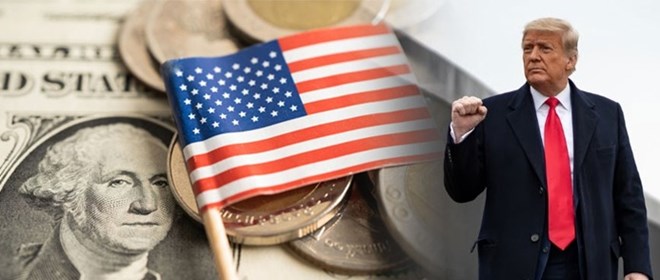


MOGADISHU (KAAB TV) – In a move that is sending shockwaves through immigrant communities and developing nations alike, the United States government has enacted a new law that imposes a 3.5% tax on all money transfers sent abroad by individuals who are not U.S. citizens. The legislation, recently signed into law by former President Donald Trump under the name “One, Big, Beautiful Bill,” is being presented as part of a broader effort to boost domestic revenue. However, critics argue that it disproportionately impacts immigrant families and developing nations that heavily rely on remittance inflows.
The tax has already sparked concern among economists, humanitarian organizations, and international development agencies. According to the Center for Global Development (CGD), the new policy could lead to a 5.6% decline in total remittances to low- and middle-income countries. For nations such as Somalia, Mexico, India, and Tonga, this could translate into a loss of billions of dollars annually — a devastating blow for economies where remittances often exceed foreign aid and government budgets.
Impact on Somalia and the Horn of Africa
Somalia stands to be particularly hard-hit. In 2023, members of the Somali diaspora sent home approximately $1.73 billion in remittances — an amount that far exceeds the total combined development and humanitarian assistance the country receives. These remittances play a critical role in helping families afford food, clean water, education, and healthcare.
Humanitarian agencies such as Oxfam have long reported that money sent by Somali expatriates has been essential in preventing famine and alleviating poverty, especially during crises. “This tax threatens the lifeline of hundreds of thousands of Somali families,” a spokesperson from Oxfam said.
The situation is further worsened by steep cuts to foreign aid. In the past year, the U.S. Agency for International Development (USAID) saw its global funding slashed by over $60 billion, resulting in a 40% decrease in assistance to countries like Somalia.
Global Ripple Effects
India, which received a staggering $119 billion in remittances in 2024, is also bracing for losses in the millions if the tax remains in place. Other countries with large diasporas in the United States are sounding alarm bells, as their economic stability is tightly linked to remittance flows.
With the tax set to reduce the income available to families abroad, many fear a rise in poverty, food insecurity, and reduced access to essential services across the Global South. The burden will be especially heavy for those who rely on small, frequent transfers from relatives working low-wage jobs in the United States.
A Step Back from Global Goals?
The timing of this policy has drawn criticism from international development organizations and the United Nations. In 2015, the UN established a goal to reduce the cost of remittances to below 3% by 2030, aiming to maximize the impact of these funds on poverty reduction. The U.S. tax, however, appears to move in the opposite direction, placing an additional financial burden on vulnerable families and threatening progress on Sustainable Development Goals (SDGs).
What Comes Next?
Some analysts and policy advocates are now asking whether countries like Australia, Canada, and members of the European Union can step in to mitigate the economic fallout. While other nations may increase aid or offer more favorable conditions for remittances, experts warn that the gap left by the U.S. will be hard to fill.
As the global community watches how this policy unfolds, immigrant advocacy groups in the United States are calling for urgent reconsideration. “This tax not only punishes immigrants but also undermines the very foundations of global solidarity and economic equity,” said a representative from the Migration Policy Institute.
For now, millions of families around the world wait in uncertainty — their livelihoods hanging in the balance.