


Türkiye’s expanding military presence in Somalia is opening a new chapter in relations between the two countries, with growing cooperation in naval security, air defence, military training and the development of Somalia’s national armed forces.
However, as Ankara deepens its involvement, questions are emerging over whether the partnership will strengthen Somalia’s long-term independence or create new forms of security and political dependence.
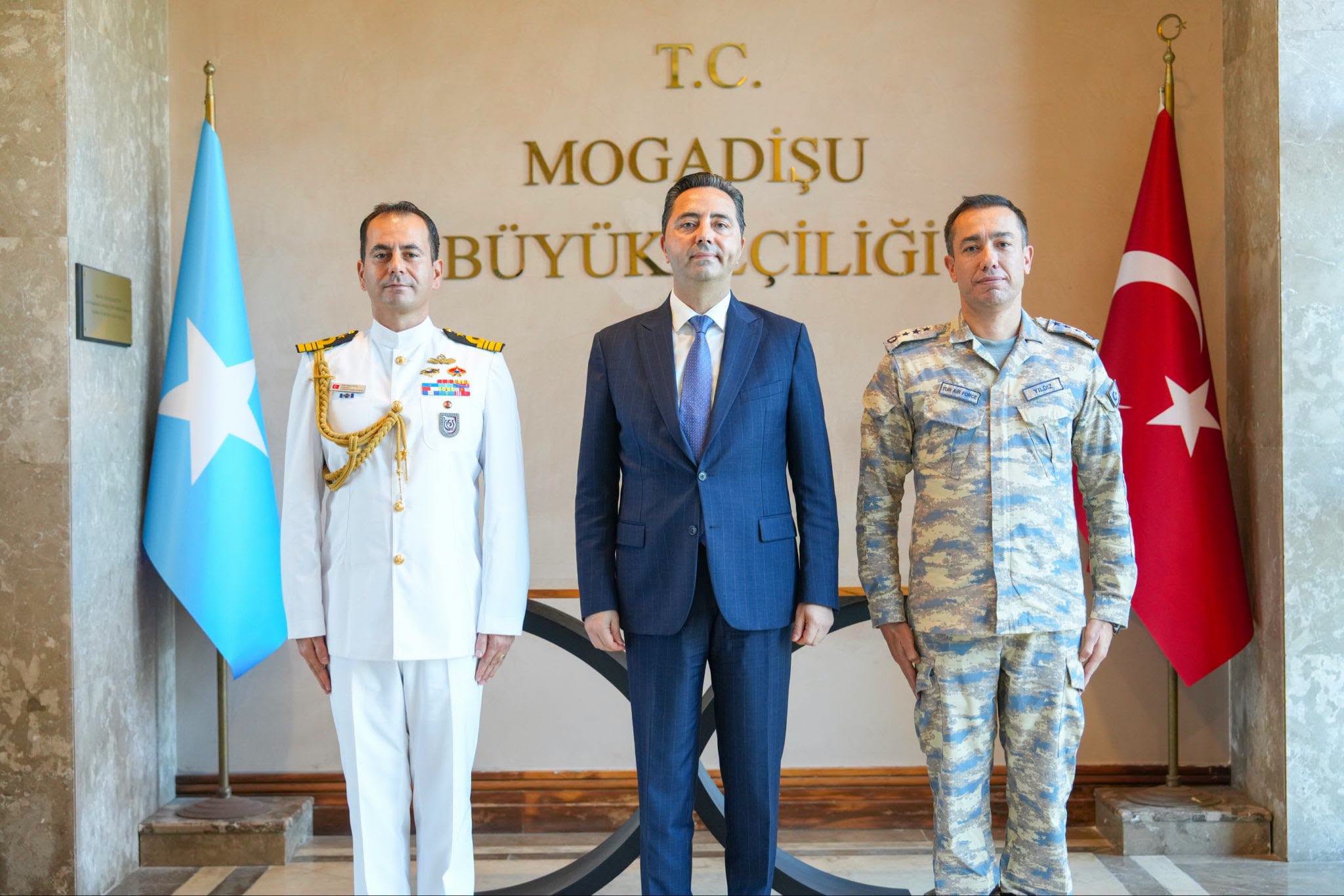
The latest indication of this expanding relationship is the arrival in Mogadishu of senior Turkish military officers assigned to the country. Türkiye has appointed Lieutenant Colonel Fatih Mehmet Ünal of its Navy as its naval attaché at the Turkish Embassy in Somalia.
The embassy confirmed his arrival in the Somali capital. His appointment follows the deployment of Colonel Dr Mehmet Serhan Yıldız as Türkiye’s air force attaché.
The appointments suggest that military cooperation is becoming more specialised, extending beyond general training and security assistance to include closer engagement in naval and air force affairs.
The officers are expected to help coordinate military relations, facilitate professional exchanges and strengthen communication between the defence institutions of the two countries.
Their arrival comes as Türkiye increases its support for Somalia’s efforts to rebuild its armed forces, protect its territorial waters and develop the capabilities needed to defend its airspace.
The growing partnership raises a fundamental question: can Somalia turn Turkish assistance into lasting national military capacity, or could prolonged reliance on a foreign partner create strategic vulnerabilities?
Somalia and Türkiye entered a new phase of defence cooperation in February 2024, when the two governments signed a comprehensive defence and economic cooperation agreement covering a ten-year period.
The agreement provides for Turkish assistance in developing, training and equipping Somalia’s naval forces, with the broader objective of strengthening the country’s ability to protect its maritime territory and resources.
In 2026, Türkiye’s parliament also approved a further two-year extension of the deployment of Turkish forces in Somalia, beginning on July 27.
The decision signalled Ankara’s intention to maintain its military role as the two countries deepen their security relationship.
For Somalia, the development of a capable navy could address longstanding weaknesses in the protection of one of Africa’s longest coastlines.
The country’s waters contain valuable fishing resources and lie close to major international shipping routes, yet maritime security remains a significant challenge.
Illegal fishing, piracy, smuggling and limited surveillance capacity have all contributed to concerns over the government’s ability to exercise effective control over its territorial waters.
A professionally trained Somali navy, supported by patrol vessels, surveillance equipment and reliable command structures, could help address these problems while protecting commercial shipping and legitimate fishing activities.
Improved maritime security could also create opportunities beyond the military sector.
A safer maritime environment would support investment in fisheries, port services, shipping, marine transport and other parts of the blue economy, potentially creating employment and generating revenue for the country.
The partnership is also extending into the wider maritime economy. In February 2026, Somalia’s Council of Ministers approved agreements relating to maritime transport cooperation and the modernisation of port services, including cooperation with Türkiye.
This reflects the growing importance of the economic dimension of the relationship, although the benefits of such arrangements will depend on their implementation and the terms governing the use of Somali resources.
The appointment of naval and air force attachés also highlights the importance of developing capabilities that Somalia has historically struggled to maintain.
A functioning navy requires trained personnel, vessels, maintenance facilities, surveillance systems and the ability to coordinate operations over a vast maritime area.
An effective air force similarly depends on qualified pilots, technical specialists, aircraft maintenance, airspace monitoring and sustainable logistical support.
Türkiye could help Somalia develop these capabilities through training, technical assistance and the transfer of professional knowledge.
If properly structured, such cooperation could contribute to rebuilding national institutions rather than simply providing temporary military support.
Türkiye has already played a major role in training Somali forces for more than a decade. Its TURKSOM military training facility in Mogadishu has become an important centre for preparing Somali troops, including members of the Gorgor special forces units.
This support has contributed to Somalia’s efforts to strengthen its military response to Al-Shabaab and improve the professionalism of its armed forces.
However, military training alone cannot resolve Somalia’s security challenges.
The effectiveness of the national army also depends on unified command structures, consistent salary payments, adequate equipment, accountability and effective coordination between federal and regional security institutions.
These are areas where the Somali government must take primary responsibility. Foreign assistance can provide expertise and resources, but it cannot substitute for strong national institutions or a coherent security strategy.
There are also potential risks associated with Türkiye’s expanding role.
If Somalia becomes heavily dependent on one foreign partner for military training, equipment, maintenance and operational support, it could struggle to develop the independent capacity required to manage its own defence needs.
Such dependence could become particularly problematic if political relations change, military assistance is reduced or disagreements emerge over strategic priorities.
Somalia therefore needs to ensure that Turkish support contributes to self-reliance, including the development of local technical expertise, maintenance capacity and institutions capable of managing military assets independently.
The wider regional environment adds another layer of complexity. The Horn of Africa has become an area of growing strategic competition involving Türkiye, Ethiopia, the United Arab Emirates, Egypt and other international actors.
Their political, economic and military interests intersect around maritime access, ports, trade routes and regional security.
Somalia’s location between the Indian Ocean, the Gulf of Aden and the Red Sea makes it strategically important for international trade and maritime security.
Türkiye’s interest in strengthening its presence in the region is therefore linked not only to its bilateral relationship with Mogadishu but also to broader economic, diplomatic and security objectives.
That does not necessarily mean Turkish involvement conflicts with Somalia’s interests. However, Mogadishu must ensure that its partnerships do not turn the country into an arena for competing foreign interests.
Its foreign and defence policies should be guided by clearly defined national priorities, with the government retaining ultimate authority over security decisions, military agreements and natural resources.
Transparency and parliamentary oversight will be particularly important. Defence agreements should clearly define the responsibilities and powers of foreign forces, the duration of their presence, the scope of their operations and the arrangements governing their cooperation with Somali institutions.
The same principle should apply to economic agreements involving fishing, ports, oil and gas. Somalia needs clear information about what it stands to gain, what obligations it assumes and how the benefits from its natural resources will reach the Somali people.
Military cooperation should not be treated as a substitute for transparent economic arrangements or proper management of national assets.
For the partnership to produce lasting benefits, Somalia should also prioritise the training of its own military officers, the development of domestic defence industries and the transfer of technical knowledge.
Building local capacity to repair and maintain equipment would reduce long-term dependence on foreign suppliers and make the national armed forces more sustainable.
The appointments of Lieutenant Colonel Fatih Mehmet Ünal and Colonel Dr Mehmet Serhan Yıldız may mark a further expansion of Türkiye’s defence engagement with Somalia, particularly in the naval and air force sectors.
Their presence could help deepen institutional cooperation, but the success of the partnership will ultimately be measured by the capabilities Somalia develops.
Türkiye’s support offers Somalia an opportunity to strengthen its armed forces, protect its coastline and improve its national defence capacity.
Yet the long-term outcome will depend on how the Somali government negotiates, supervises and implements the agreements involved.
If the country uses Turkish expertise and assistance to build capable institutions and a self-sufficient military, the partnership could make a significant contribution to national development and security.
If transparency, accountability and a clear national defence strategy are lacking, however, the growing relationship could expose Somalia to greater dependence and disputes over foreign interests.
The central question, therefore, is not simply how much military support Türkiye provides, but whether Somalia can transform that assistance into lasting national strength while safeguarding its sovereignty and resources.