

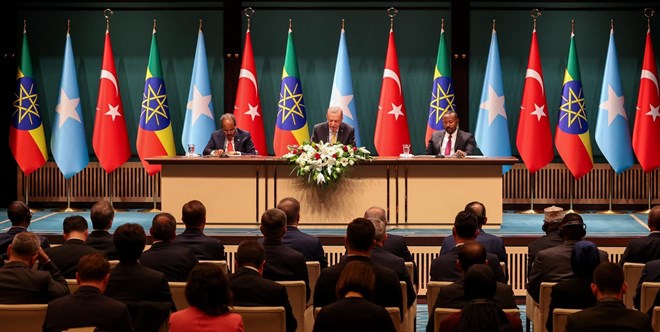
Mogadishu (KAAB TV) — Turkey’s initiative to mediate between Somalia and Ethiopia has effectively failed, casting a shadow over hopes for a peaceful resolution to the escalating tensions in the Horn of Africa. The talks, which began in Ankara in early 2024 with cautious optimism, have gradually unraveled due to entrenched mistrust, regional rivalries, and clashing national interests.
At the heart of the impasse lies the controversial agreement signed between Ethiopia and Somaliland in January 2024, in which Somaliland granted Ethiopia access to a section of its Red Sea coastline. Somalia views this deal as a blatant violation of its sovereignty and territorial integrity, as it does not recognize Somaliland’s claim to independence. The agreement ignited widespread condemnation from Mogadishu and triggered a sustained diplomatic campaign to reverse the deal on the international stage.
Turkey, a country with longstanding ties to both Somalia and Ethiopia, sought to act as a neutral broker. Ankara invested significant diplomatic capital in facilitating dialogue between the two nations. However, the mediation effort has now stalled indefinitely. Despite Turkey’s balanced posture and regional influence, it was unable to bridge the fundamental divide between Addis Ababa’s strategic aspirations and Mogadishu’s insistence on preserving national unity.
By mid-2025, signals from both Somali and Ethiopian officials confirmed what many had already suspected: the Ankara talks have quietly collapsed without resolution. Ethiopia remains steadfast in its commitment to implement the Somaliland deal, arguing it is essential for its long-term economic and geopolitical interests, particularly its access to maritime trade routes. Prime Minister Abiy Ahmed, addressing Ethiopia’s parliament on July 3, reiterated that Ethiopia’s quest for sea access is peaceful and within its sovereign rights.
Somalia, meanwhile, continues to rally international support against what it terms a “dangerous precedent” of foreign deals with a self-declared, unrecognized breakaway region. President Hassan Sheikh Mohamud has been at the forefront of this campaign, seeking backing from key allies, particularly in the Arab world.
In a notable development, Egyptian President Abdel Fattah el-Sisi reaffirmed Cairo’s support for Somalia’s territorial integrity during a meeting with President Mohamud on July 6 in El Alamein. President el-Sisi emphasized Egypt’s commitment to Red Sea security and pledged to enhance military cooperation with Somalia. The two leaders discussed the wider implications of instability in the Horn of Africa and reached a strategic consensus on preserving regional peace.
The failure of the Turkish-led mediation effort underscores the broader geopolitical challenges facing the Horn of Africa. The unresolved status of Somaliland, Ethiopia’s strategic ambitions, and competing regional influences—from Turkey and Egypt to Gulf states and global powers—continue to shape a complex and volatile landscape.
Without a renewed push for dialogue or a credible alternative to Ankara’s initiative, tensions between Somalia and Ethiopia are likely to persist, with potential repercussions for regional security, trade, and diplomacy.