

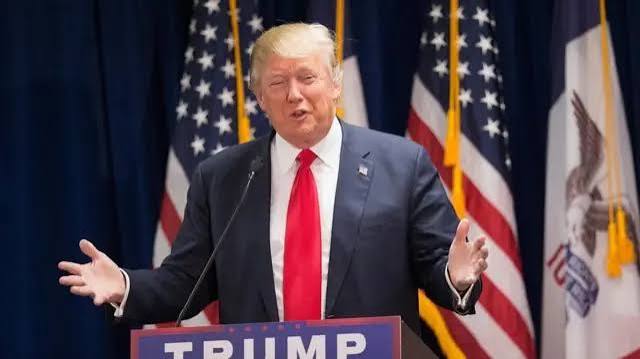

U.S. President Donald Trump stated that his administration has suspended the admission of refugees originating from Somalia.
Speaking at a political rally in Mobile, Alabama, he asserted that Somali people do not need to come to the United States and should remain in their home country.
Trump delivered these remarks on October 2, 2026, while participating in a political rally to show support for Republican Party candidates ahead of the U.S. midterm elections.
In his speech, he noted that the U.S. has halted refugee admissions from Somalia and other countries he characterized as dangerous.
Trump added that Somalia suffers from an unemployment rate of 98 percent, while also launching critical remarks regarding Somali individuals and what he claimed was their exploitation of the United States.
These comments quickly drew intense focus from the Somali community and observers tracking U.S.-Somalia relations.
However, the 98 percent figure cited by Trump does not align with the latest World Bank data based on International Labour Organization (ILO) estimates.
World Bank records indicate that Somalia’s overall unemployment rate for 2025 was estimated at 18.9 percent.
It is essential to distinguish between unemployment and individuals who do not participate in the labor market.
Somalia exhibits lower labor force participation, alongside a high prevalence of informal and non-salaried work.
According to the World Bank, the labor force participation rate for individuals aged 15 to 64 in Somalia stood at 34.8 percent in 2025.
This does not mean 65.2 percent are unemployed; rather, it highlights that a significant portion of the working-age demographic falls outside standard statistical labor force measurements.
Trump’s statements arrived amid broader shifts in U.S. immigration and refugee policy.
On January 20, 2025, his first day back in office, Trump signed an executive order pausing the United States Refugee Admissions Program (USRAP).
That directive mandated the temporary halt of refugee entries into the U.S. starting January 27, 2025, pending comprehensive administrative reviews.
Nevertheless, the order permitted conditional exemptions if the Secretary of State and the Secretary of Homeland Security jointly determined that admitting a specific individual or case served the national interest of the United States
Somalia was also specifically included among the countries targeted by U.S. entry restrictions.
In June 2025, the Trump administration issued an order restricting the entry of nationals from multiple countries, placing Somalia among 12 nations subjected to a total ban.
The U.S. government justified the restrictions on Somalia by citing concerns including the Somali government’s capacity to issue and verify reliable documentation, traveler screening and vetting procedures, security conditions, and the presence of terrorist organizations operating within Somalia.
The U.S. directive also noted that the Somali government faces challenges regarding the repatriation of its citizens deported from the United States.
This indicates that Trump’s October 2 remarks were not an entirely isolated measure, but rather part of an ongoing immigration and refugee policy pursued by the U.S. administration since 2025.
It is also important to distinguish between refugees and the broader population of Somali individuals residing in the United States.
Refugees are defined as individuals granted international protection due to conflict, persecution, or other risks, and their admission is governed by a distinct U.S. processing framework.
Not all Somalis currently living in the United States are refugees. Some are U.S. citizens, others hold permanent residency status, and some reside in the country under alternative legal statuses.
Consequently, announcements concerning the suspension of Somali refugee admissions do not directly apply uniformly to all Somalis living within the U.S.
Trump’s remarks also coincided with heightened political debate in the United States surrounding immigration and undocumented populations.
With the congressional midterm elections approaching, Trump delivered his speech in Mobile on October 2 to rally support for Republican candidates.
U.S. media reported that the rally was part of Trump’s campaigning efforts to bolster party candidates ahead of the November elections.
Therefore, the statements regarding Somalis occurred within a domestic American political arena, making it essential to differentiate between political rhetoric from the presidency and formal governmental regulations.
Immigration policy is executed through executive orders, statutory laws, judicial rulings, and agency operational procedures.
Somalis living in the United States, particularly in the state of Minnesota, have previously reacted to harsh rhetoric directed at the Somali community by Trump.
Minnesota hosts one of the largest Somali-American communities in the U.S., comprising many long-term residents and U.S. citizens.
The current climate may also impact Somali individuals navigating the asylum system.
A recent report from Minnesota indicated that over one thousand Somalis have been issued deportation orders since February 2026, as the Trump administration accelerates asylum adjudication and immigration enforcement proceedings.
The report noted that more than half of the analyzed deportation orders involved Somalis living in Minnesota.
However, a deportation order and the suspension of refugee admissions are two legally distinct matters.
An individual applying for refugee status from abroad falls under a completely different framework than someone who has requested asylum from within the United States or an individual who previously held alternative residency status.
On another front, Trump’s remarks could influence perceptions of the bilateral relationship between Somalia and the United States.
Both nations maintain a vital security partnership, particularly concerning the ongoing campaign against Al-Shabaab.
The United States provides Somalia with critical backing in security, intelligence, and counter-terrorism operations.
For its part, Somalia views the U.S. as a key ally in security support and the broader fight against armed insurgent groups.
Consequently, political statements targeting Somalis and immigration restrictions intersect with an already sensitive intergovernmental relationship marked by complex security, aid, and diplomatic dynamics.
Economic considerations are also at play. Somalia’s economy relies heavily on remittances sent home by diaspora communities abroad.
Somalis residing in the United States form a core segment of this diaspora, channeling financial support that sustains numerous families and domestic businesses across the country.
If immigration policies tighten and the number of Somali nationals permitted entry into the U.S. declines, future family mobility, reunification opportunities, and migration pathways for those wishing to join relatives in the U.S. could be impacted.
The ultimate economic footprint will depend on the scale and duration of these enforcement measures.
Regarding unemployment data, it is vital to recognize that Somalia genuinely faces severe job creation challenges, particularly for its youth.
However, the 98 percent figure cited by Trump is not supported by World Bank and ILO data.
The latest available records place Somalia’s overall unemployment rate at 18.9 percent for 2025.
There is another reason why employment figures in Somalia can be easily misinterpreted.
A vast portion of the population operates within the informal economy, engaging in small-scale trade, daily wage labor, pastoralism, agriculture, and informal services.
An individual lacking formal salaried employment is not always statistically classified as unemployed.
However, a deportation order and the suspension of refugee admissions are two legally distinct matters.
An individual applying for refugee status from abroad falls under a completely different framework than someone who has requested asylum from within the United States or an individual who previously held alternative residency status.
On another front, Trump’s remarks could influence perceptions of the bilateral relationship between Somalia and the United States.
Both nations maintain a vital security partnership, particularly concerning the ongoing campaign against Al-Shabaab.
The United States provides Somalia with critical backing in security, intelligence, and counter-terrorism operations.
For its part, Somalia views the U.S. as a key ally in security support and the broader fight against armed insurgent groups.
Consequently, political statements targeting Somalis and immigration restrictions intersect with an already sensitive intergovernmental relationship marked by complex security, aid, and diplomatic dynamics.
Economic considerations are also at play. Somalia’s economy relies heavily on remittances sent home by diaspora communities abroad.
Somalis residing in the United States form a core segment of this diaspora, channeling financial support that sustains numerous families and domestic businesses across the country.
If immigration policies tighten and the number of Somali nationals permitted entry into the U.S. declines, future family mobility, reunification opportunities, and migration pathways for those wishing to join relatives in the U.S. could be impacted.
The ultimate economic footprint will depend on the scale and duration of these enforcement measures.
Regarding unemployment data, it is vital to recognize that Somalia genuinely faces severe job creation challenges, particularly for its youth.
However, the 98 percent figure cited by Trump is not supported by World Bank and ILO data.
The latest available records place Somalia’s overall unemployment rate at 18.9 percent for 2025.
There is another reason why employment figures in Somalia can be easily misinterpreted.
A vast portion of the population operates within the informal economy, engaging in small-scale trade, daily wage labor, pastoralism, agriculture, and informal services.
An individual lacking formal salaried employment is not always statistically classified as unemployed.
.