


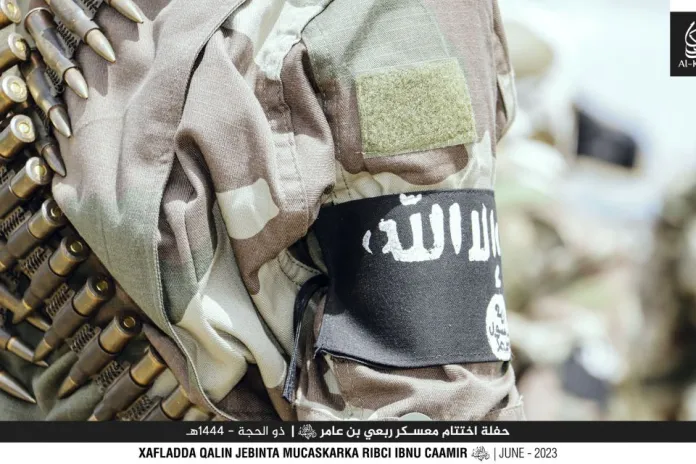


JOWHAR (Kaab TV) – Al-Shabaab has intensified its tax collection activities in villages and rural areas surrounding Jowhar, the capital of HirShabelle State, taking advantage of seasonal rains that have disrupted normal transportation routes and limited government access to some areas.
Heavy rainfall in recent weeks has caused flooding along sections of the main highway connecting Balcad and Jowhar, leaving parts of the road impassable. As a result, commercial vehicles and passenger transport traveling between Mogadishu, Jowhar, and central Somalia have increasingly been forced to use alternative dirt roads and unofficial routes.
According to local residents and drivers, Al-Shabaab fighters have established checkpoints along some of these alternative routes, where they stop vehicles and collect payments that the group describes as taxes. Drivers say the amount charged varies depending on the type of vehicle and the nature of the cargo being transported.
Several transport operators reported that the collections are taking place near junctions and crossing points around the Qalimow area, located between Balcad and Jowhar. Truck drivers and traders have expressed concerns that the additional costs are increasing transportation expenses and affecting the movement of goods and services.
Security sources and local residents also report that Al-Shabaab has recently strengthened its influence in several areas under Jowhar district, including Xawaadleey, Shanloow, Yaaqle, Lama-Koore, Far-Barako, Mukay Dheere, and Mareereey. The group’s growing presence in these locations has raised concerns among residents about security and freedom of movement.
The situation comes at a time when there is no visible large-scale effort to fully rehabilitate or reopen some of the flood-damaged roads. The road disruptions have created operational challenges for both civilian traffic and security forces, allowing Al-Shabaab to exploit gaps in mobility and state presence.
Although the Somali Federal Government, HirShabelle security forces, and local community defense fighters continue to conduct operations against Al-Shabaab, often with support from international partners through airstrikes and intelligence assistance, the group has managed to re-establish activity in some areas from which it had previously been pushed out.
The increase in Al-Shabaab activity around Jowhar highlights the persistent security challenges facing the Middle Shabelle region. Analysts note that seasonal rains frequently create conditions that militants can exploit by restricting movement, disrupting supply routes, and weakening government access to rural communities, making it more difficult to maintain security gains achieved through military operations.