

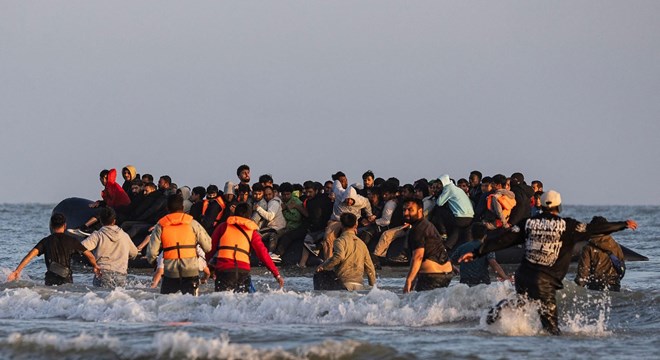

Libya (KAAB TV) – At least 42 migrants are feared dead after a rubber boat sank off the coast of Libya, according to the International Organization for Migration (IOM).
The vessel reportedly departed the coastal town of Zuwara in northwestern Libya in the early hours of November 3, but its engine failed amid strong waves shortly after setting out.
According to the IOM, seven survivors were discovered following a six-day ordeal at sea. They were rescued on Saturday, when Libyan authorities launched an operation near the al-Buri offshore gas platform.
All survivors were immediately transported to Tripoli, where they received medical care, water, and food. Although weakened and suffering from exposure-related illnesses, they were reported to be in stable condition.
The ill-fated boat was carrying 49 people—47 men and 2 women—when it departed Zuwara.
Those still missing include 29 Sudanese, 8 Somalis, 3 Cameroonians, and 2 Nigerians, highlighting once again the desperate conditions that drive people from conflict-stricken or impoverished regions toward Europe through the central Mediterranean.
Libya continues to serve as a major transit hub for migrants from across Africa and the Middle East, many of whom rely on dangerous smuggling routes due to a lack of safe and legal migration pathways. Shipwrecks remain tragically common as overloaded and unseaworthy boats attempt the perilous crossing to Europe.
This latest incident follows another fatal shipwreck just one month earlier. In that case, a wooden boat that departed from al-Zawiya, also in northwestern Libya, capsized due to rough seas.
Eighteen people lost their lives, while 64 migrants—reportedly from Sudan, Bangladesh, and Pakistan—were rescued.
According to IOM’s Missing Migrants Project, the death toll in the central Mediterranean Sea continues to climb. Since the beginning of 2025, more than 1,000 people have died attempting the crossing.
Of these, over 500 disappeared specifically off the Libyan coast, underscoring the ongoing humanitarian crisis and the deadly risks faced by migrants seeking safety or opportunity in Europe.
This most recent tragedy adds to a growing list of catastrophic maritime disasters in the region and highlights the urgent need for safer migration routes, stronger search-and-rescue efforts, and improved protection for vulnerable people on the move.