

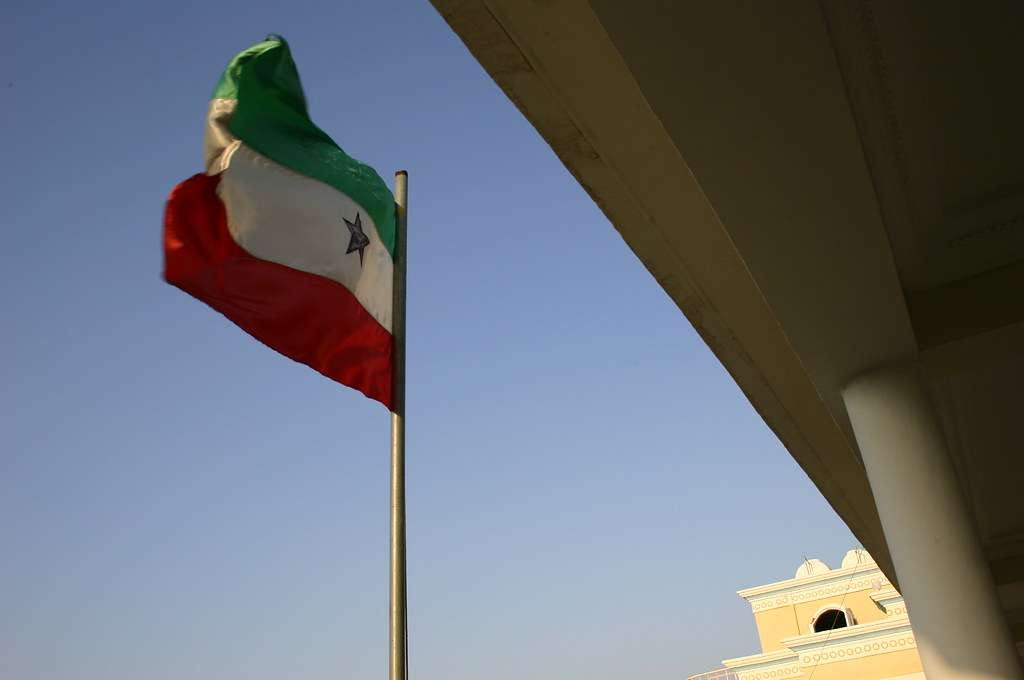

In an era when statehood is often contested amid conflict and fragility, the Republic of Somaliland stands as a rare exemplar of resilience, democratic maturity, and effective governance. For over three decades, since reclaiming its sovereignty in 1991, at the “Grand Conference of the Northern Peoples” Somaliland has maintained peace, built robust institutions, and pursued pragmatic diplomacy—all without widespread international recognition.
As the sun set on 2025 Israel’s recognition —the first by a United Nations member state—and the successful democratic transition following the November 2024 elections, have brought renewed urgency to the question of its statehood. The December 26th recognition by Israel validates Somaliland’s de facto independence and invites the international community to align diplomatic practices with the empirical realities and established doctrines of international law.
Somaliland’s claim to sovereignty is not a novel assertion born of separatism but a restoration of borders, rooted in historical legitimacy that leads back to the time of the British Empire. As the former British Somaliland Protectorate, it achieved independence on June 26, 1960, and received recognition from at least 35 states, including permanent members of the UN Security Council. This brief period of sovereignty was voluntarily relinquished five days later through union with the former Italian Somaliland to form the Somali Republic, driven by aspirations for a unified Somali nation. That union, however, proved untenable. Under Siad Barre’s dictatorship, the people of the north endured systematic discrimination and, in the 1980s, a campaign of repression that many scholars and human rights organizations have characterised as genocidal against the Isaaq clan.
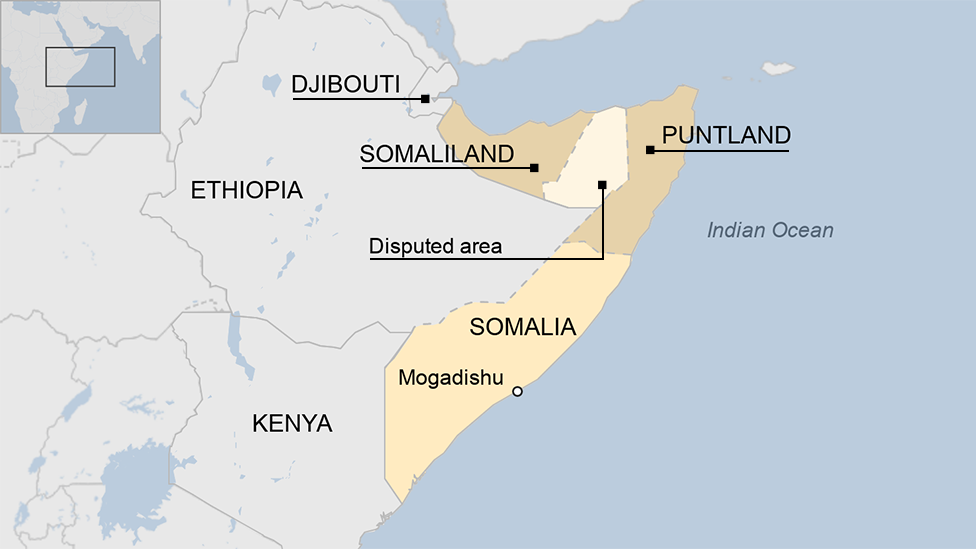
The collapse of the central government in Mogadishu in 1991 dissolved the union irrevocably. Somaliland’s leaders and clans, through inclusive reconciliation conferences, declared the restoration of independence, reclaiming the precise boundaries of the 1960 state. This act aligns with the principle of uti possidetis juris, a cornerstone of post-colonial international law endorsed by the African Union (AU) who itself determined regarding Somaliland that:
“The fact that the union between Somaliland and Somalia was never ratified and also malfunctioned when it went into action from 1960 to 1990, makes Somaliland’s search for recognition historically unique and self-justified in African political history.”
and the International Court of Justice (ICJ), which holds that newly independent states should retain colonial-era borders to prevent territorial chaos. Somaliland does not seek to alter borders or secede from a functioning state; it only seeks to reassert a pre-existing sovereignty following the effective dissolution of a voluntary union—a scenario analogous to the peaceful separations of Singapore from Malaysia in 1965 or the dissolution of Czechoslovakia in 1993.
At the heart of Somaliland’s case lies the doctrine of statehood as articulated through the 1933 Montevideo Convention on the Rights and Duties of States, widely regarded as customary international law. Article 1 outlines four objective criteria: (1) a permanent population; (2) a defined territory; (3) an effective government; and (4) the capacity to enter into relations with other states. Somaliland unequivocally satisfies these. Somaliland’s case is a compelling one…
Its population of approximately 6 million is stable and cohesive, bound by shared Somali heritage yet distinguished by a unique political identity forged in adversity. The territory is clearly defined, with borders respected internally and by neighbours in practice. Government effectiveness is demonstrated through a hybrid system blending modern democracy with traditional clan-based governance—a model that has proven remarkably resilient and inclusive.
Somaliland’s democratic achievements deserve particular emphasis, as they set it apart as a beacon of pluralism and stability in the Horn of Africa. Since 2001, Somaliland has conducted eight multi-party national elections, all judged credible by international observers (with its Constitution being adopted by the parliament on 30 April 2000). The November 13, 2024, presidential and parliamentary elections marked a high point: opposition candidate Abdirahman Mohamed Abdullahi (Irro) of the Waddani party decisively defeated incumbent President Muse Bihi Abdi, securing a peaceful transfer of power—the third such democratic handover in Somaliland’s history. Outgoing President Bihi conceded promptly, and the transition proceeded smoothly, earning praise from observers for its orderliness, transparency, and festive atmosphere. This was no small feat in a region plagued by electoral violence and authoritarian backsliding.
Somaliland’s democracy is distinctive in its hybrid character: a bicameral parliament combines an elected House of Representatives with a Guurti (House of Elders) that mediates clan interests using traditional mechanisms. This system, honed through grassroots reconciliation in the 1990s, has fostered genuine political competition while preventing the clan fractures that destabilise neighbours. Voter turnout routinely exceeds 80%, and civil society thrives, with vibrant media and active women’s groups advocating for greater inclusion. In a continent where many elections are marred by fraud or suppression, Somaliland’s record exemplifies democratic consolidation—rewarding merit, accountability, and the rule of law over patronage or coercion.
Finally, Somaliland’s capacity for international relations is evident in its growing web of partnerships. It maintains representative offices in numerous countries, issues its own currency and passports, and has entered binding agreements, such as the 2024 Memorandum of Understanding with Ethiopia granting port access in Berbera in exchange for cooperation—a deal that continues to advance amid regional tensions. Mutual recognition with Taiwan since 2020 has fostered practical ties in education, health, and technology. Benjamin R. Farley’s 2010 article, “Calling a State a State: Somaliland and International Recognition,” published in the Emory International Law Review, argues that Somaliland meets the international legal criteria for statehood under the Montevideo Convention, despite lacking formal recognition. The work examines the legal challenges and implications of recognising the breakaway region.
In international law, the debate over statehood often turns on two rival theories that reveal as much about power as they do about doctrine.
The declaratory theory treats statehood as an objective fact: if an entity has a permanent population, defined territory, government and capacity for foreign relations, it is a state, whether others like it or not. Recognition, on this view, merely “declares” what already exists. The constitutive theory, by contrast, insists that statehood is ultimately a political club: you become a state because other states, especially powerful ones, say you are—and they do so through recognition, UN membership, and diplomatic practice. In practice, the international system blends these theories; lawyers recite the neutral Montevideo criteria while governments quietly ask who their allies are and what vetoes might be cast in New York. The result is a deeply political law of statehood that can affirm the independence of some entities overnight while leaving others—no less “objective” in their attributes—waiting indefinitely in the antechamber of international legitimacy.
In many stands of international legal doctrine, recognition is declaratory rather than constitutive: it acknowledges an existing factual situation rather than conferring statehood ex nihilo. As affirmed by scholars like Hersch Lauterpacht and the ICJ in cases such as the 1948 Conditions of Admission advisory opinion, collective non-recognition cannot negate statehood where effective control and independence persist. Precedents reinforce this. Eritrea’s recognition in 1993 followed de facto independence; South Sudan’s in 2011 came after a referendum after the 2005 signing of the Comprehensive Peace Agreement (CPA) which officially ended the North-South conflict and set the date for a referendum on South Sudan’s self-determination in January 2011; and Kosovo’s unilateral declaration in 2008 has been upheld by the ICJ as not violating international law under the UN Resolution 63/3 on the 8 October 2008:
‘“It concluded that the object and purpose of that resolution was to establish ‘a temporary, exceptional legal régime which . . . superseded the Serbian legal order . . . on an interim basis’ It then examined the identity of the authors of the declaration of independence”.
Somaliland’s case is arguably stronger than all of these: it involves no ongoing territorial conquest, no violation of the principle of uti possidetis, (a principle of customary international law which posits that newly independent states should inherit the administrative borders they held at the time of their independence) and a proven commitment to democracy that aligns with the values espoused in the UN Charter and the African Charter on Human and Peoples’ Rights. The 2001 constitutional referendum, with 97% approval for independence, was a profound act of self-determination.
Recent developments have dramatically underscored Somaliland’s readiness. Israel’s recognition of Somaliland in December 2025, driven by shared strategic interests in Red Sea security and counter-terrorism, has yielded tangible benefits, including a reported “recognition dividend” boosting Somaliland’s 2026 budget through enhanced trade and investment (there’s a good blog here on this).
While reactions vary—Somalia and allies have expressed opposition—the decision aligns with precedents where initial recognitions paved the way for broader acceptance.
The African Union’s caution against secession ironically supports Somaliland: recognition would uphold colonial borders while rewarding a stable democracy. Withholding it risks incentivising instability elsewhere.
Diplomatically, Somaliland offers strategic value: control of the Berbera port, a bulwark against extremism, and a model for hybrid governance. Recognition would facilitate deeper cooperation on migration, climate resilience, and security, while enabling cooperative relations with Somalia.
The international community now confronts a moment of intellectual and moral clarity. Israel’s step and Somaliland’s democratic triumphs affirm the declaratory doctrine: Somaliland is already a state in fact. Extending recognition is not disruption but consistency with international law, historical justice, and pragmatic statecraft.
After 35 years of proven sovereignty and democratic excellence, the Republic of Somaliland deserves its rightful place among nations. The world should act accordingly, recognising an independent state of Somaliland.
—