

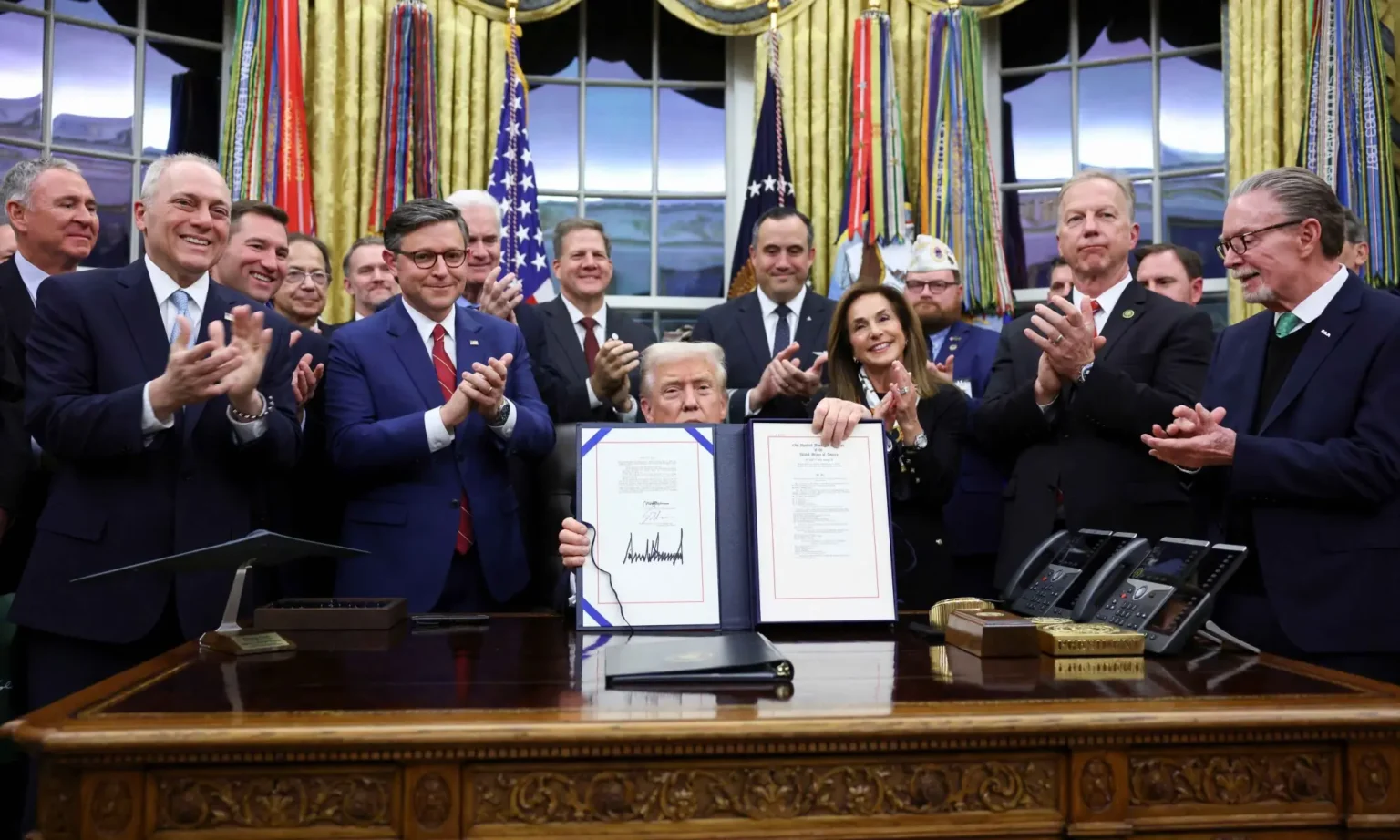
Washington DC (KAAB TV) – President Donald J. Trump has signed legislation to reopen federal government agencies after a prolonged 43-day shutdown, the longest in U.S. history.
The shutdown began when the President and members of Congress failed to reach an agreement on funding for a proposed wall along the U.S.–Mexico border—one of Trump’s key campaign promises.
The budget standoff resulted in the freezing of funding for numerous government departments and agencies, halting many public services and leaving federal operations in partial paralysis. As the impasse dragged on, its impact spread widely across the country.
The newly signed law, passed by bipartisan votes in both the House of Representatives and the Senate, authorizes temporary funding to restore full government operations while negotiations over border security continue.
By approving the measure, lawmakers aimed to relieve the mounting pressure on federal employees and the public.
Speaking from the Oval Office, President Trump announced that federal agencies were resuming normal activity. He acknowledged that the lengthy shutdown had caused hardship for millions of Americans, especially the federal workforce.
“I know this has been a difficult period,” he said, emphasizing that the government’s reopening would begin immediately.
During the shutdown, many essential and non-essential services were disrupted. Approximately 800,000 to 1.4 million federal workers were either furloughed or required to work without pay, creating financial strain for families nationwide.
Critical assistance programs, including food aid for low-income households, faced delays and uncertainty, leaving vulnerable communities at heightened risk.
The effects were also felt in sectors such as aviation, where staff shortages contributed to flight delays at major airports. National parks, public safety agencies, and administrative offices likewise struggled to operate without adequate funding.
With the government now reopened, Congress and the White House are expected to continue negotiations in search of a long-term agreement on border security and immigration funding.
The hope is that a lasting solution will prevent another shutdown and restore stability to federal operations and the millions of Americans who rely on them.