


In 2026, Somalia has become a theater where several regional and international governments are competing for political, economic, and security influence. The country’s strategic importance, extensive coastline, ports, natural resources, and positioning along global trade routes have attracted nations seeking to shape Somalia’s future.
Among the principal governments exercising influence in Somalia are Turkey, the United Arab Emirates, Saudi Arabia, Egypt, Ethiopia, Israel, Qatar, the United States, and China. These nations vary in their specific interests regarding Somalia and the methods through which they pursue influence.
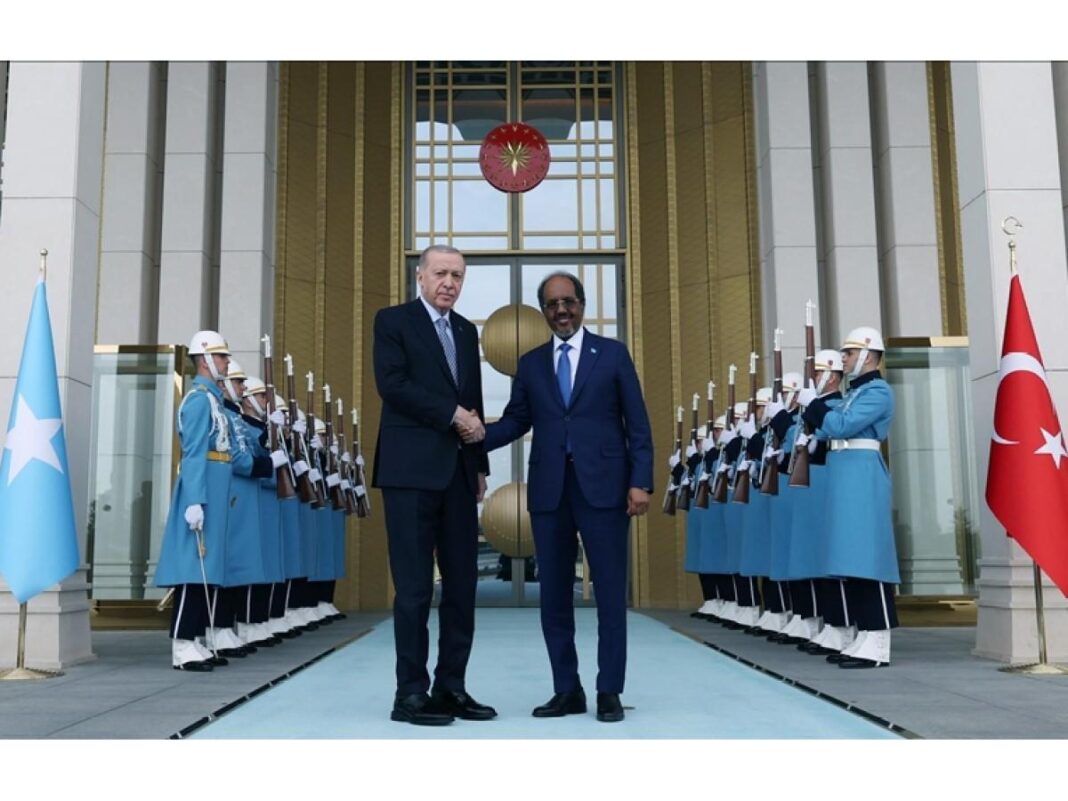
Turkey stands out as one of the nations deeply embedded in Somali affairs, working alongside the Federal Government across security, military training, economic development, and infrastructure sectors.
Turkey maintains the TURKSOM military training facility in Mogadishu and has likewise concluded various agreements with Somalia concerning defense and maritime security cooperation.
Conversely, the United Arab Emirates has long maintained economic and security interests in Somalia. DP World holds an investment in the Port of Berbera, while the UAE maintains relations with the regional administrations of Puntland and Jubaland.
Friction between Mogadishu and Abu Dhabi intensified after the Federal Government of Somalia announced the suspension of its cooperation agreements with the UAE. This step raised questions concerning the future of bilateral relations and its potential impact on Somalia’s domestic politics.
Saudi Arabia likewise maintains an active interest in Somalia, focusing particularly on Red Sea and Gulf of Aden security.
The rivalry between Saudi Arabia and the UAE stemming from Yemeni affairs has influenced the political competition across the Horn of Africa. Both nations, formerly close allies, currently diverge on several regional issues.
Somalia is vital to Saudi Arabia owing to its geographic positioning and role in safeguarding international trade maritime corridors.
Egypt maintains close relations with the Federal Government of Somalia, particularly across military and security cooperation.
The long-standing dispute between Egypt and Ethiopia regarding Nile River waters and the Grand Ethiopian Renaissance Dam constitutes part of the rationale behind Cairo’s strategic prioritization of Somalia.
Ethiopia, for its part, seeks secure access to maritime ports, given that it lacks a coastline of its own. This objective sparked acute tension when Ethiopia signed a memorandum of understanding with Somaliland in January 2024.
The Federal Government of Somalia opposed this agreement, categorizing it as a violation of the country’s sovereignty and territorial integrity.
Turkey subsequently mediated between Somalia and Ethiopia, culminating in the Ankara Declaration of December 2024, wherein both nations affirmed the necessity of resolving disputes through diplomatic negotiation.
Israel’s extension of diplomatic recognition to Somaliland in December 2025 opened a new chapter of diplomatic controversy between Somalia and other external actors.
The Federal Government of Somalia strongly opposed this move, insisting that Somaliland constitutes an integral part of Somali territory.
Conversely, Somaliland anticipates that Israeli recognition will encourage other international actors to extend formal recognition as well.
Israel maintains a strategic interest in Somaliland’s geographic positioning, particularly its coastline overlooking the Gulf of Aden and the Bab el-Mandeb strait, which is critical for Red Sea security and commercial shipping lanes.
Qatar is among the nations maintaining close ties with the Federal Government of Somalia. Its bilateral cooperation spans diplomatic, economic, and security domains.
Eritrea likewise maintains security and political relations with Somalia, monitoring regional stability and Red Sea security developments.
Djibouti plays an essential role in Horn of Africa affairs, particularly in diplomacy and regional state-building initiatives. It is similarly vital for trade transit routes and Gulf of Aden security.
The United States views Somalia as a critical partner in counter-terrorism campaigns against Al-Shabaab and the preservation of regional security in the Horn of Africa.
Washington provides support to Somali security forces and maintains an active role in security operations and intelligence collaboration.
China, meanwhile, prioritizes trade, investment, and economic partnership across the region. Beijing likewise places special emphasis on maritime security and international trade connectivity.
While both global superpowers pursue broader international objectives beyond Somalia, the country’s strategic crossroads location renders it a focal point for their geopolitical competition.
This foreign power competition coincides with a period when Somalia is grappling with profound domestic political disputes concerning the constitution, the electoral framework, and relations between the Federal Government and federal member states.
Puntland and Jubaland remain locked in friction with the central government, while the Somaliland dispute persists as one of the primary structural challenges impeding national political cohesion.
This complex landscape risks enabling foreign governments to forge disparate alignments across Somalia’s political spectrum, potentially compounding the difficulty of achieving a durable national consensus.