


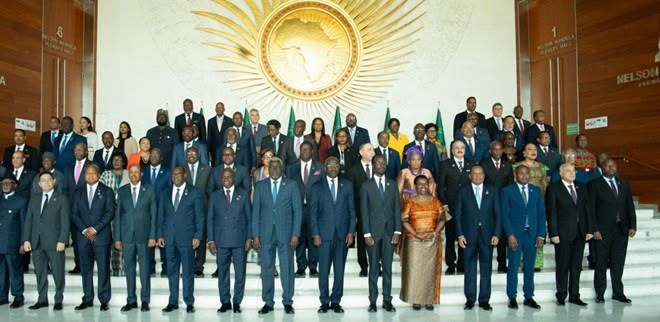


The African Union Peace and Security Council is holding a meeting today on the situation in Somalia, focusing specifically on the future of the African Union Support and Stabilization Mission in Somalia (AUSSOM), the decline in foreign troop support, and the political tension between the Federal Government and the opposition.
The meeting comes at a time when Somalia is facing both security and political challenges, amid concerns over Uganda’s troop drawdown plan, electoral disputes, and the capacity of Somali forces to assume security responsibilities once African Union troops withdraw from the country.
According to preliminary information regarding the meeting, the Peace and Security Council is particularly concerned about Uganda’s moves to reduce and withdraw its troops from Somalia, warning of the potential impact this could have on security in the areas between the Bay and Lower Shabelle regions.
One of the primary agenda items expected to be analyzed during the meeting is Uganda’s decision regarding the drawdown and planned withdrawal of its troops from Somalia.
Preliminary reports indicate that the Peace and Security Council is worried about the impact such a move could have on security in strategic areas located across the Bay and Lower Shabelle regions.
Ugandan troops have long played a prominent role in security operations, particularly in the fight against Al-Shabaab and the protection of key installations. Consequently, reducing their troop numbers without an alternative plan to fill the void they leave behind could create a security vacuum that armed groups might exploit.
Another major item carrying significant weight at the meeting is the political dispute between the Federal Presidency and the opposition, which centers specifically on the electoral framework and the country’s political direction.
According to preliminary briefings shared with the Council, Somali political stakeholders may be urged to urgently initiate dialogue aimed at reaching a settlement, with regional countries potentially playing a mediating role.
Such an initiative reflects concerns that a prolonged political rift could undermine cooperation among state institutions and disrupt the country’s security strategy.
Somali factions are expected to be encouraged to come to the negotiating table to reach a political agreement that resolves the electoral impasse and fosters an environment in which the government and security forces can jointly confront security challenges.
The preliminary information also notes that the Council will be presented with concerns regarding how Al-Shabaab could capitalize on political disputes and delays in the security transition plan.
There are fears that if government leaders and the opposition become consumed by political rivalry, and if the plan for Somali forces to assume security responsibilities falls behind schedule, Al-Shabaab could seize the opportunity to escalate its attacks or capture new territory.
This heightens the urgency of resolving the political dispute through dialogue so that political tensions do not weaken the campaign against Al-Shabaab.
The Peace and Security Council is also expected to focus on the future roadmap for the AUSSOM mission and how to manage the phase in which African Union forces withdraw from Somalia.
The overarching concern is ensuring that the withdrawal of AUSSOM troops does not occur before Somali forces are fully prepared and equipped to take over security responsibilities, particularly in areas currently secured by African Union troops.
Additionally, discussions are expected to address the scheduled conclusion of United Nations Support Office in Somalia (UNSOS) backing at the end of 2027, which is vital for logistical and operational support for both African Union and Somali forces.
Accordingly, the African Union is expected to call for an urgent plan outlining how the AUSSOM withdrawal will be managed, who will fill the gap left by departing troops, and how strategic facilities and regions will be safeguarded.
The meeting takes place as Somalia simultaneously confronts two major challenges: an unresolved political dispute and uncertainty surrounding the future of African Union military support.
Without a political agreement between the Federal Government and the opposition, coordinating the national security plan and securing unified international support could become increasingly difficult.
On the other hand, if Uganda and other troop-contributing countries to AUSSOM begin reducing their forces without a replacement security plan in place, the risk of Al-Shabaab exploiting any resulting security vacuum will rise.
The African Union Peace and Security Council meeting is therefore pivotal in determining the future trajectory of the AUSSOM mission, security assistance for Somalia, and efforts to resolve the country’s political crisis.
The key outcome anticipated from the session is for the African Union to issue a clear stance on three fronts: how to maintain security as Uganda draws down its presence, how to broker an inclusive Somali political agreement, and how to formulate a plan that prevents a security vacuum when AUSSOM eventually exits the country.