




The Supreme Court today issued a landmark ruling nullifying the results of the recent combined elections for the Galmudug House of Representatives and Local Councils, a vote that had sparked a dispute between participating political organizations and the contested Independent Electoral and Boundaries Commission.
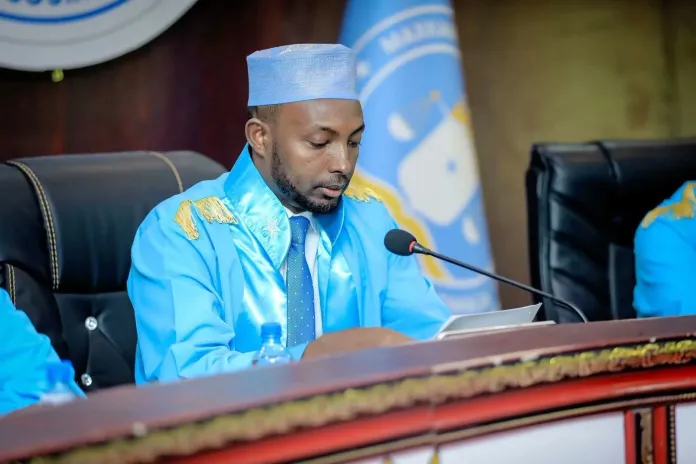
Announcing the decision, Supreme Court Chairman Baashe Yusuf Ahmed said the court found that the July 30 elections were not conducted or administered in accordance with the constitution and the country’s electoral laws.
As a result, the court declared the outcome invalid and without legal effect.
“The court has determined that the combined elections for the House of Representatives and Local Councils held on July 30 in Galmudug were not managed or conducted in compliance with the constitution and electoral laws of the country.
Therefore, their results are invalid and void,” Baashe said while delivering the verdict.
The court further ruled that the irregularities identified during the electoral process were serious enough to undermine the credibility, transparency, and legitimacy of the vote.
According to the ruling, the violations were of a nature that could not be corrected after the fact and had a direct impact on the election outcome.
In addition to cancelling the results, the Supreme Court ordered the disputed electoral commission to organize a new election within the shortest reasonable timeframe.
The court also directed that Galmudug’s current institutions remain in office during the preparation and conduct of the new vote to avoid a constitutional vacuum in the state.
The ruling comes amid growing political tensions in Somalia over electoral processes and governance.
The Galmudug elections had been heavily contested, with opposition groups and political stakeholders raising concerns over the management of the vote, the role of the electoral commission, and allegations of procedural violations.
The decision is expected to have major political implications for Galmudug and could further intensify debate over electoral legitimacy and democratic processes across Somalia at a time when the country is already facing broader political challenges linked to its ongoing transition and electoral reforms.