

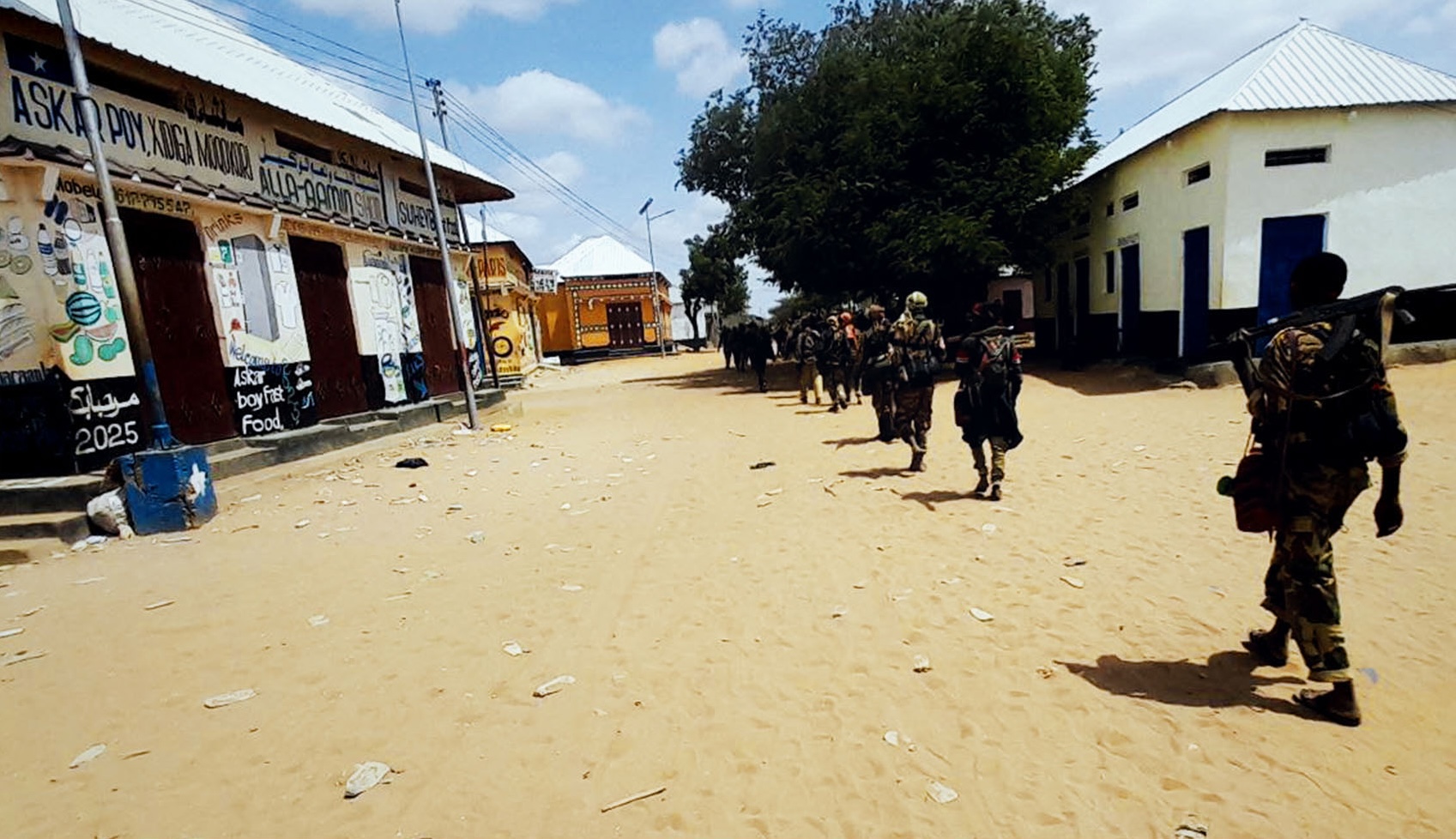

MOGADISHU, Somalia (Kaab TV) — Al-Shabab militants have retaken control of Moqokori, a town in Somalia’s Hiiraan region, in a deadly assault on Monday this week that killed at least 42 members of the local Ma’awisley clan militia on Monday, according to survivors and military sources.
The town, which had been liberated from the al-Qaida-linked group in September 2022 during a government-backed uprising led by Hawadle clan fighters, fell back into militant hands after a coordinated raid involving four suicide car bombings, followed by a ground assault.
The Somali government has not officially commented on the attack, which marks one of the deadliest in the region this year.
According to multiple sources interviewed by Kaab TV, the attack began in the early hours of Monday after Al-Shabab fighters reportedly disabled local telecommunications networks, cutting off the town from outside communication.
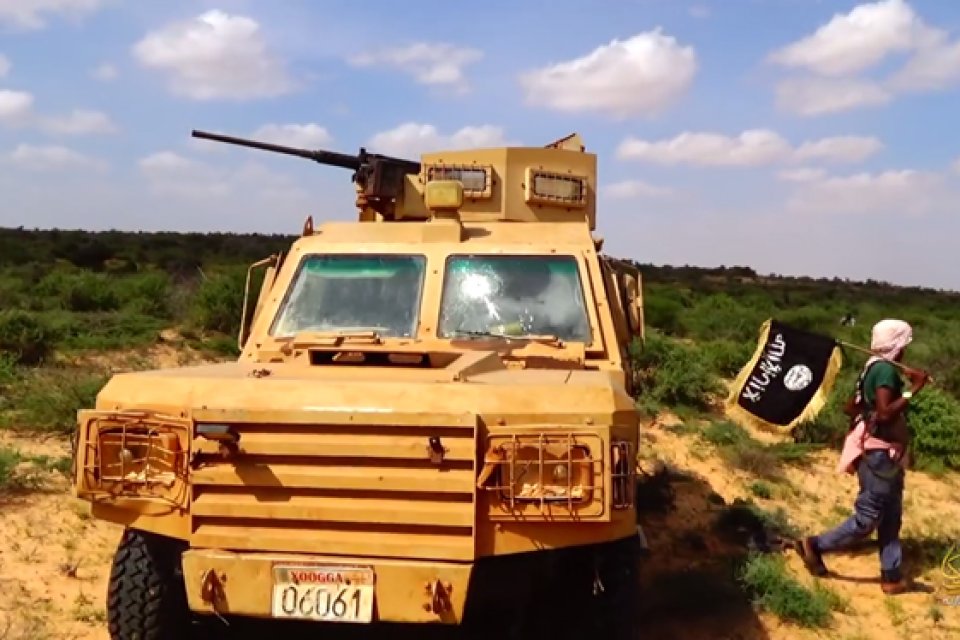
The militants then launched their assault using Turkish-made armored vehicles rigged with explosives.
“Al-Shabab terrorists attacked us early Monday morning. They used four armored trucks as suicide bombs — it was impossible to stop them,” said Adan Gedi, a Ma’awisley fighter who survived the attack.
The armored vehicles used in the bombing are believed to be among the military hardware previously seized by Al-Shabab from Somali forces during past operations, including equipment originally donated by Turkey.
Following the explosions, Ma’awisley fighters and government troops reportedly fled the area, allowing Al-Shabab militants to storm the town.
Witnesses said the insurgents were later seen patrolling the streets, while many residents fled in fear.
Among those killed was Abdi Muumin Xiish, a senior Hawadle commander and the recently appointed head of Somalia’s National Intelligence and Security Agency (NISA) in Hiiraan.
Reports of Betrayal and Lack of Support
Survivors expressed anger at what they described as a lack of government support and alleged internal sabotage.

Multiple frontline accounts shared with Kaab TV claimed that Ma’awisley fighters were instructed to stand down during critical moments in the fighting — and some even alleged that drone strikes mistakenly targeted their own ranks.
“The drones didn’t come for Al-Shabab — they hit our men,” said Abdi Mohamud, another fighter. “Al-Shabab came from Lower Shabelle, Middle Jubba, Bay, and Bakool. Nobody stopped them. No intelligence, no warning.”
Liban Abdirahman, Deputy Minister for Internal Security in Hirshabelle State, acknowledged the limitations of relying solely on local militias.
“This war can only be led by a government, not by locals. For four years, these brave men have fought alone. Many have died. Too many resources have been lost,” he said.
“The federal government and international partners must step up. Instead, they appear distracted by elections and political maneuvering.”
Security experts warn that Al-Shabab is expanding both its operational reach and propaganda efforts, particularly in Hiiraan, Lower Shabelle, and Middle Shabelle.
Local elders report that some clans are entering bey’ah — an Islamic agreement of submission — with the militants, seeking to avoid further bloodshed.
Al-Shabaab seizes Turkish-donated armored vehicle, amid a deadly battle in central Somaliahttps://t.co/NIGgnFc8MC pic.twitter.com/QxULkfONAr
— Kaab TV (@KaabTV) December 26, 2023
Meanwhile, divisions within Somalia’s security forces and deepening clan rivalries have raised further concerns.
The group’s infiltration into government ranks has bred mistrust within the military and intelligence services.
While these security challenges mount, President Hassan Sheikh Mohamud is facing criticism for focusing federal attention and resources on Sanaag region, where tensions are rising between Puntland forces and SSC-Khatumo, a new local administration.
“The Somali government is losing towns and villages to Al-Shabab at a frenetic pace,” said Rashid Abdi, a Nairobi-based regional analyst.
“Yet Villa Somalia continues to deploy troops and airlift weapons to Sanaag to back proxy factions. Fighting Al-Shabab should be the top priority — but sadly, it never has been.”
The fall of Moqokori raises urgent questions about Somalia’s ongoing counterterrorism strategy and its ability to defend liberated territories as it faces continued attacks from one of Africa’s most lethal insurgencies.