

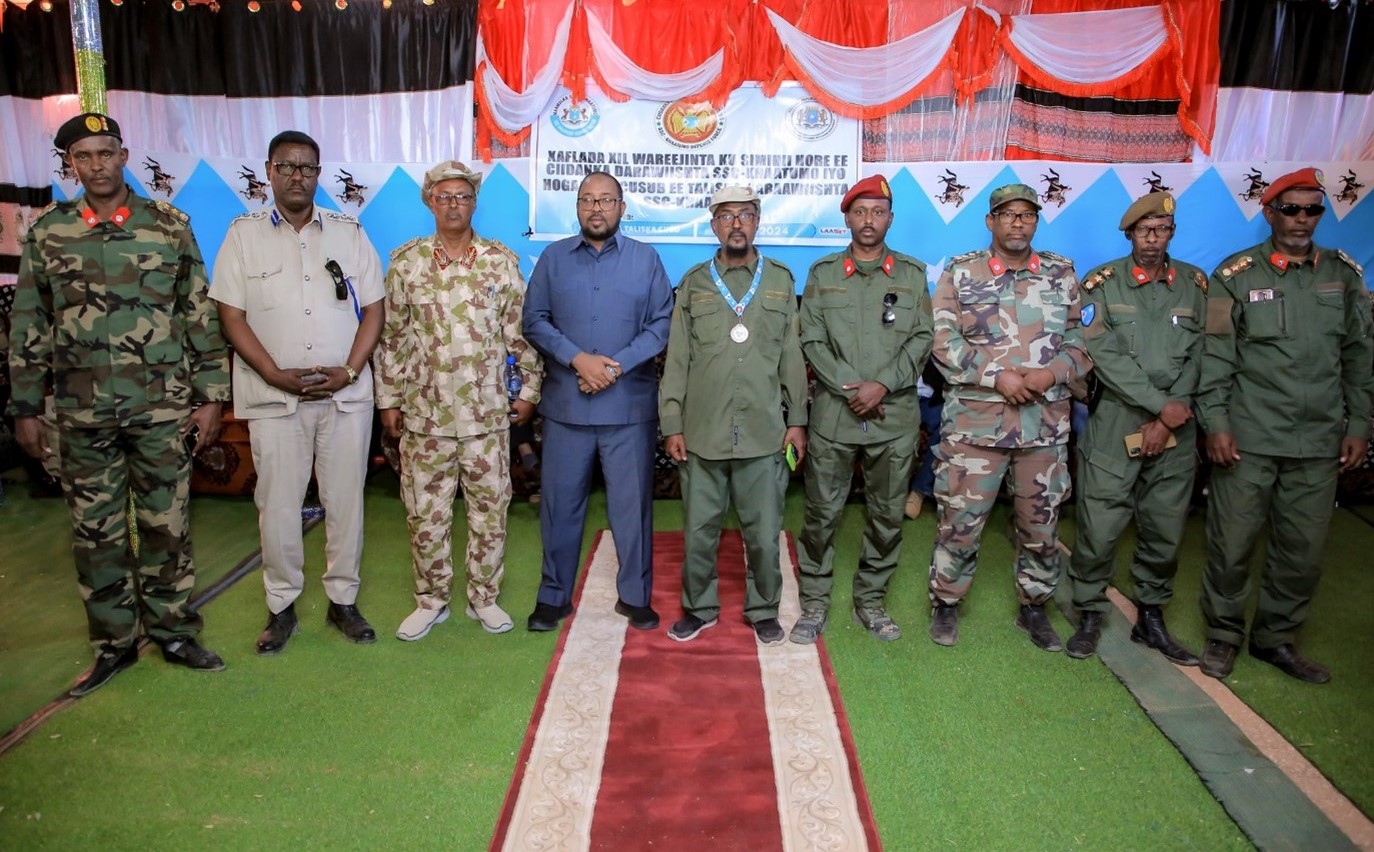

SSC-Khaatumo leader Abdiqadir Ahmed Aw Ali (Firdhiye) has established a high-level independent committee to investigate the deadly violence that claimed the lives of more than 20 civilians in Ari-Adeeye, Sool region, as authorities face mounting pressure to establish accountability and prevent further bloodshed.
The five-member committee, made up of senior cabinet ministers and members of the SSC-Khaatumo Parliament, has been mandated to conduct a comprehensive and impartial investigation into the circumstances surrounding the killings and produce an official report with its findings and recommendations.
According to the presidential decree, the committee will not only investigate how the attack unfolded but will also assess the response of SSC-Khaatumo’s security institutions before, during, and after the violence. The review is expected to determine whether security agencies acted appropriately, identify any operational failures, and recommend measures to prevent similar incidents in the future.
The investigation committee is chaired by Minister Gen. Abdi Hassan Mohamed, with members including Minister Abdikadir Mohamed Duale, Minister Jama Farah Muse, MP Abdikadir Abdi Warsame, and MP Abdi Muse Ahmed.
President Firdhiye called on the committee to carry out its mandate independently, professionally, and transparently, stressing that establishing the facts surrounding the killings is essential to delivering justice for the victims and restoring public confidence in the administration’s security institutions.
The committee’s appointment follows one of the deadliest outbreaks of violence witnessed in the Sool region in recent months. Local sources said more than 20 people were killed and dozens of others injured after clashes erupted in Ari-Adeeye, leaving families devastated and forcing residents to seek safety as fighting spread through parts of the area.
Although relative calm has since returned to the town, tensions remain high as grieving families continue to bury those killed in the violence. Among the victims were reportedly women, children, and elderly civilians, underscoring the heavy humanitarian toll of the clashes.
According to multiple local sources, the violence is believed to have been linked to a series of earlier killings reported elsewhere in the Sool region, which fueled tensions and ultimately triggered retaliatory attacks. Authorities have not yet officially confirmed the exact sequence of events or identified those responsible for the killings.
In the immediate aftermath of the violence, senior SSC-Khaatumo security officials reportedly convened emergency meetings to assess the deteriorating security situation and discuss measures aimed at preventing further clashes. However, officials have yet to publicly disclose the outcomes of those meetings or announce specific security measures beyond the formation of the investigation committee.
Meanwhile, traditional elders, religious leaders, and community representatives have intensified mediation efforts to prevent another cycle of retaliatory violence. Local mediators are working to encourage dialogue between the affected communities, urging restraint while the investigation is underway.
The latest bloodshed has once again highlighted the persistent security challenges facing parts of the Sool region, where unresolved clan disputes, competition over local influence, and cycles of revenge have repeatedly fueled deadly confrontations. Despite periods of relative stability, sporadic violence continues to threaten civilian safety and undermine broader reconciliation efforts.
Community leaders and civil society organizations have welcomed the establishment of the investigative committee but emphasized that lasting peace will require more than an inquiry. They have called for those responsible to be held accountable, stronger security measures to protect civilians, and sustained reconciliation initiatives to address the underlying causes of recurring violence.
The committee is expected to interview witnesses, collect evidence, review the actions of security agencies, and submit a comprehensive report to the SSC-Khaatumo leadership. Its findings are expected to guide future security reforms and inform decisions on accountability for one of the region’s deadliest recent incidents.