

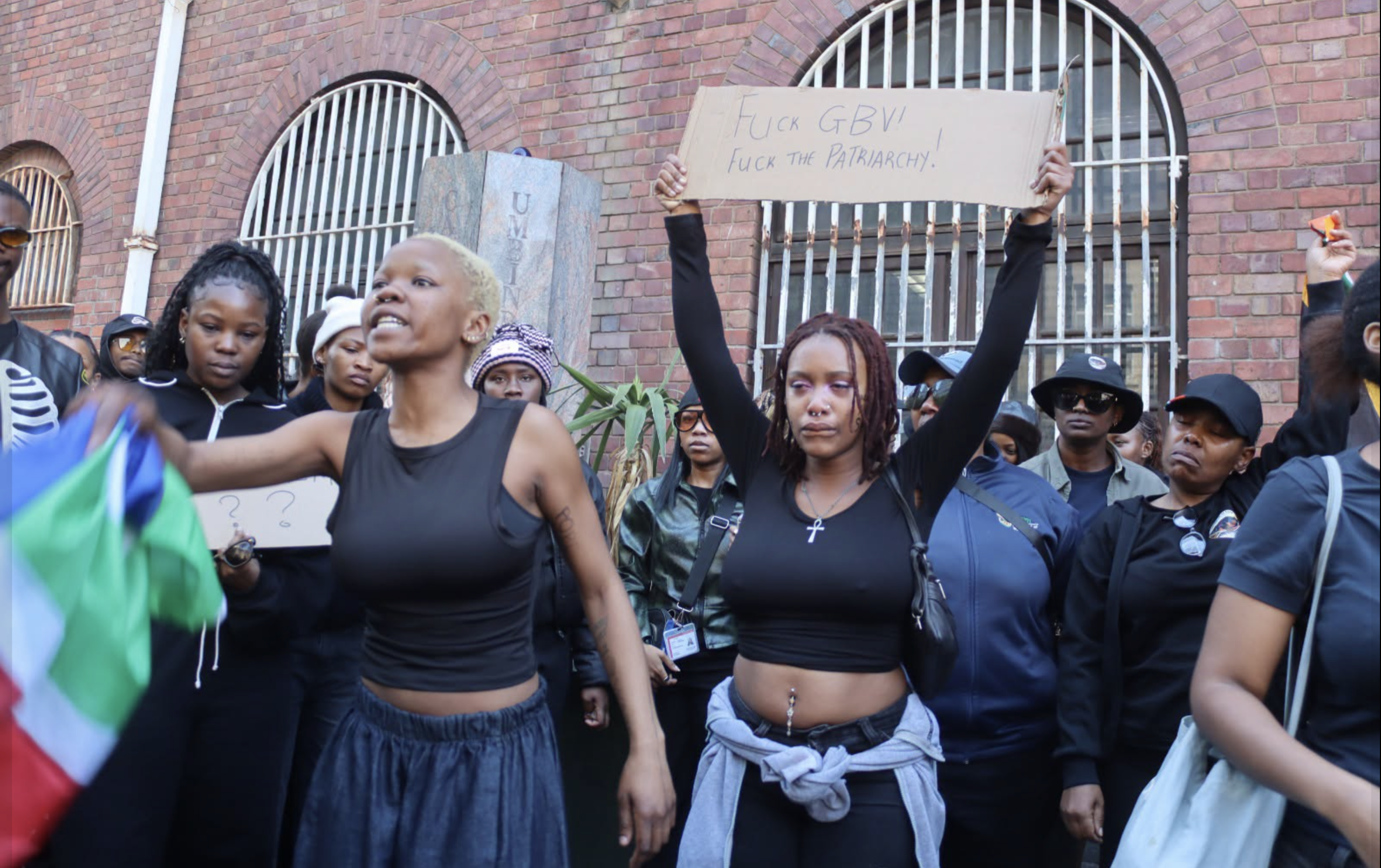

Memorial runs and protests swept South Africa this week as the killings of nine women near Johannesburg reignited long-simmering anger and fear over violence that many women say defines their daily lives.
Police have recovered the bodies of nine women in Ekurhuleni, east of Johannesburg, over the past two months and are investigating possible links between the deaths. Most victims were in their 20s and 30s; some were found stripped and showing signs of sexual assault.
On Saturday, runners gathered in Johannesburg to honor Elizabeth Moselakgomo, one of the victims, who vanished while out for a run and was found dead days later. Dressed in black, participants lit candles and carried a banner reading “Enough. Stop Femicide.”
“We are here because we’ve lost a runner. But we are not safe anywhere,” said Lerato Lentsela, one of dozens who joined the memorial run. “We are not safe running, we are not safe at a post office, we are not safe on a date, we are not safe in our own homes, we are not safe in an Uber.”
The deaths have renewed scrutiny of gender-based violence in South Africa, which the government declared a national disaster in 2025. Despite that designation and repeated official pledges, many women say little has changed to make them feel safer.
“Enough is enough. Our women deserve to live, walk, run and exist without fear,” the Uyinene Mrwetyana Foundation, an anti-gender-violence charity, said in a statement.
President Cyril Ramaphosa said Thursday that the country could not allow itself to become numb to such violence, vowing a thorough investigation.
But policing remains hampered by corruption and limited resources — only about one in ten murders in South Africa is ever solved. “We need to relook at our policing. The only reason these nine women were found was because there was more police presence in the area. This problem is countrywide,” said Merlize Jogiat of Women for Change, which held its own memorial in Cape Town on Friday.
Some women also pushed back against police advice urging extra caution while exercising or walking alone. “Stop placing the responsibility of our safety back onto us,” Women for Change wrote on social media. “Women should not have to organise their entire lives around surviving violence and not being next.”