


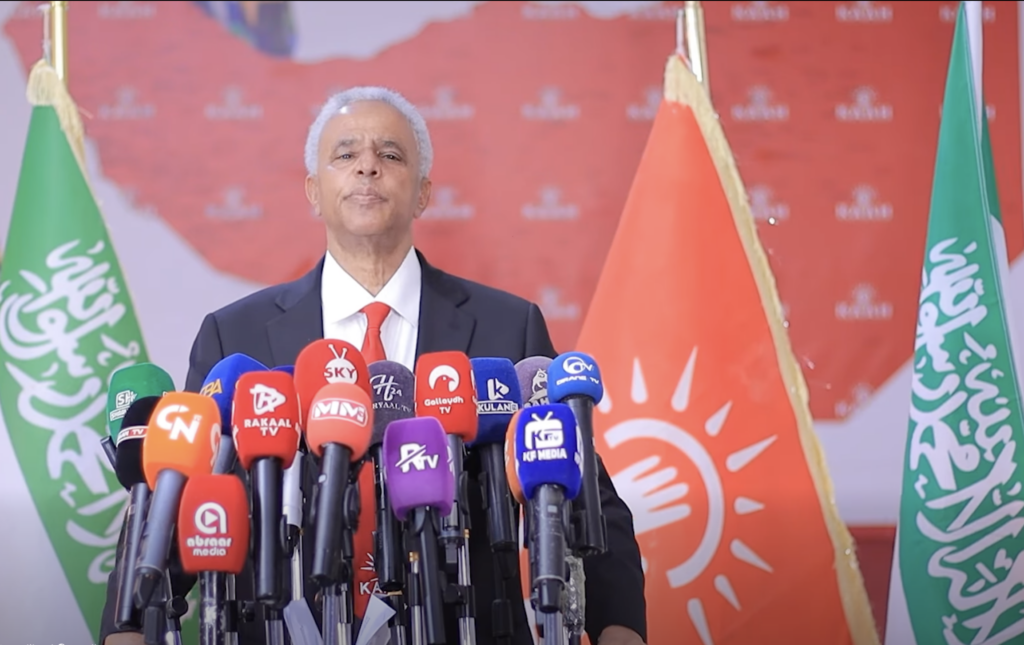


Somaliland’s political landscape entered a new phase of debate last week after the chairman of the Kaah political party, Mahmoud Hashi Abdi, publicly declared that he opposed Somaliland opening its embassy in Jerusalem following Israel’s recognition of Somaliland in late December 2025.
Instead, he argued that any Somaliland embassy should be located in Tel Aviv rather than Jerusalem.
Although the remarks sparked intense political reactions across Somaliland, few observers interpreted them as opposition to Israeli recognition itself. Rather, they highlighted the increasingly complex intersection between Somaliland’s decades-long quest for international recognition, domestic political competition, and the sensitivities surrounding the Israeli-Palestinian conflict in a predominantly Muslim society.
Mohamud Hashi, a senior politician from the Habar Jeclo branch of the Isaaq clan and a former senior official of the Kulmiye party, currently leads Kaah, Somaliland’s second-largest political party. During the November 2024 presidential election, Kaah endorsed President Abdirahman Abdullahi Irro (Habar Yoonis clan) of the Waddani party in a political alliance that extended beyond electoral cooperation.
The agreement reportedly included power-sharing arrangements and extensive political bargaining that resulted in three of Hashi’s close allies being appointed to cabinet positions after President Irro assumed office.
Despite the alliance, political insiders say tensions have gradually emerged between Kaah and Irro’s presidency. Hashi’s latest comments therefore did not come as a surprise to many within Somaliland’s political establishment.
The timing, however, has attracted particular attention.
Kaah has recently experienced internal divisions after several prominent politicians from the Arab clan left the party to join the ruling Waddani party.
According to party insiders, these defections have weakened Kaah’s internal cohesion and increased concerns that the party is being politically marginalized despite maintaining strong support among sections of the Sacad Muse community.
Against that backdrop, Hashi’s intervention on the Jerusalem issue appears to many observers to be as much about domestic political positioning as foreign policy.
Somaliland’s Long Search for Recognition
The ruling party responded swiftly.
Waddani chairman Hirsi Haji Ali rejected any attempt to “separate Israeli recognition from Somaliland’s diplomatic arrangements.”
“Recognition of Somaliland remains one issue. There are not two separate issues. Either you accept it or you oppose it,” Hirsi told reporters during a press conference in Hargeisa on Thursday.

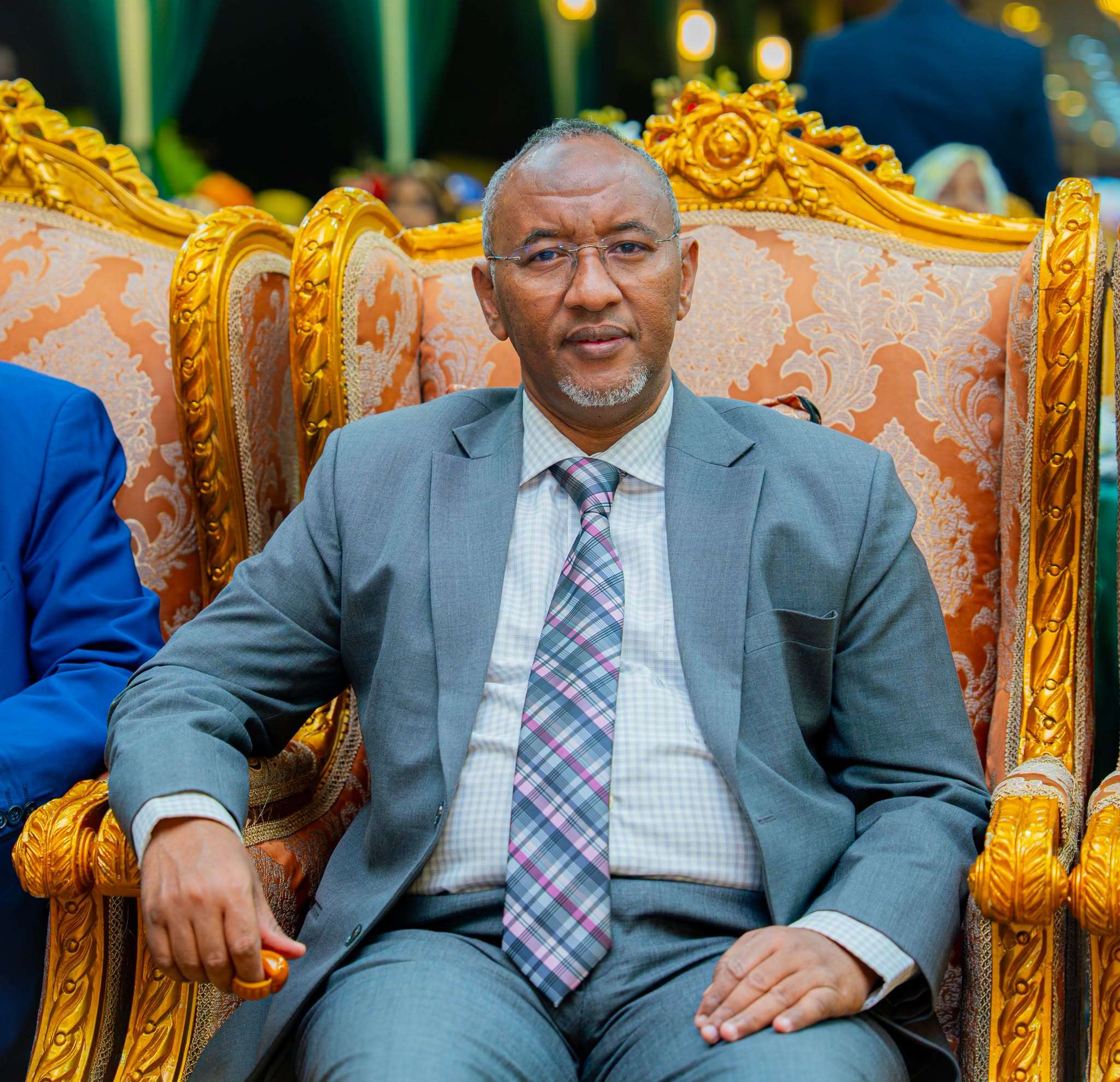
His remarks reflected the government’s broader argument that recognition by any sovereign state necessarily includes the right to establish diplomatic relations according to mutually agreed terms, including the location of embassies.
For the Irro administration, the recognition achieved by Israel represents one of the most significant diplomatic breakthroughs in Somaliland’s modern history, making any public debate that could be interpreted as undermining it politically sensitive.
Since declaring the restoration of its independence from Somalia in May 1991, Somaliland has functioned as a de facto state with its own government, constitution, currency, security forces and democratic institutions.
The declaration followed the collapse of Somalia’s central government and years of conflict between the military regime of Mohamed Siad Barre and the former British Somaliland territory.
While southern Somalia descended into prolonged civil war, Somaliland gradually built functioning institutions and has held multiple competitive elections since 2001, earning a reputation for relative political stability in the Horn of Africa.
Despite these achievements, no United Nations member state formally recognized Somaliland for more than three decades.
Dialogue between Hargeisa and Mogadishu, facilitated by Türkiye beginning in 2011 and later supported by other international partners, failed to produce a political settlement. Somalia consistently insisted on preserving its territorial integrity, while Somaliland maintained that the union formed in 1960 had collapsed irreversibly.
Recognition Changes the Strategic Landscape
The geopolitical environment shifted significantly after former Somaliland President Muse Bihi Abdi signed a memorandum of understanding with Ethiopia in January 2024.
The agreement proposed granting landlocked Ethiopia access to the Red Sea and a military facility along Somaliland’s coast in exchange for Ethiopia moving toward recognition.
The deal triggered strong opposition from Somalia, which declared it a violation of its sovereignty. Although implementation stalled amid regional diplomatic pressure, Somaliland officials continued to insist the agreement remained available should Ethiopia decide to proceed.
An even more dramatic shift occurred on 26 December 2025 when Israeli Prime Minister Benjamin Netanyahu announced Israel’s formal recognition of Somaliland as an independent state.
The decision marked the first recognition of Somaliland by a UN member state and fundamentally altered regional diplomacy.
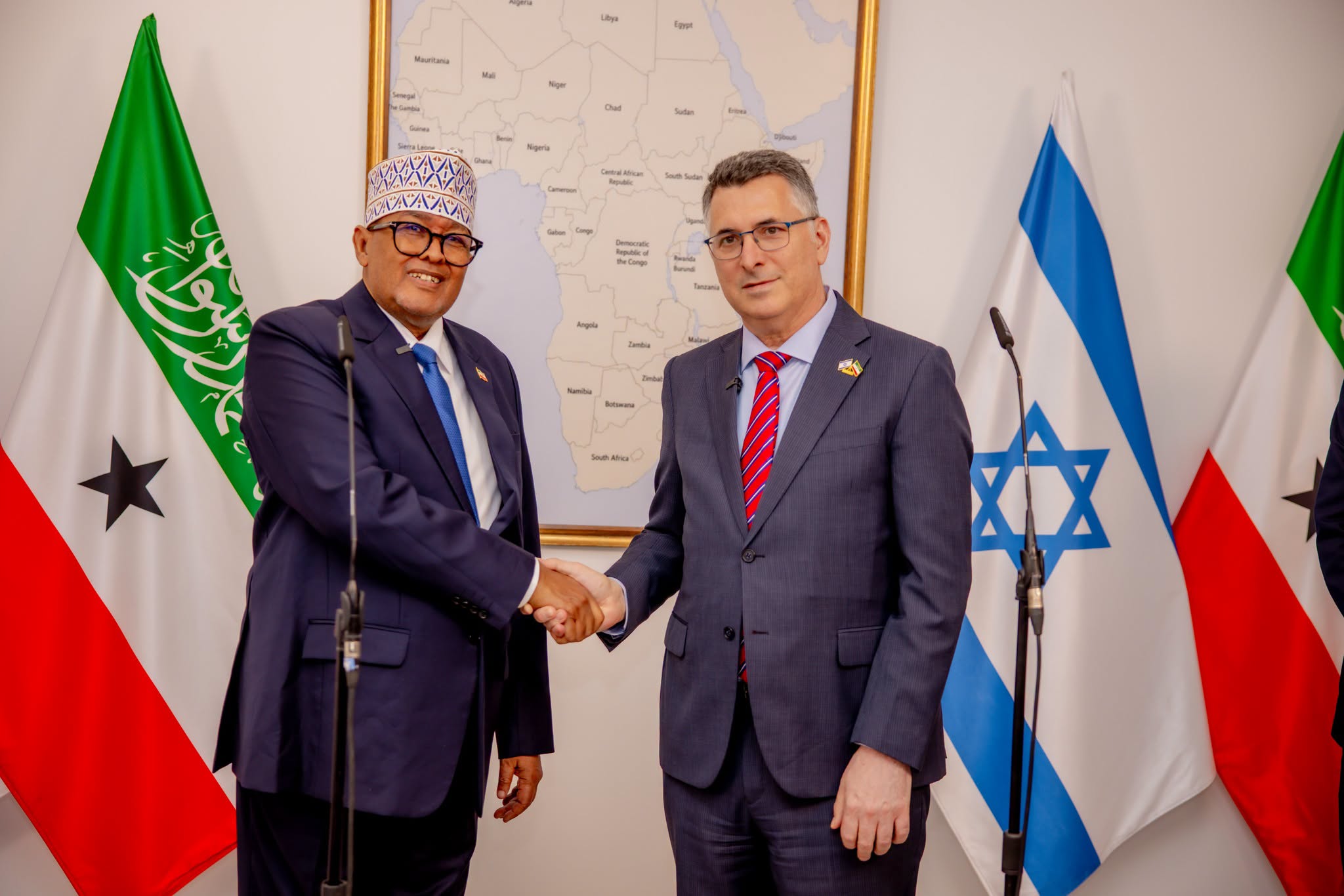
Recognition was followed by an unprecedented series of high-level exchanges, including an official visit by Israel’s foreign minister to Hargeisa in early January 2026 and President Abdirahman Irro’s official visit to Israel in June 2026.
The Somali federal government immediately rejected Israel’s recognition and reaffirmed its position that Somaliland remains an integral part of Somalia.
Most Arab League countries similarly backed Somalia’s territorial integrity and criticized Israel’s move.
At the same time, Türkiye and Egypt continued expanding security cooperation with Mogadishu through military training, defence assistance and support for Somalia’s security institutions, reinforcing their longstanding support for Somalia’s internationally recognized borders.
For Mogadishu, preventing wider international recognition of Somaliland has become an important diplomatic priority.
Hashi’s criticism focused specifically on Jerusalem rather than recognition itself.
Like many Muslims worldwide, he argued that Jerusalem should not be recognized exclusively as Israel’s capital and instead should remain central to any future settlement between Israelis and Palestinians.

His position illustrates the difficult balance Somaliland’s leaders must navigate.
Somaliland is overwhelmingly Muslim, and public sympathy for the Palestinian cause remains widespread. At the same time, the territory’s pursuit of international recognition has increasingly encouraged policymakers to prioritize pragmatic diplomacy over traditional ideological alignments.
The Jerusalem debate therefore reflects a broader question facing Somaliland: how should an aspiring state balance religious identity with strategic national interests?
For supporters of the government’s policy, securing recognition after more than three decades outweighs disputes over embassy location. For critics, accepting Jerusalem as Israel’s capital risks creating unnecessary religious and diplomatic controversy.
Public Opinion Appears Overwhelmingly in Favour of Recognition
Despite the political debate, there is little evidence that Hashi’s remarks represent wider public opinion regarding recognition itself.
Across Somaliland, support for international recognition remains one of the rare issues that transcends party politics, clan affiliations and ideological divisions.
Many Somalilanders view recognition not simply as a foreign policy achievement but as the culmination of more than three decades of state-building and democratic development.
Conversations with residents, political observers and civil society figures in Hargeisa suggest that most Somalilanders continue to support diplomatic relations with Israel if they strengthen Somaliland’s international standing, even while some express reservations about the symbolic decision to establish an embassy in Jerusalem rather than Tel Aviv.
In that sense, the dispute appears less about whether Somaliland should maintain relations with Israel and more about how those relations should be presented to a Muslim public.
Some analysts believe Hashi’s intervention reflects growing frustration within Kaah as the party feels increasingly sidelined by President Irro’s administration despite playing a decisive role in his electoral victory.
If that interpretation is correct, raising the Jerusalem issue may serve as a means of differentiating Kaah from Waddani ahead of future elections.
Yet the strategy carries considerable political risks.
Recognition has become one of the strongest unifying themes in Somaliland’s national identity. Any political message that is perceived—fairly or unfairly—as weakening or complicating Somaliland’s recognition campaign could alienate voters across party and clan lines.
For many Somalilanders, the source of recognition matters less than the fact that it advances Somaliland’s longstanding aspiration to secure a place among the world’s sovereign states.
Whether Mohamud Hashi intended to challenge only the embassy’s location or inadvertently reopened a broader debate about recognition, his comments have underscored a central reality of Somaliland politics: even after recognition by Israel, the territory’s diplomatic journey continues to be shaped as much by domestic political calculations and religious sensitivities as by international diplomacy.