


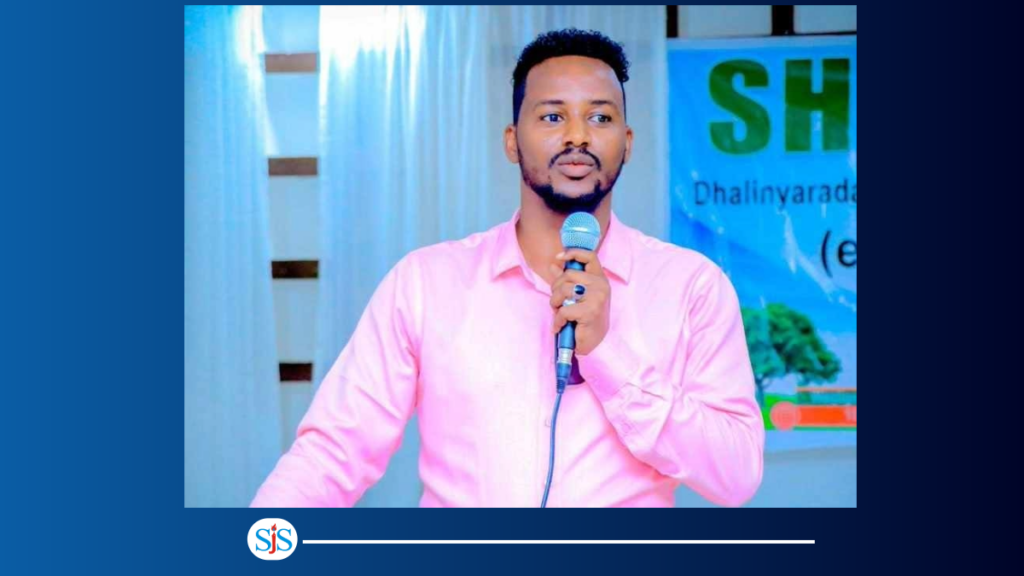


MOGADISHU – The Somali Journalists Syndicate (SJS) calls on Somaliland’s Sanaag Regional Prosecutor to drop the unfounded charges against local journalist Mohamed Saleban Ahmed for reporting on the severity of the drought in the Sool and Sanaag regions. SJS also urges authorities to allow all journalists unrestricted access to report on the climate crisis without interference or limitations on their work.
On 4 March 2026, police in Erigabo arrested local journalist Mohamed Saleban Ahmed, known as Suute, following the publication of a news report on 3 February that discussed drought conditions in the Sool and Sanaag regions. Suute told SJS that he was released without charge after spending two days in police custody.
On 15 March, the Sanaag Regional Prosecutor of Somaliland, based in Erigabo, issued a charge sheet against the journalist, accusing him of “spreading false information.” On 18 March, the Erigabo District Court summoned the journalist to appear for a hearing in the case brought by the regional prosecutor. According to the charge sheet, which SJS had seen, the Somaliland government is listed as the “victim.”
The journalist’s report, which SJS reviewed, included interviews with rural communities who said they had not received aid despite being severely affected by the ongoing drought.
Suute told SJS that the Deputy Governor of the Sanaag region, Salah Yusuf Diriye, was pushing the case, alleging that local authorities were unhappy with the report and were attempting to silence public complaints about lack of aid. Deputy Governor Diriye was not reachable for comment upon publication of this report.
A local lawyer representing the journalist told SJS that the case has been heard twice, but no verdict has yet been issued.
In July last year, Somaliland declared a national emergency as drought affected four regions, including Sanaag, whose capital is Erigabo. President Abdirahman Abdillahi Irro made an urgent appeal to international donors and Somalilanders at home and abroad to support relief efforts aimed at saving lives and livelihoods.
According to an August 2025 report by the United Nations Office for the Coordination of Humanitarian Affairs, more than 650,000 people were directly affected in Somaliland alone. Aid groups’ reports indicate that over 80% of rural households have been impacted by water shortages and agricultural losses in recent years.
Suute told SJS that he and other reporters visited numerous rural towns, witnessing the severe conditions firsthand, which he documented in his reporting.
SJS calls on the Somaliland authorities, particularly the Erigabo prosecutor, to stop targeting journalist Suute for reporting on and advocating for drought-affected communities. Authorities must respect journalists’ right to report on drought and climate-induced crises and ensure unhindered access to information to help save lives.
“The prosecution of journalist Mohamed Saleebaan Ahmed, known as Suute, for reporting on the devastating drought in Sool and Sanaag regions is both unjustified and deeply concerning. Journalists must not be punished for giving voice to voiceless communities in crisis,” said SJS Secretary General, Abdalle Mumin.
“We call on the Sanaag Regional Prosecutor to immediately drop these unfounded charges and urge Somaliland authorities to guarantee all journalists the freedom to report on climate-induced crises without fear, interference, or restriction,” Mr. Mumin adds.