

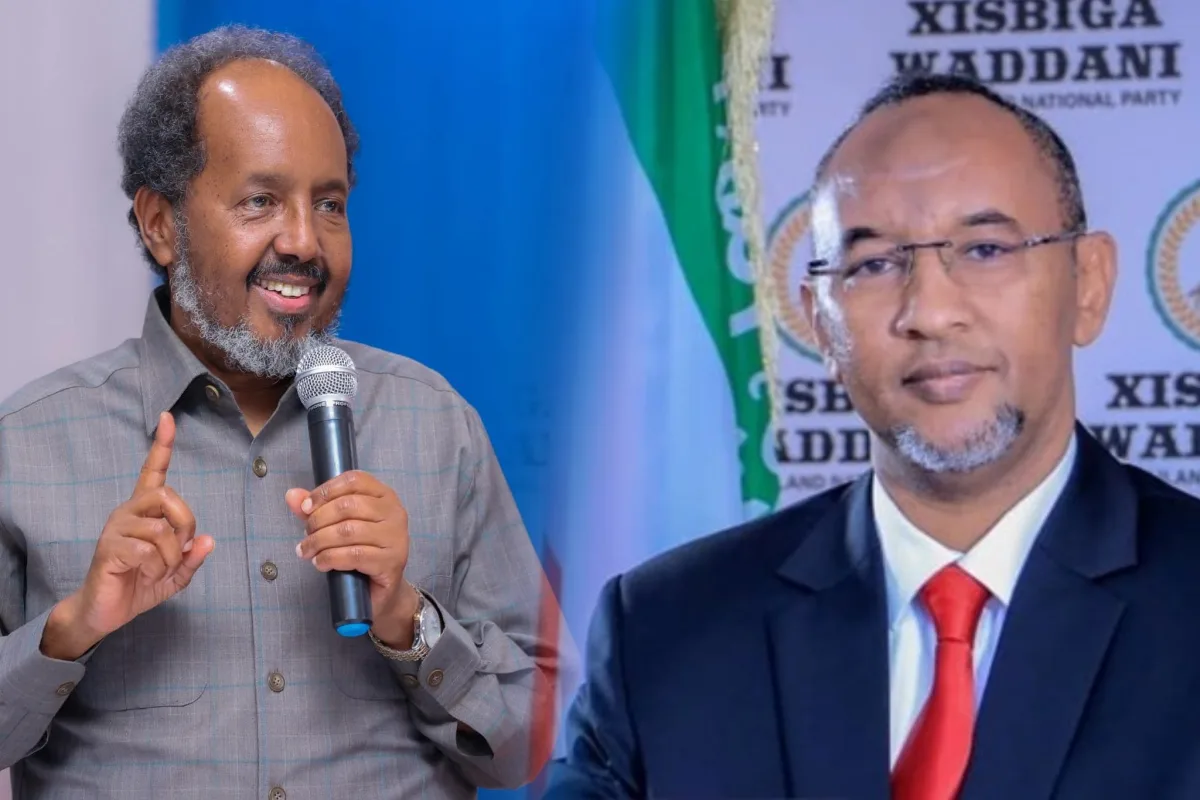
Hargeisa (KAAB TV) – The Waddani Party chairman, Hirsi Ali Haji Hassan, has criticized Somalia’s new E-Visa system, calling it an unfair, politically motivated policy targeting Somalilanders.
Speaking at a press conference in Hargeisa after returning from a trip abroad, Hirsi expressed his frustration over the new digital visa requirement, which he said has created unnecessary obstacles for Somalilanders traveling from overseas.
The new system compels individuals flying from foreign countries to apply online for a Somali entry visa according to him—a process he characterized as “a deliberate attempt to inconvenience and harass citizens of Somaliland.”
Hirsi directly accused Somali President Hassan Sheikh Mohamud of breaking promises he made before assuming office, particularly regarding his commitment to fostering dialogue and mutual respect between Somalia and Somaliland.
The opposition leader argued that the E-Visa policy contradicts those assurances and further deepens the rift between the two sides.
“President Hassan Sheikh, I am telling you—this action is driving the two sides further apart,” Hirsi declared. “Our people are resilient and will not be intimidated by any political pressure or administrative hurdles.
Somaliland will never accept actions designed to undermine its dignity or restrict the movement of its citizens.”
Hirsi went on to emphasize that Somaliland has its own political and administrative systems, and therefore, any measures imposed by Mogadishu that affect Somalilanders without consultation are unacceptable.
The Federal Government of Somalia recently implemented the E-Visa system as part of a broader plan to modernize and strengthen immigration and border control procedures.
Under this system, all foreign travelers—including Somaliland citizens who do not possess a Somali passport—must obtain an entry visa online before traveling to Somalia.
Somali authorities have defended the move, stating that the E-Visa program aims to enhance national security, streamline immigration processes, and combat irregular entry.
Critics like Hirsi argue that the policy has political undertones, designed to assert federal control over Somaliland, which continues to operate as a self-declared independent state since 1991, though it remains unrecognized internationally.
Hirsi’s remarks reflect ongoing tensions between Hargeisa and Mogadishu, as the two sides continue to disagree over sovereignty, governance, and administrative control.
His statement has resonated widely among Somalilanders, many of whom view the E-Visa requirement as another example of political interference from the Somali federal government.