


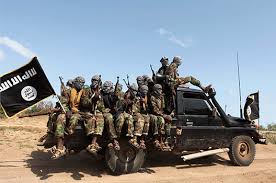


MOGADISHU (KAAB TV) – When President Hassan Sheikh Mohamud returned to power in May 2022, his administration launched what was described as a decisive campaign “to liberate and save the country” from the militant group Al-Shabaab.
The government framed this as a historic war aimed at reclaiming national sovereignty and restoring peace across Somalia.
However, nearly three years into his presidency, the campaign has faced major setbacks. Al-Shabaab has regained significant territory, carried out deadly attacks on urban centers, and reasserted its presence in regions that were previously declared liberated.
This report outlines the major areas that have fallen back under Al-Shabaab’s control since 2022, alongside an analysis of why government operations have struggled to achieve lasting results.
The Hiraan region was the first battleground of the new offensive. Initially, Somali National Army (SNA) forces, supported by local militias known as Ma’awisley, succeeded in retaking several villages. Government media celebrated these gains as “historic victories.”
Yet, within months, Al-Shabaab recaptured most of those same areas, demonstrating the fragility of the government’s control.
Towns and villages currently under Al-Shabaab control in Hiraan include:
Reece
Ceel Qurun
Ceel Koohle
Moqokori
Ceel Lahelay
Yasooman
Buq Aqable
Ceel Dheere
Booco Weyne
Jicibow
Ceel Baraf
Many of these places have become permanent battlegrounds, where control shifts repeatedly between the two sides. Residents report frequent clashes and population displacements, with basic services completely disrupted.
Middle Shabelle, which lies close to Mogadishu, is considered one of Somalia’s most strategic regions. Control over this area is vital for ensuring safe passage between the capital and central Somalia.
Despite government claims of progress, the campaign to secure the road from Balcad to Jowhar and Adale has largely failed. Al-Shabaab has re-established dominance in key rural areas and along supply routes.
Notable areas recaptured by Al-Shabaab in Middle Shabelle include:
Al-Kowthar
El Cali Axmed
Daaru Nicmah
Aadan Yabaal (briefly held by the government, now contested)
Busle Ceel
Cali Gaduud
Runir Good
Ceel Mire
Ceel War-gaduud
Ceel Dheere
Although the government continues to describe its operations as “security victories,” major supply roads—including Balcad, Afgooye, and Adale routes—remain insecure. Balcad is now effectively the last government-controlled buffer zone before entering Al-Shabaab-held areas.
The Galgaduud region, once a symbol of the government’s resilience, has witnessed renewed Al-Shabaab activity. Government forces initially liberated several towns in early 2023, but due to poor coordination, inadequate logistics, and limited troop numbers, the militants returned in force.
Towns and villages retaken by Al-Shabaab include:
Caad
Budbud
Galcad
Ceel Dheer outskirts
Ceel Lahelay
Qurac Joome
Jacar
Bargaan
Ceel Garas
Key military positions such as El Bur and Galcad, which were vital to government operations, have once again fallen under Al-Shabaab control. Analysts say this shows that the government’s campaign lacked a sustainable security or stabilization plan after the initial offensives.
While the federal government often portrays Mogadishu as secure, the situation on the ground tells a different story.
The capital’s relative stability is largely due to the security infrastructure and counterterrorism systems established under the previous administration of President Mohamed Abdullahi Farmaajo (2017–2022).
For instance:
The citywide CCTV surveillance system—currently in use to monitor movement—was installed under Farmaajo’s government.
Key intelligence officers within the National Intelligence and Security Agency (NISA), including senior leadership, are holdovers from the previous administration.
In recent years, Al-Shabaab has carried out high-profile attacks in Mogadishu, including near Villa Somalia, the presidential compound.
The former Minister of Security—now ambassador to Qatar—was seriously injured during one such assault on a hotel close to the palace, underscoring how deeply the militant group’s network penetrates the capital.
Lower Shabelle remains one of the most contested regions in southern Somalia. The corridor between Awdheegle and Airport No. 50 has been the scene of continuous clashes. Both sides have repeatedly gained and lost ground.
Despite government efforts, the crucial Afgooye–Mogadishu highway remains largely insecure, and many roads are patrolled or blockaded by Al-Shabaab fighters.
The KM4–Juba Hotel stretch in Mogadishu is under heavy military protection, reflecting persistent instability even near the capital.
From 2022 to 2025, Al-Shabaab has regained significant ground across Hiraan, Middle Shabelle, Galgaduud, and Lower Shabelle. Many of the “liberated” towns celebrated by the government have either fallen back into militant hands or remain contested.
Analysts attribute the government’s failure to several key factors:
Lack of coordinated military strategy between federal and regional forces.
Over-reliance on clan militias instead of a unified national army.
Politicization of security operations, where political goals outweighed military planning.
Failure to follow through with stabilization programs after military gains.
Dependence on media narratives of victory rather than measurable security improvements.
The resurgence of Al-Shabaab under President Hassan Sheikh Mohamud’s second administration raises serious questions about the effectiveness of Somalia’s current counterterrorism strategy.
Without a unified command structure, consistent funding, and genuine political reconciliation, military gains will continue to be temporary and reversible.
Somalia’s path to peace requires not only defeating Al-Shabaab on the battlefield but also addressing the political fragmentation, corruption, and lack of institutional capacity that allow the group to thrive.