

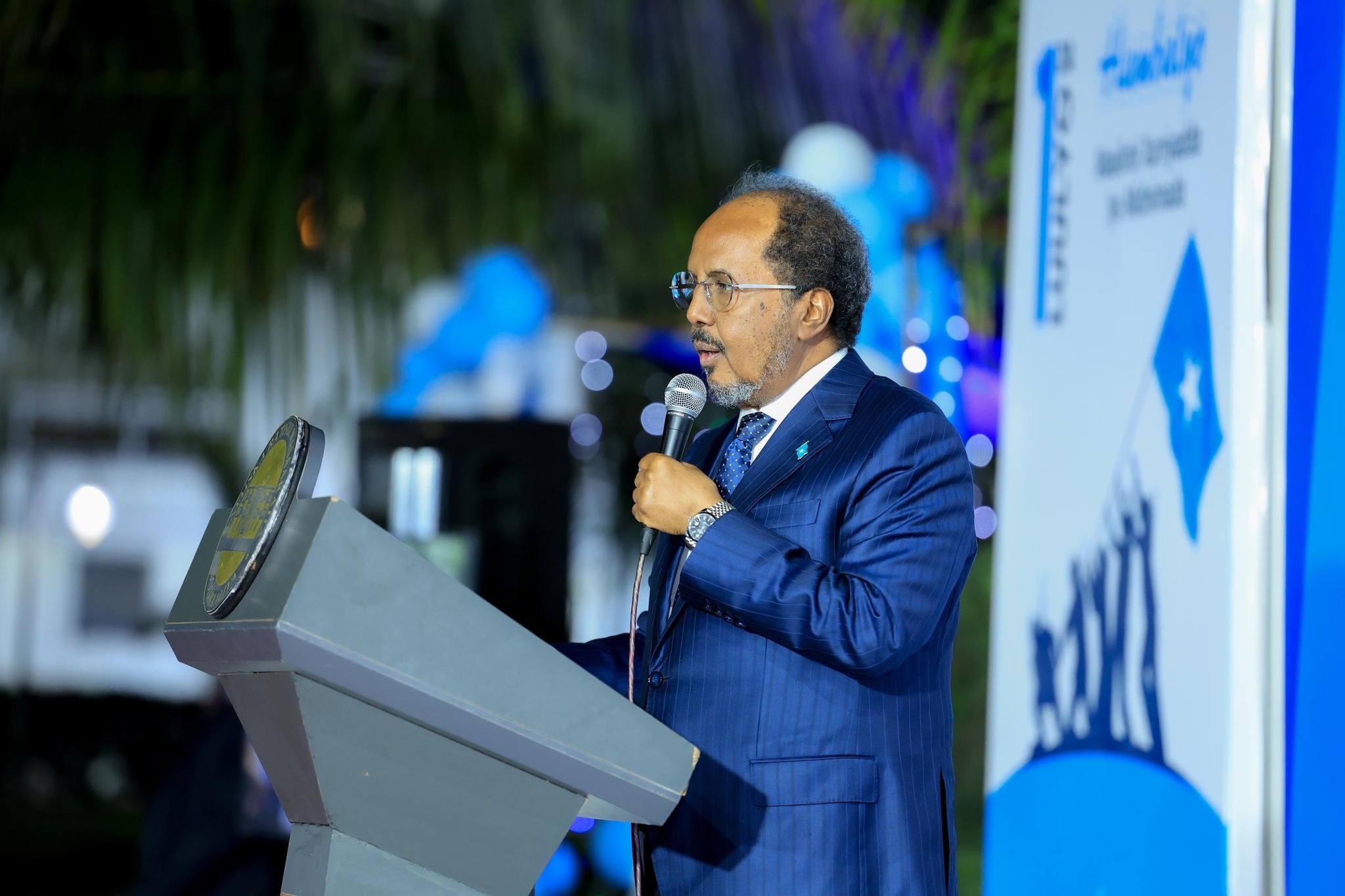
As Somalia approaches a pivotal moment in its political evolution, leaders from across the spectrum are once again locked in a tense standoff.
President Hassan Sheikh Mohamud, now in the second term of his presidency, is advancing an ambitious electoral and constitutional agenda ahead of the 2026 general elections—one that has ignited both cautious optimism and deep suspicion.
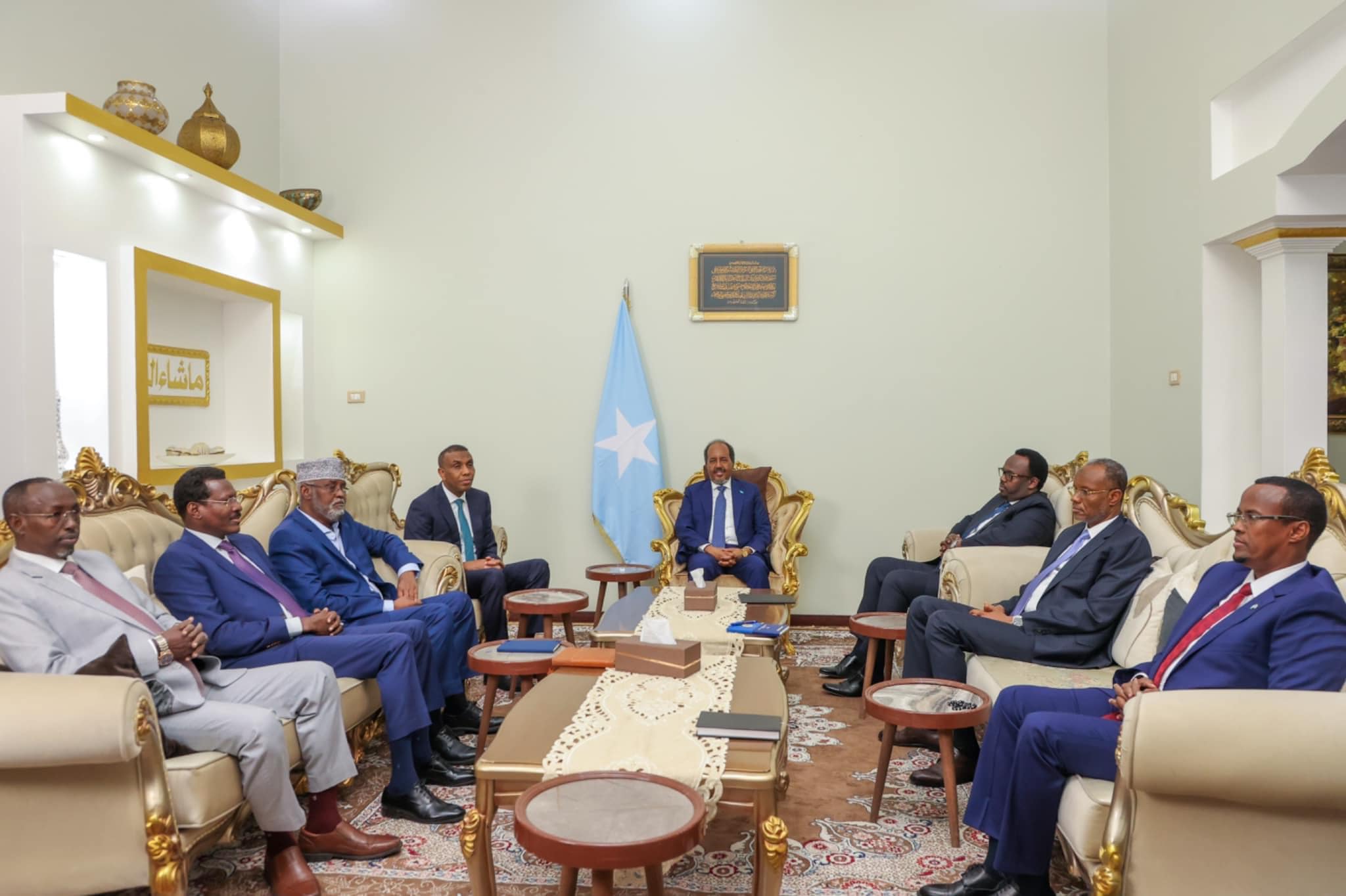
Three rounds of dialogue between the President and a bloc of presidential hopefuls have so far failed to yield tangible results.
A fourth round is slated for August 10. The stated aim is to reach a consensus on the structure of the next election and finalize changes to the provisional constitution.
But beneath the surface, a fierce contest over the future of the Somali state is unfolding—one that pits central authority against federal autonomy, urgency against consensus, and reform against resistance.
This is not just a debate about elections.
It is a test of Somalia’s post-conflict political architecture, and whether it can survive the pressure of majoritarian reform in the absence of national consensus.
Elections or Executive Power?
The federal government’s proposed roadmap includes registering at least one million voters and holding a one-person, one-vote election in 2026.
The plan is seen by many within Villa Somalia as a landmark effort to break away from the clan-based, indirect electoral model that has dominated Somali politics for decades.
But the plan goes further. The administration is also pursuing amendments to the Provisional Constitution — most notably Chapter 4 — that would remove Parliament’s authority to confirm the Prime Minister and vest more powers directly in the presidency.
To supporters, these are overdue reforms that will bring Somalia in line with more centralized, functional state systems. To critics, they represent a dangerous shift toward unchecked executive authority.
The optics of reform are compelling: a streamlined executive, direct electoral legitimacy, and a country finally shedding the limitations of its transitional past.
But critics argue the substance tells a different story—one of consolidation, not consensus; of imposition, not inclusion.
Divided Tactics, Common Anxiety
Within the opposition camp, reactions to the talks have ranged from cautious participation to outright skepticism.
Some candidates have called for patience, hoping the President may soften his position in the next round.
Others, however, view the process as a calculated delay—designed to buy political time while solidifying reforms that fundamentally alter Somalia’s balance of power.
What unites many of these actors is the fear that the President’s agenda is not being driven by national interest, but by a desire to shape the political landscape in his favor ahead of the 2026 vote.
Concerns over transparency, accountability, and motive have become central to the political discourse in Mogadishu.
Key Federal States Push Back
Nowhere has resistance been more visible than in Puntland and Jubaland.
Once politically estranged, the two federal member states recently realigned their positions in a strategic effort to counter Villa Somalia’s moves.
Their message has been consistent: no forward movement on elections or constitutional reform without genuine dialogue and rollback of the most contested proposals.
They accuse President Hassan Sheikh of centralizing power at the expense of the federal system, using the constitutional review process as a vehicle to marginalize regional voices and consolidate control.
From Gedo region to SSC-Khaatumo, they see a pattern of federal overreach — one that threatens the fragile equilibrium Somalia has tried to build since the adoption of federalism.
The political realignment between Puntland and Jubaland is not just symbolic. It represents the re-emergence of a counterweight to the federal government — one that could challenge not only Mogadishu’s authority but the legitimacy of the reforms themselves if pushed through unilaterally.
A Constitution Under Siege?
What began as a review process aimed at finalizing Somalia’s Provisional Constitution has become a highly contested battleground?
At issue is not only the content of the amendments but the process itself.
Can a constitution meant to be inclusive and unifying be rewritten under political pressure, and in the absence of regional agreement? Is it still a “national” constitution if key federal member states do not consent?
Legal experts warn that any attempt to pass and implement such amendments without broad buy-in could result in rival interpretations of constitutional authority, deepen institutional fragmentation, and pave the way for parallel governance structures.
The specter of a constitutional crisis is no longer hypothetical—it is looming. Without compromise before September 2025, Somalia may face a breakdown in political coordination between the center and the periphery, further complicating security, aid delivery, and governance in an already fragile context.
Reform or Rupture?
Supporters of the President argue that bold action is needed to move Somalia forward—that consensus has become a synonym for stagnation.
They see the old system as a barrier to progress, one that privileges clan elites and procedural deadlock over performance and accountability.
But Somalia’s journey toward a stable, representative democracy cannot rely solely on the momentum of one political figure or faction. It requires shared ownership, collective sacrifice, and institutional humility.
Reform without legitimacy risks becoming repression. Urgency without trust breeds resistance.
Somalia has made remarkable progress in recent years: reclaiming territory from insurgents, expanding international partnerships, and beginning to rebuild public institutions.
But the path forward depends on how its leaders manage disagreement, not how swiftly they push through agendas.
A Nation at a Political Tipping Point
Somalia is standing on a narrow ridge—on one side, the possibility of political evolution; on the other, a descent into yet another round of contested authority, federal estrangement, and constitutional disarray.
President Hassan Sheikh Mohamud may see himself as an architect of a new political order. But history will judge him by whether he chose consolidation over consensus, and whether his reforms brought the country together—or pulled it apart.
What Somalia needs now is not a victor in the power struggle. It needs a statesman willing to put national unity above political ambition.
If that leadership fails to emerge before the next round of talks, Somalia may not just miss the chance to hold credible elections—it may lose its fragile sense of national cohesion altogether.
–
The author is the Director of Arlaadi Media Network, a foreing policy journalist, and communications specialist.