

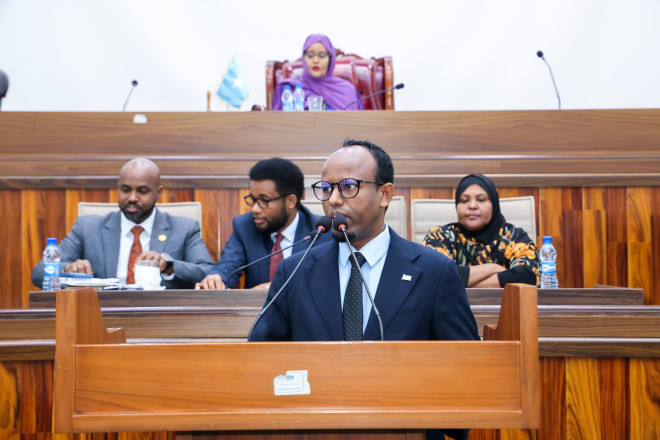

Mogadishu (Kaab TV) – Somalia’s lower house of parliament on Saturday passed the Medicine Bill, a key piece of legislation aimed at regulating the country’s pharmaceutical sector and improving public health. Lawmakers said the measure comes at a crucial moment for a health system that has struggled with weak oversight and unsafe medical products.
The bill was approved during the House of the People’s 25th meeting of its seventh session, with 141 lawmakers voting in favor, one abstention, and no objections, according to parliamentary officials.
A total of 142 members were present, meeting the required quorum for the final vote. The session was presided over by First Deputy Speaker Saadiya Yasin Haji Samatar, with the primary agenda focused on the bill’s third reading.
The legislation was drafted by the Ministry of Health and Social Welfare and reviewed by the House’s Social Service Development Committee. Ahead of the vote, the committee presented the final draft to lawmakers and facilitated debate, allowing members to examine its provisions in detail.
Health Minister Dr. Ali Haji Aden welcomed the approval, emphasizing that the bill comes at a time of “pressing need” for Somalia’s health system. The legislation is designed to:
Strengthen regulatory oversight of medicines, including licensing of pharmacies and importers.
Prevent the circulation of counterfeit and substandard drugs, which have been a persistent public health challenge in Somalia.
Nadra Salah Abdi, chairperson of the Social Service Development Committee, highlighted that the law will help protect patients from unsafe drugs and enhance accountability within the pharmaceutical sector.
For years, Somalia’s pharmaceutical industry has operated under limited regulation, with reports of unlicensed imports and poor-quality medicines reaching local markets. The new legislation is expected to create a legal framework for monitoring drug production, importation, distribution, and sale.
During the same parliamentary session, lawmakers also debated the Convention on Tobacco Control, discussing the health and social consequences of tobacco use, particularly among young people. Members stressed the importance of developing a comprehensive national policy to reduce tobacco consumption and its long-term effects on public health.
These legislative discussions reflect a broader effort by Somalia’s parliament to rebuild state institutions and strengthen the delivery of basic services after decades of conflict and governance challenges.
Observers note that effective regulation of pharmaceuticals and public health policies are crucial steps toward restoring trust in Somalia’s healthcare system and protecting citizens from preventable health risks.