

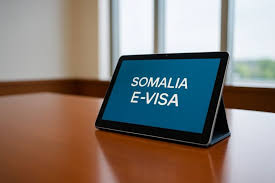

Mogadishu (KAAB TV) – The Federal Government of Somalia has officially launched a unified electronic visa (E-Visa) system, requiring all foreign nationals traveling to any part of Somalia — including Somaliland — to apply online through the Federal Immigration and Naturalization Directorate.
The move is part of Somalia’s broader digital modernization efforts aimed at streamlining immigration processes, enhancing border security, and asserting federal authority across all Somali territories. However, the decision has reignited political tensions with the self-declared Republic of Somaliland, which has rejected the E-Visa policy outright.
Authorities in Hargeisa have dismissed the new visa system as inapplicable to Somaliland, reiterating that:
The Somali Federal Government’s E-Visa will not be recognized at any of Somaliland’s border entry points.
Travelers to Somaliland will continue to obtain visas upon arrival at Hargeisa Egal International Airport, or through Somaliland’s foreign missions and representatives abroad.
This firm stance reflects Somaliland’s long-standing claim of de facto independence since its self-declaration in 1991, despite lacking de jure international recognition.
From Mogadishu’s perspective, the introduction of a nationwide E-Visa system is both a bureaucratic modernization and a political statement. The Federal Government considers itself the legitimate authority over the entire territory of the former Somali Republic, which collapsed into civil war in 1991. Thus, it insists that all entry into Somali territory — including Somaliland — must comply with federal immigration law.
Legally (de jure), the international community still recognizes Somalia as a single sovereign state, encompassing Somaliland. However, in practice (de facto), Somaliland operates as a self-governing entity, maintaining its own borders, currency, security forces, and immigration policies.
This dichotomy between international recognition and domestic control lies at the heart of the current visa dispute.
The Somali federal government may attempt to enforce compliance by pressuring airlines flying into Somaliland not to board passengers lacking a federal E-Visa.
While Mogadishu can restrict airline routes or landing permissions under international aviation regulations, it cannot compel Somaliland to accept or process travelers using federal documentation.
On the other hand, Somaliland retains full control over who is permitted entry through its airports and land borders. It can issue its own visas on arrival, and theoretically, it could revoke permission for E-Visa holders to enter. Yet, doing so could create a logistical and economic burden, discouraging travel and investment — a move Somaliland would likely avoid.
For the Federal Government of Somalia, the rollout offers several strategic advantages:
It demonstrates administrative authority over the entire Somali territory, reinforcing Mogadishu’s claim to sovereignty.
It bolsters domestic political standing, as many Somalis support stronger central governance and perceive Somaliland’s defiance as a challenge to national unity.
It projects international legitimacy, showcasing Somalia as a functioning state implementing modern digital governance.
For Somaliland, the dispute brings indirect benefits:
It draws renewed international attention to Somaliland’s distinct governance, further highlighting its de facto independence.
It strengthens internal unity by rallying citizens around the issue of recognition and self-determination.
It offers a platform to differentiate its institutions from Somalia’s, which supports its long-term goal of achieving formal recognition.
The greatest burden falls on citizens and travelers. Confusion over visa requirements could lead to double payments, travel delays, or even denied boarding for those caught between conflicting systems.
Those in Somaliland who still favor closer ties or eventual reunification with Somalia may feel alienated. This policy could further polarize opinions, strengthening separatist sentiment and weakening advocates for reconciliation.
While the move asserts authority, it could backfire politically, deepening Somaliland’s determination to distance itself and eroding what little hope remains for a negotiated unity.
Every new point of friction between Hargeisa and Mogadishu makes future reconciliation more difficult. Analysts warn that, if current trends continue, the political rift could become irreversible by the 2040s. Without dialogue and compromise, the Somali people risk perpetuating cycles of division, resentment, and mutual isolation.
The E-Visa initiative was intended as a modernization effort, but it has quickly turned into a symbolic power struggle. To Mogadishu, it’s an assertion of unity; to Hargeisa, an encroachment on sovereignty.
Unless both governments find a way to coordinate pragmatically on issues like travel, trade, and security — without politicizing them — the E-Visa may serve as yet another reminder that the Somali state, though legally whole, remains divided in practice and spirit.