


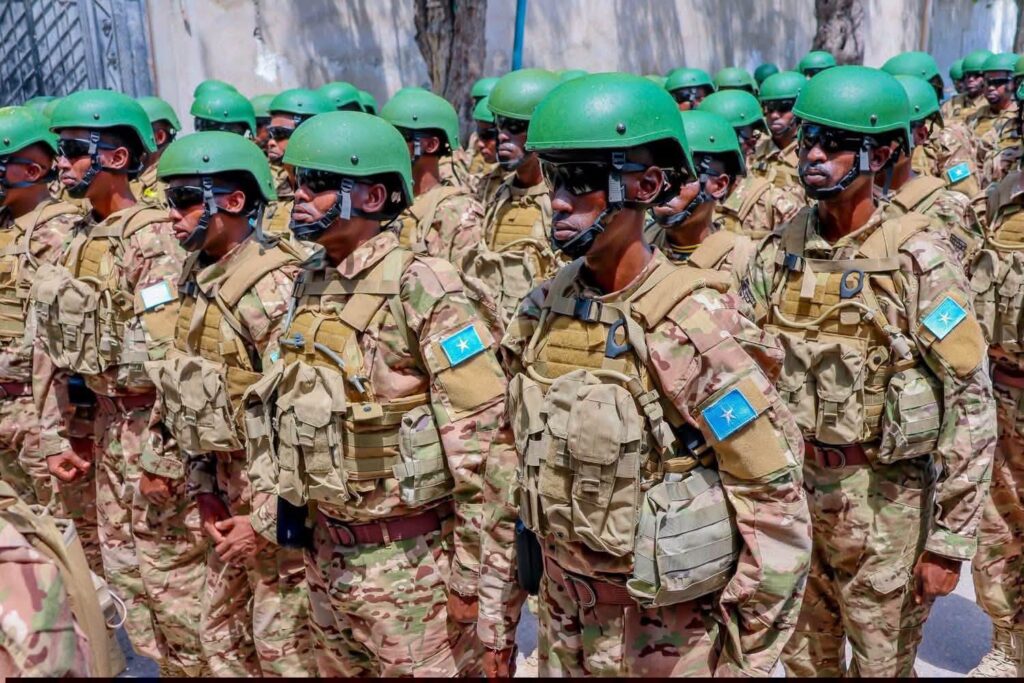


For much of the post-2006 period, Somalia occupied an unusual place in international diplomacy.
Despite disagreements over governance, federalism and competing national interests, foreign governments, regional powers and Somali political actors shared one overarching assumption: whatever their differences, the campaign against al-Shabaab had to remain the first priority.
That understanding became the invisible architecture supporting Somalia’s modern state-building project.
African Union peacekeepers deployed under successive mandates. Western governments financed military operations while investing in institution-building. The United Nations sustained the logistical infrastructure that enabled those missions to function.
Political crises routinely emerged between Mogadishu and federal member states, but international mediation was largely guided by a single objective – preventing those disputes from undermining the counterinsurgency campaign.
For nearly twenty years, counterterrorism did more than shape military policy. It defined diplomatic priorities, determined aid allocations and provided a common language through which external powers justified their engagement with Somalia.
Today, that strategic framework is quietly dissolving.
Not because the al-Qaeda-linked extremist group of al-Shabaab has diminished as a security threat. If anything, the radical group has demonstrated an extraordinary capacity to adapt, recovering territory after setbacks, exploiting governance failures, infiltrating state institutions and expanding influence in areas where government authority has weakened.
Rather, the insurgency is no longer the central lens through which Somalia is viewed.
Counterterrorism has become one priority among several competing strategic interests, and increasingly it is not the one driving regional decision-making.
The transformation has been gradual enough to escape dramatic headlines.
The Rise of Competitive Geopolitics
There was no conference announcing the end of the counterterrorism era. No formal declaration that international priorities had shifted. Instead, a succession of political crises steadily redirected diplomatic attention toward new disputes that often carried greater strategic urgency for the actors involved.
The catalyst was not a battlefield development but geopolitics.
Ethiopia’s controversial maritime memorandum of understandingwith Somaliland transformed Somalia’s sovereignty into a regional fault line, fundamentally reshaping relations between Addis Ababa and Mogadishu.
Egypt, viewing Ethiopia primarily through the prism of the Grand Ethiopian Renaissance Dam dispute, expanded its military partnership with Somalia, turning the country into another arena within a much broader contest for regional influence.
Turkey simultaneously evolved beyond its long-standing role as Somalia’s principal security partner. Ankara increasingly positioned itself as both mediator and strategic stakeholder, balancing security cooperation with expanding maritime and economic interests.

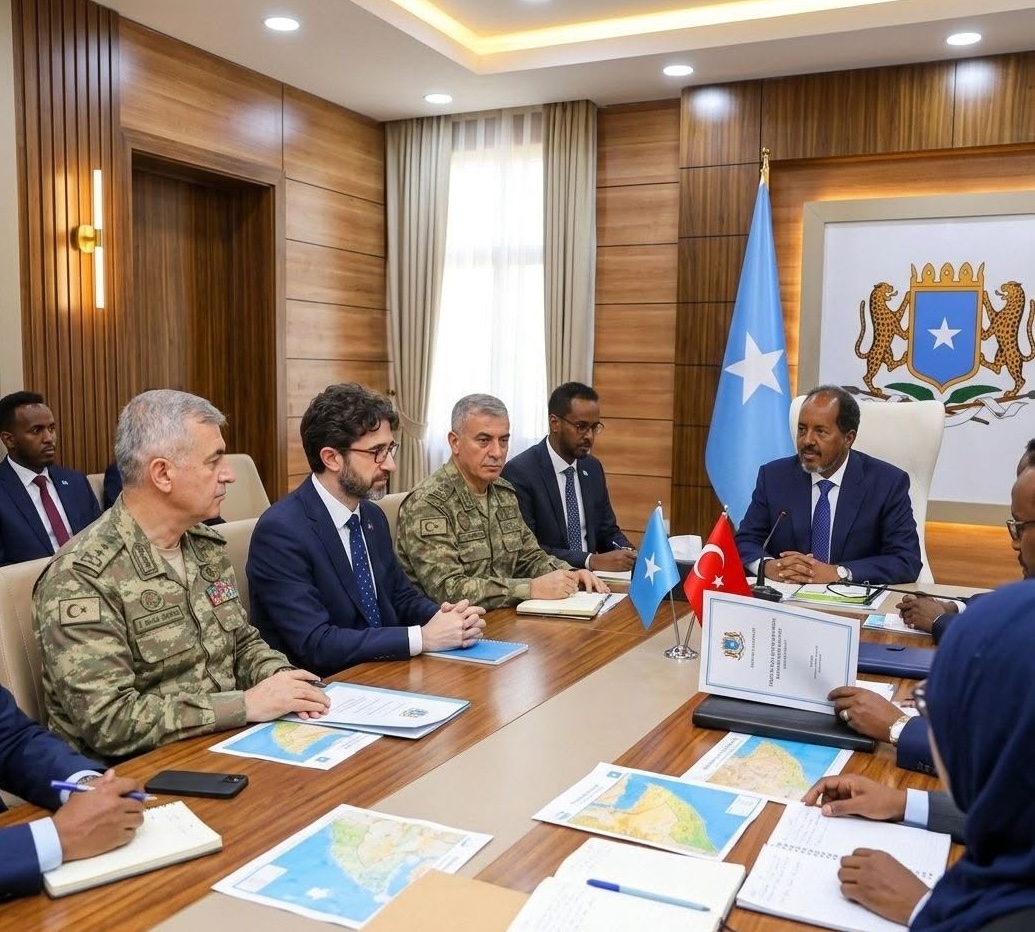
Elsewhere, the United Arab Emirates, Qatar and other Gulf powers continued pursuing commercial, logistical and political influence through ports, infrastructure investments and bilateral partnerships, reinforcing a broader regional competition that extended well beyond counterterrorism.
The Fragmentation of Somalia’s Security Coalition
Somalia itself was changing as well.
Domestic politics increasingly eclipsed the security consensus that had previously united competing political actors.
Constitutional amendments advanced by President Hassan Sheikh Mohamud reopened fundamental questions about federalism, elections and the distribution of power.
Puntland, the semiautonomous federal state in northern Somalia suspended recognition of key federal institutions. Relations with Jubaland deteriorated. Political debates that had once been temporarily contained in the name of fighting al-Shabab instead became defining struggles over the future structure of the Somali state.
The consequence was subtle but profound.
Political capital that had previously been devoted to sustaining military coordination was redirected toward constitutional disputes, electoral competition and negotiations over authority between Mogadishu and regional administrations.
The effects gradually became visible on the battlefield.
The nationwide offensive launched in 2022 represented perhaps the closest Somalia had come to a genuinely integrated counterinsurgencystrategy in more than a decade.
The Somali National Army, local Ma’awisley militias and international partners combined military pressure with unprecedented community mobilization. Government forces recaptured dozens of towns across central Somalia, while local resistance demonstrated that al-Shabab could be challenged not only through conventional military operations but through popular rejection of the austere insurgent rule.
For a moment, the campaign appeared to alter the strategic balance. Yet counterinsurgency victories require political cohesion as much as military momentum.
As relations between the federal government and regional administrations deteriorated, operational coordination inevitably suffered. Intelligence sharing became more difficult. Trust weakened. Forces trained for counterinsurgency were increasingly reassigned to manage domestic political confrontations and security crises unrelated to the insurgency itself.
Al-Shabab, by contrast, demonstrated the patience that has long distinguished successful insurgent organizations.
Rather than seeking decisive conventional battles, it absorbed military setbacks, dispersed its forces and waited for political fragmentation to erode the coherence of the coalition confronting it.
Its greatest advantage was not superior firepower but strategic consistency. International support was evolving in parallel as well.
The New Strategic Order in the Horn of Africa
The transition from the African Union Transition Mission in Somalia (ATMIS) to the African Union Support and Stabilization Mission in Somalia (AUSSOM) reflected more than an institutional rebranding. It revealed the changing political environment surrounding international engagement.
European governments redirected attention and resources toward Russia’s war against Ukraine, instability across the Middle East and security pressures closer to Europe’s borders.

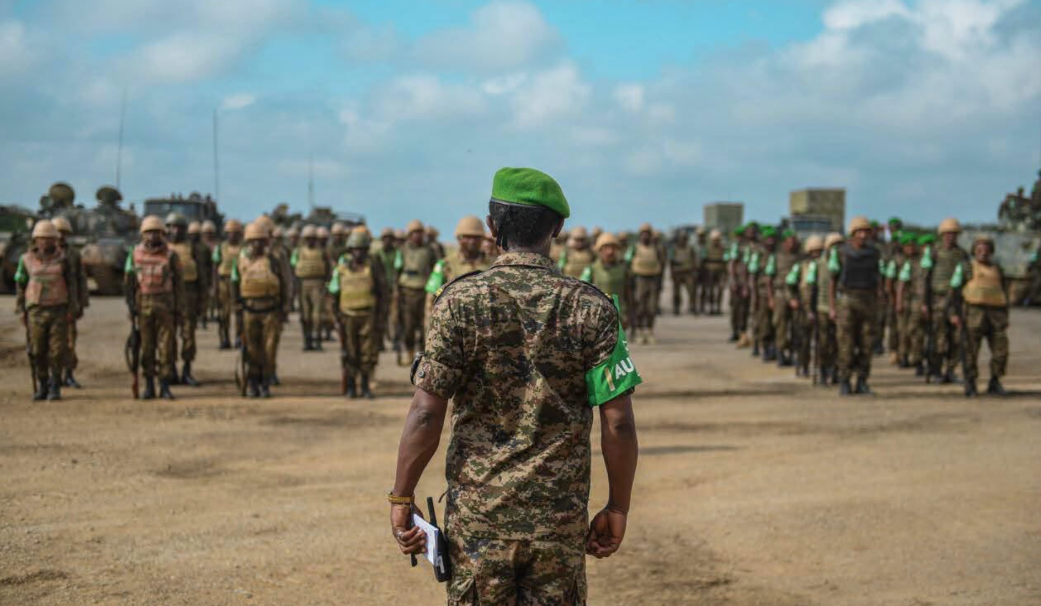
The United Nations confronted growing financial constraints affecting peace operations globally. Washington increasingly emphasized targeted counterterrorism capabilities, including intelligence support, air operations and specialized partnerships, rather than the expansive state-building ambitions that had characterized earlier phases of engagement.
Support for Somalia did not disappear. It became narrower.
The End of the Counterterrorism Era
The international coalition that once pursued broad political stabilization alongside security assistance increasingly shifted toward more selective, transactional forms of cooperation tailored to individual national interests.
What emerged in its place was a broader strategic agenda driven less by traditional alliances than by maritime security, bilateral defense partnerships, infrastructure competition and shifting regional balances of power.
A collective approach gradually gave way to a landscape of overlapping national interests, reflecting a wider transformation in international politics.
Across strategic regions, shared security frameworks have increasingly been replaced by more transactional arrangements shaped by competition, influence and access.
The post-9/11 era had elevated counterterrorism into the organizing principle of foreign policy across much of Africa and the Middle East. Security assistance, diplomatic engagement and development programs were often structured around a singular objective: weakening extremist organizations before advancing broader political, economic and institutional goals.
That hierarchy no longer dominates strategic thinking. Today’s international environment is increasingly multipolar.
Middle powers exercise greater influence. Competition over trade corridors, critical infrastructure, energy resources and maritime access now shapes foreign policy calculations as much as ideological conflicts once did.
The Horn of Africa has become one of the clearest expressions of that shift.
Ports are strategic assets. Shipping lanes are geopolitical leverage. Military partnerships increasingly intersect with commercial investment, energy exploration and access to the Red Sea and Indian Ocean. Security policy has become inseparable from economic geography.
Within that environment, al-Shabaab occupies a paradoxical position.
The group remains one of Africa’s most capable insurgent movements, yet it is no longer the principal factor shaping how major regional and international actors engage with Somalia.
Its threat persists. The strategic consensus surrounding that threat does not.
History suggests that insurgencies rarely prevail because they overpower stronger states militarily. More often, they endure because the political coalitions confronting them gradually lose coherence. Competing priorities emerge. External partners diverge. Domestic political disputes overshadow shared security objectives.
Somalia increasingly exhibits those dynamics.
Federal institutions, regional administrations and foreign partners continue to pursue overlapping security goals, but they no longer operate within a unified strategic framework. Each actor is increasingly guided by distinct political calculations, bilateral interests and regional rivalries.
Al-Shabaab has not needed to transform itself nearly as dramatically.
It has remained focused on a singular objective: preserving organizational resilience while expanding influence wherever state authority fragments.
The implications extend beyond Somalia.
The quiet erosion of the counterterrorism consensus marks a broader strategic transition across the Horn of Africa. The region is no longer primarily organized around defeating violent extremism. It is increasingly defined by contests over sovereignty, maritime access, infrastructure, commercial corridors and the ambitions of competing regional and middle powers.
Counterterrorism has not disappeared. It has simply been displaced from the center of the strategic map.
For nearly two decades, defeating al-Shabab was widely treated as the prerequisite for political progress in Somalia. Today, political fragmentation increasingly defines the conditions under which that fight is conducted.
That reversal may prove to be one of the most consequential, and least appreciated strategic transformations the Horn of Africa has experienced since al-Shabab first emerged as a regional insurgency.