

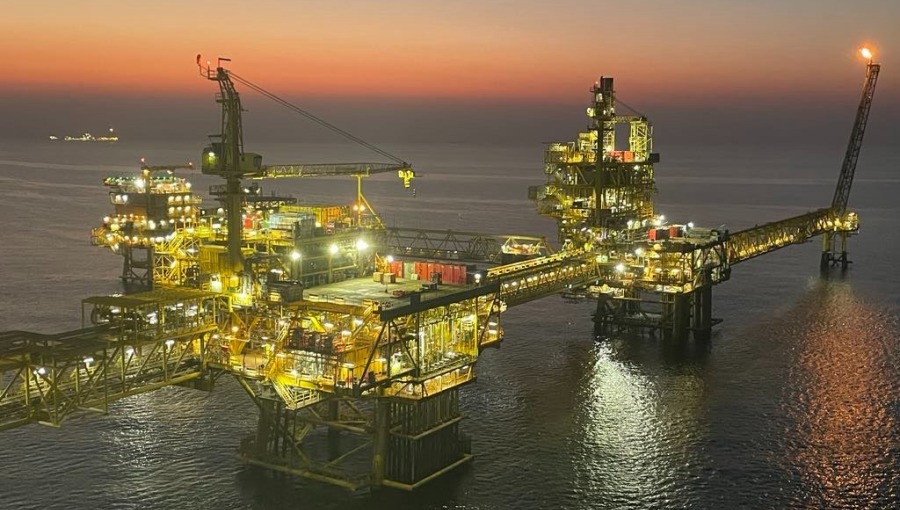
Mogadishu /Ankara (KAAB TV) – Somalia is set to announce its first commercial oil drilling site this December, marking a major step toward becoming an energy-producing nation after extensive work with Turkish partners.
From Exploration to Decision: What’s Been Done So Far
The path to first drilling has been long and cautious. For decades, Somalia’s hydrocarbon potential has been under‑explored, hampered by internal conflict, weak institutions, contested maritime boundaries, and lack of regulatory clarity.
Over recent years, however, Somalia has made deliberate moves to lay groundwork:
-
In March 2024, Somalia and Turkey signed a cooperation agreement covering offshore and onshore exploration, development, and production of oil and gas.
- Turkey’s state energy company, TPAO, secured licenses and began seismic surveys off the Somali coast, sending the research vessel Oruç Reis to map subsurface geology.
- By mid‑2025, the Somali Ministry of Petroleum confirmed that the initial phase of seismic and exploration work had been completed.
- SPA Chairman Abdulqadir Adan Mahmoud, speaking on national television, said the field teams have “completed their fieldwork,” leaving final assessments and site verification to the next stage.
With these technical analyses nearing conclusion, SPA officials say they are now ready to select the specific block or blocks for drilling.
What to Expect in December
According to SPA, the formal announcement of the drilling site is tentatively scheduled for December 1 to 7, 2025, and may be held in Ankara, Turkey, reflecting the strong role of Turkish cooperation in the project.
The announcement will likely include:
-
The coordinates or general area of the selected site (onshore, offshore, or both)
-
Technical justifications (geological, seismic, reservoir models)
-
The drilling timeline and the contractor(s) chosen to carry out the drilling
-
Provisions for oversight, revenue sharing, environmental safeguards
-
Possibly the ceremony will include Somali and Turkish dignitaries and technical delegations
In public remarks, SPA urged citizens to remain patient, noting that while work is advanced, final verification remains necessary before formal selection.
Stakes and Challenges
Announcing the drilling site is merely a beginning. What follows will be even more critical. Key challenges include:
Fiscal & Contractual Regimes
Somalia must ensure that the contracts (production sharing agreements, royalties, cost recovery rules) benefit the country and protect against exploitative terms. Weak or poorly structured contracts could lock the country into disadvantageous deals.
Governance, Transparency & Revenue Management
Given Somalia’s history of conflict and fragility, transparent mechanisms for revenue sharing, oversight, and anti‑corruption will be essential to prevent tensions among regions, clans, or federal members. Civil society and analysts have warned of the “resource curse” that afflicts many resource-rich countries.
Security & Local Conflicts
Some of the fields lie in areas affected by insecurity or contested territorial claims. Ensuring safe access, infrastructure security, and local community consent will be a delicate balancing act.
Environmental Risks & Climate Considerations
Offshore drilling poses risks of spills, pollution, and marine disruption. Somalia must put in place rigorous environmental impact assessments, monitoring systems, and contingency plans.
Market & Technical Uncertainty
Despite promising seismic data, there is no guarantee of commercially viable oil quantities. The first well will test reservoir quality, flow rates, and extractability. In such frontier settings, the risk of dry wells or marginal fields is high.
Possible Economic Impacts
If successful, the project could have transformative effects:
-
A new revenue stream for a country heavily reliant on foreign aid and remittances
-
Job creation and skills development in the energy sector
-
Catalyst for infrastructure investment (ports, roads, pipelines)
-
Incentive for broader foreign direct investment
-
A shift in Somalia’s regional economic role
Officials have already spoken of the need to avoid overdependence on hydrocarbons by diversifying the economy, emphasizing agriculture, fisheries, and renewable energy as complementary pathways.
Domestic reactions are mixed but cautious optimism predominates among the political and business classes. Many see the move as a bold step forward after years of stalled or stunted exploration efforts.
Analysts, however, emphasize that boldness must be matched by strong institutions and legal frameworks.
International energy analysts have suggested that Somalia’s offshore basins may rival other East African finds, but stress that the lack of proven reserves to date means much depends on how the first wells perform.
Some opposition voices warn that the government may overpromise, underdeliver, or mismanage revenues and contracts.
If Somalia proceeds as planned, the December announcement will mark both a symbol and a commitment: symbolizing arrival at a new era in Somali resource strategy, and committing the state to make difficult economic, legal, and environmental decisions going forward.
The months following the announcement will be closely watched: which site is selected, which companies are contracted, how the agreements are structured, and how local communities and institutions respond.
In the broader Horn of Africa, Somalia’s success or failure could influence the energy ambitions of regional states, the engagement strategies of major powers, and the discourse on whether resource extraction can coexist with fragile governance.
If Somalia gets it right — with sound contracts, transparency, checks and balances, and sustainable development practices — December’s announcement could be the opening chapter of a new national trajectory. If mismanaged, it could exacerbate division, corruption, and environmental strain.
As the countdown to December begins, global energy watchers, Somali stakeholders, and neighboring nations will watch closely.