

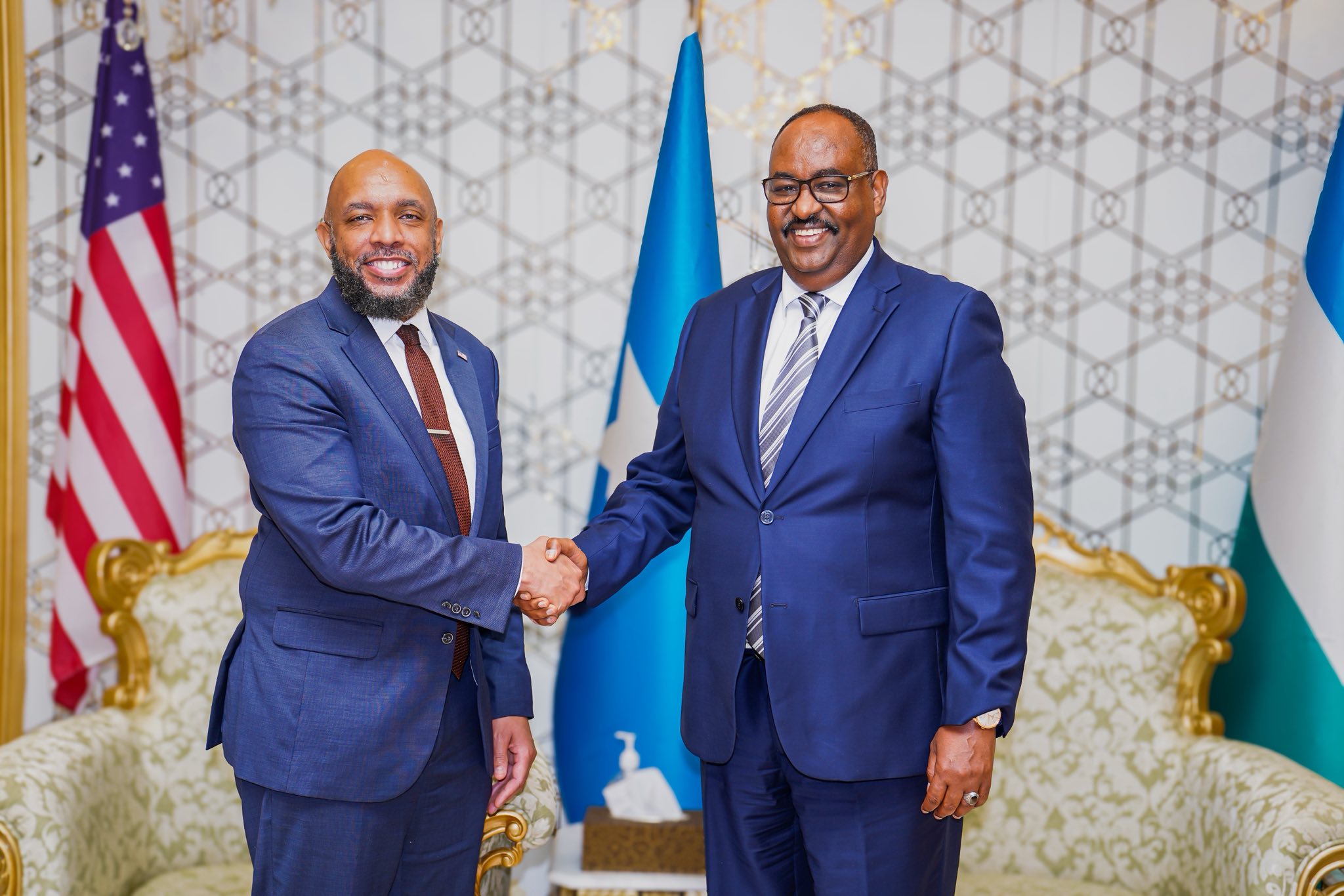

GAROWE, Somalia (KAAB TV) – A U.S. delegation led by the Chargé d’Affaires Ambassador Justin Davis, accompanied by officers from the Africa Command including Colonel Shane Jones, Commander of U.S. Special Operations in Africa — visited Garowe, the capital of Puntland, today, as the stalemate over Somalia’s political transition continues to intensify.
The visit comes amid a deepening constitutional and political crisis in Somalia. Former President Hassan Sheikh Mohamud’s mandate expired on May 15, yet he has refused to step down, having failed to organise a presidential election within his constitutional term.
The opposition — united under the Future Council of Somalia — has declared his continued hold on power illegitimate, demanding an immediate transfer of authority and the formation of a transitional government.
The standoff has raised fears of political violence and institutional collapse, drawing urgent concern from regional governments and international partners.
The delegation met with Puntland President Sa’id Abdullahi Deni, discussing counter-terrorism and Somalia’s stability.
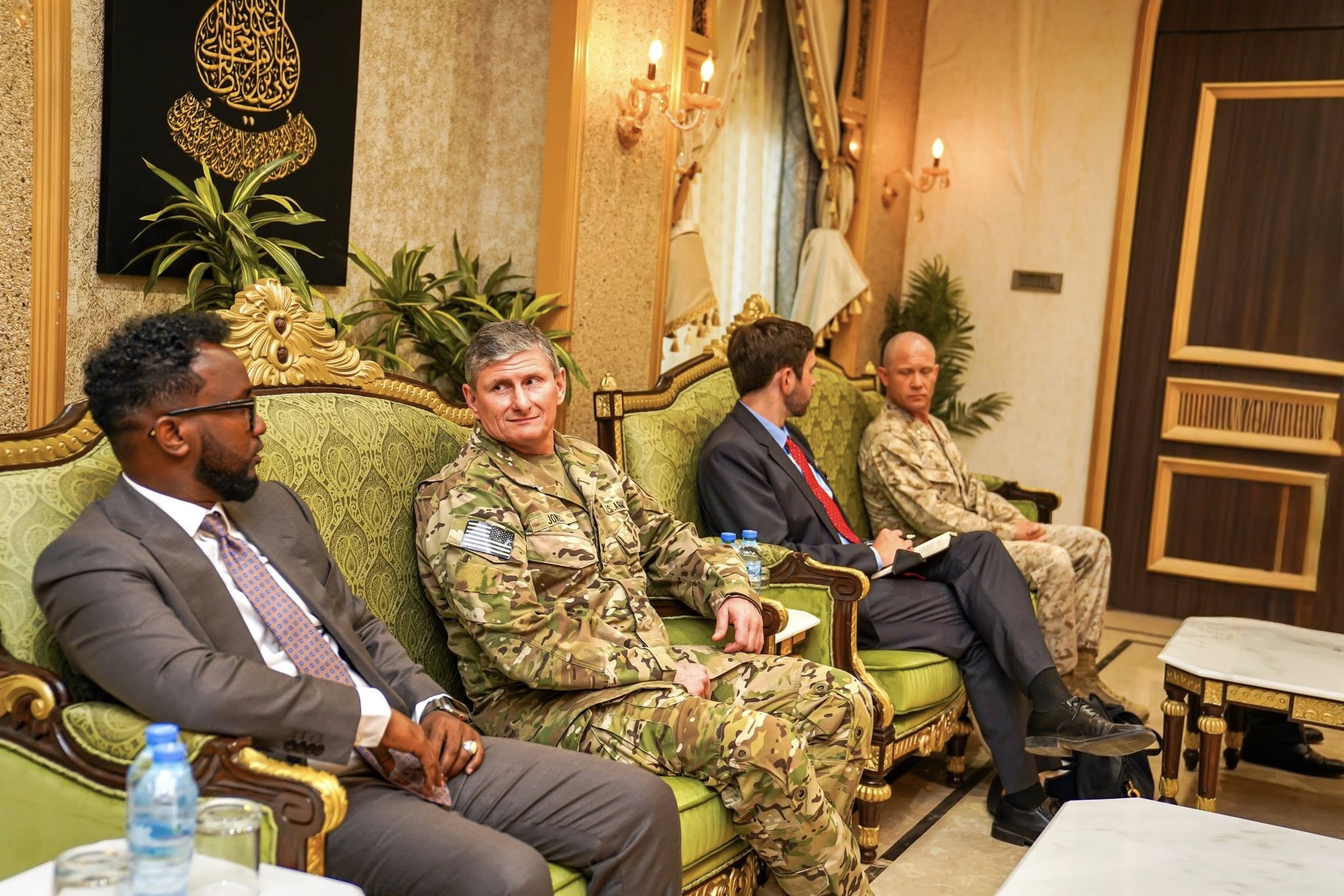
Puntland’s State House reported the meeting addressed “the overall security and political situation in Somalia, with a particular focus on cooperation and the achievements Puntland has made in combating the Islamic State (ISIS/Daesh) terrorist group.”
The meeting also covered strengthening the cooperative relationship between the Puntland Government and the United States, specifically in the areas of security, investment, and the utilisation of Puntland’s natural resources, including mining, fisheries, and oil, according to the Puntland presidency.
Puntland, which broke away from the Federal Government in 2023 over constitutional disputes, has emerged as a key stakeholder in Somalia’s political future.
President Deni has been a vocal critic of Hassan Sheikh Mohamud’s administration and has aligned himself with the opposition coalition calling for accountability and a return to constitutional order as the term of the Federal Government ended last week.
The Somali electoral crisis has its roots in long-running disagreements over the electoral model, the role of federal member states, and the timeline for a transition to a one-person, one-vote system.
In March 2026, the Somali Future Council, which is the main opposition coalition issued a stark warning, declaring it was “clearly and unequivocally opposed to any attempt to extend the term of office beyond the periods clearly set out in the 2012 Provisional Constitution.”
Successive Somali governments have failed to deliver a direct popular vote, with elections instead conducted through a complex clan-based indirect voting system.
The failure to hold elections before the expiry of Hassan Sheikh’s term has now brought Somalia to one of its most precarious political junctures in years.
Last week, the U.S. Embassy, alongside the United Kingdom, launched an initiative to broker talks between the opposition coalition and former President Hassan Sheikh Mohamud following the end of his term on May 15.
The international community has urged all parties to engage in dialogue and avoid any actions that could further destabilise the country.