




MOGADISHU (Kaab TV) – The Somali federal government has proposed ending the mandate of the Independent Expert on the situation of human rights in Somalia, a position established in 1993 pursuant to a Commission on Human Rights resolution.
A leaked submission by the Somali delegation in Geneva indicates that the government seeks to terminate the mandate effective October 2025.
Human Rights Council Resolution 57/27, adopted on 10 October 2024, extended the mandate of the Independent Expert for one year to assess, monitor, and report on the human rights situation in Somalia, while making recommendations on technical assistance and capacity-building.
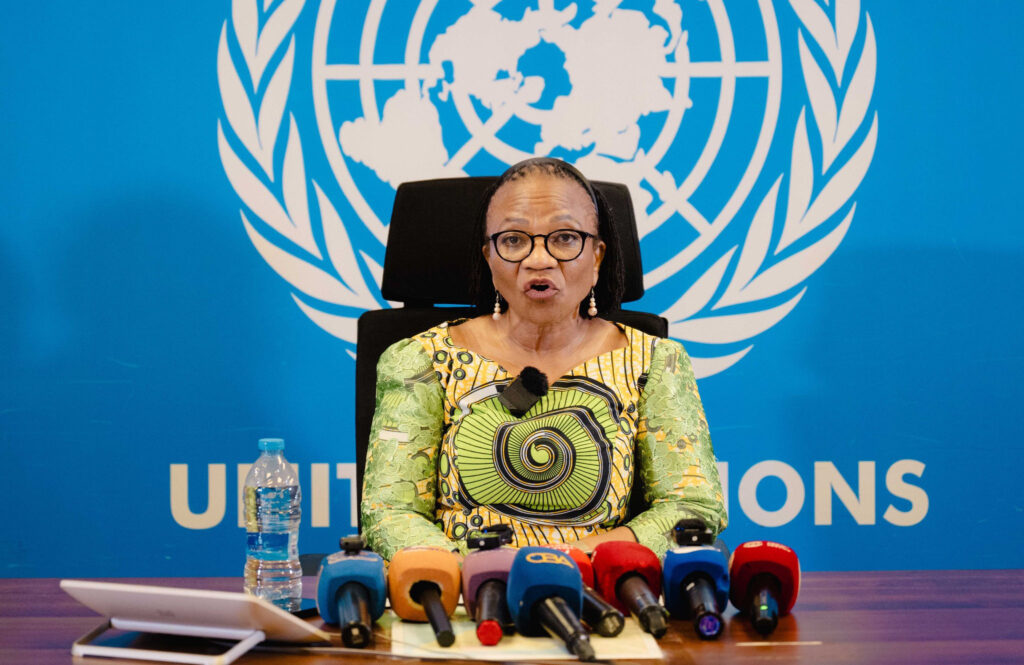
The current Independent Expert, Ms. Isha Dyfan, a Sierra Leonean national, was appointed in May 2020 by the UN Human Rights Council. Working in her individual capacity on a voluntary basis, she is not a UN staff member. Her mandate involves conducting official visits, gathering information, and making recommendations to promote and protect human rights in Somalia.
Creation of a Government-Controlled Commission
According to diplomatic sources, Somalia recently established a so-called National Human Rights Commission in July 2025. This nine-member commission is primarily composed of current government employees, former ministers, and close associates of President Hassan Sheikh Mohamud, the Prime Minister, and the Speakers of the Parliament.
A Somali human rights defender described that “This makes the commission a government-owned body that cannot speak out against human rights violations, let alone investigate them.”
The commission was formally announced in early July 2025 by the Ministry of Women and Human Rights. Local human rights groups, including the Somali Journalists Syndicate, described it as “an attempt to whitewash human rights abuses in the country.”
Notably, a month earlier, the Somali cabinet re-appointed Mahad Mohamed Salad, widely described as a brutal human rights violator, as the new Director of the National Intelligence and Security Agency (NISA).

Composition of the National Human Rights Commission
Kaab TV reviewed the commission’s members, which include:
- Farhan Mohamed Jimale – Prime Minister’s spokesperson who comes from the Hawadle/Hawiye clan.
- Ahmed Sheikh Hamza Abshir – Advisor to the Speaker of Lower House (Parliament), former employee of the national electoral commission’s office in Baydhabo, closely connected to President Abdiaziz Mohamed Laftagareen of Southwest. He hails from Rahanweyn/Harin.
- Ali Mohamed Elmi – Advisor to First Deputy Speaker Sadia Haji Samatar. He comes from the Daarood/Leelkase.
- Omar Abdulle Alasow – Former AMISOM/ATMIS advisor, close associate of President Hassan Sheikh Mohamud and fellow clansmen, from Hawiye/Abgaal/Waceysle; likely to serve as chairman.
- Maryam Qasim Ahmed – Former minister (2012–2014), advisor to current Minister of Higher Education, head of Damu Jadid (Al-Islah’s Muslim Brotherhood women’s wing). Maryam has enjoyed connection due to several of her son-in-laws being employed in the federal government ministries. She hails from Barawe/Haatimi clan.
- Fadumo Abdiqani Yusuf – Employee at the Attorney General’s office who migrated from United Kingdom thanks to her clans connection to the Attorney General Sulaiman Mohamud. She comes from Daarood/Warsangali, likely candidate for deputy chair.
- Mohamed Osman Mohamud – Advisor to President Hassan Sheikh Mohamud and a graduate of the president’s SIMAD University. He hails from Dir/Surre.
- Mohamed Harun Mohamud – Only member with a disability, advisor to the Ministry of Women and Human Rights, from Dir/Isaaq/Cidagale.
- Mumino Sheikh Omar – Former State Minister of Justice and Constitutional Affairs, current advisor to the Ministry of Justice and Constitution, widow of a former minister, from Rahanweyn/Tunni.
Lack of Inclusivity and Independence
Despite claims of protecting human rights, the commission lacks inclusivity. Somalia’s most marginalized groups, including Bantu, Banaadiri, Tumaal, Madhibaan, Yaxar, and others, are excluded.
The composition demonstrates how powerful and armed groups have effectively captured the very body meant to protect minority rights and oppressed communities against the dominant clans.
The commission’s structure violates Article 41 of Somalia’s Provisional Constitution, which states: “The Federal Parliament shall establish a Human Rights Commission that is independent of State control, and has adequate resources to carry out its functions effectively.”
It also contravenes the Paris Principles, which provide a roadmap for establishing a genuine, independent, and transparent national human rights commission.