


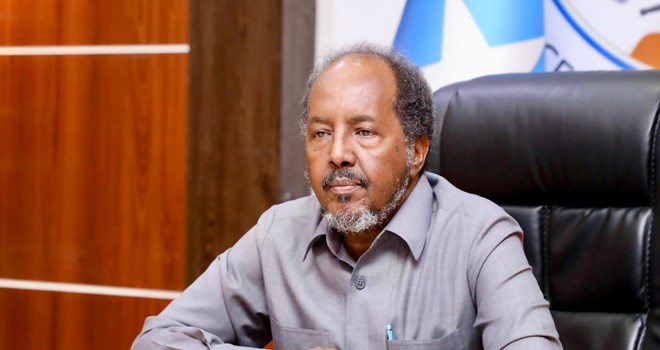


Perhaps some people do not fully comprehend Somalia’s situation. SOMALIA IS NOT LIKE DJIBOUTI, TURKEY, OR ERITREA. What happened yesterday in Somalia’s parliament is not a new constitution; it is pure term extension, and it is the beginning of a plot toward dictatorship, chaos and bloodshed… yes bloodshed!
Hassan Sheikh Mohamud’s attempt to extend his term by a year, and take over the executive powers of the government will only add another layer to the country’s already complex and endless crisis—and could make it far worse.
Let’s take a closer look at Somalia’s recent history: Somalia’s powerful president, Mohamed Siad Barre, left Mogadishu on January 26, 1991, after rebel militias entered the capital and overthrown his powerful military government.
Before his departure, several attempts were made by elders and politicians to mediate between Siad Barre and the opposition.
The proposed plan, formalized in what is now known as ‘The Manifesto Communique‘, was for President Siad, who was in power for 21 years, to step down, hand over authority to a transitional civilian administration for the country and its people, and hold elections.

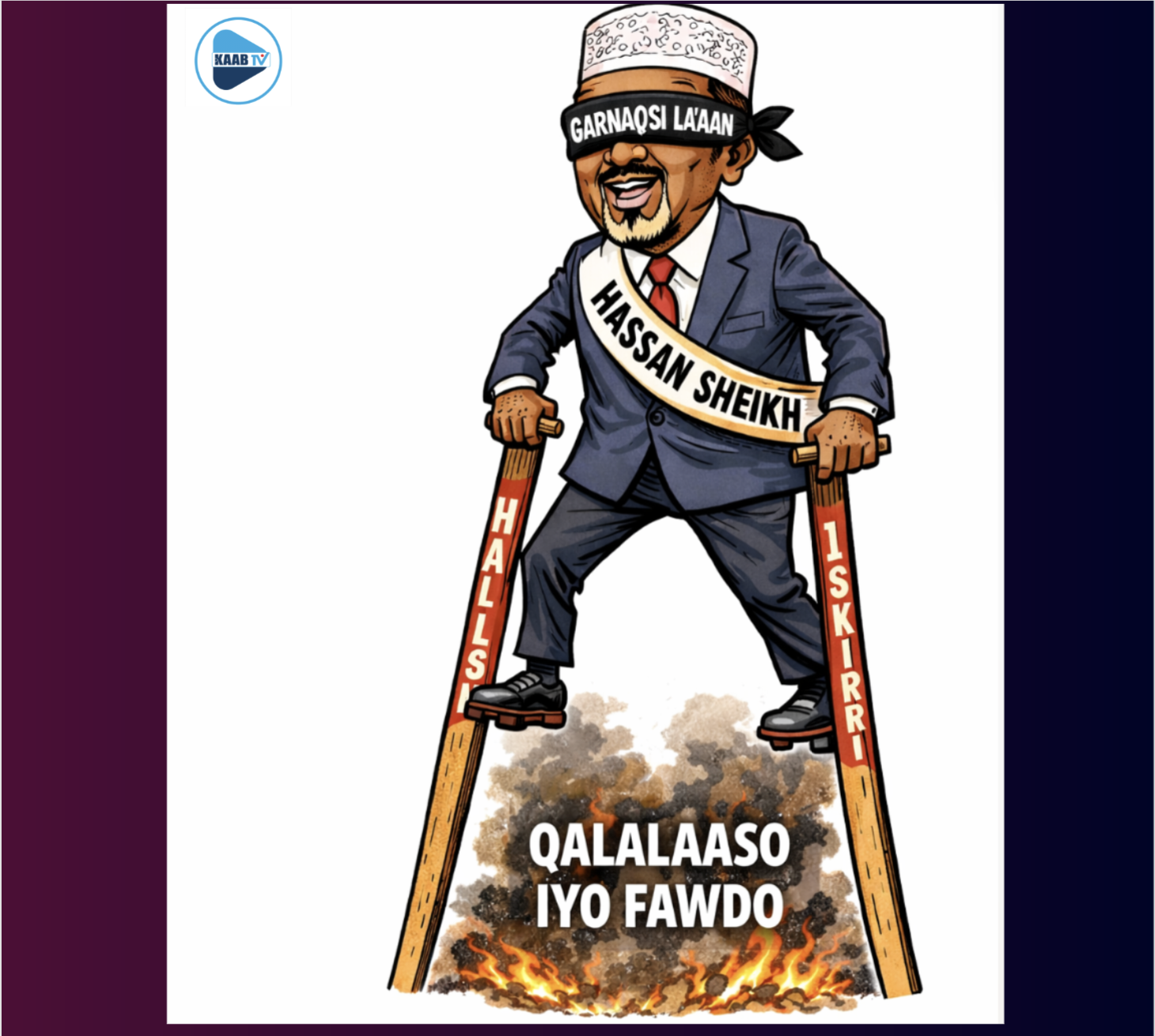
Unfortunately, this did not happen. The political dispute escalated into a full-blown conflict, and the government, which possessed Africa’s most powerful air, land, and sea forces, collapsed almost immediately. Its leaders ended up in exile and as refugees, and the country plunged into civil war—a civil war that made my family victims.
In the same year, 1991, one faction of the opposition appointed Mogadishu businessman Ali Mahdi Mohamed as “interim president“. However, this was immediately rejected by General Mohamed Farrah Aidid’s faction. Notably, Ali Mahdi established a constitution and even issued his own currency that circulated in parts of Mogadishu.
Mediation efforts between Ali Mahdi and General Aidid failed. This led to four months of intense street clashes, ultimately resulting in the “Green Line,” which divided Mogadishu into two parts. As a young boy, I vividly remember the days when we had to flee from one neighborhood to the other, passing through merciless militiamen and rockets being fired.
In August 2000, Abdiqasim Salad Hassan was elected president in Djibouti without full national agreement. When he arrived in Mogadishu, his administration was confined to a few blocks of the capital (from KM4 and Tarabuunka). He could not even access the presidential palace – the Villa Somalia – and both the Mogadishu port and the airport were closed by militias.
Abdiqasim’s government formed in Djibouti was based on a constitution forming a Transitional National Government (TNG). However, many of the Somali political factions rejected it. Several clan-based attempts to negotiate with Mogadishu’s faction leaders failed.
Finally, in 2004, while Abdiqasim remained in Mogadishu, a fresh reconciliation conference in Nairobi, Kenya, established the Transitional Federal Government (TFG), with Abdullahi Yusuf Ahmed as president. Mogadishu warlords were admitted into it becoming ministers and MPs—including those who had split from Abdiqasim’s TNG administration.
In 2008, with President Abdullahi Yusuf still in office, the third Djibouti conference was organized, involving portion of president Yusuf’s TFG administration and the Islamic Courts Union (ICU). This was pushed by the international community as the last attempt to end the conflict between TFG and the ICU.
Seeing that he had no support or power, President Abdullahi Yusuf resigned honorably on December 29, 2008. Djibouti then saw Sheikh Sharif Sheikh Ahmed elected as president.
In September 2012, Somalia held its first domestic election in decades. President Sharif Sheikh Ahmed ran again but was defeated. A month before the election, in August 2012, the current Provisional Federal Constitution was drafted and ratified.
In April 2021, when President Mohamed Abdullahi Farmaajo’s term ended, opposition in Mogadishu rejected his attempt to extend power. This led to clashes in the city, with gunfire forcing around 100,000 people to flee within a week. Multiple warnings to the government were ignored. Those days, my colleagues and I were stuck in my office, but we continued reporting the developments in the city.
It is important to remember that Farmaajo had developed his own election laws, established his own election commission, and even used offline and online trolls to amplify his narratives—but all of this collapsed following the April 2021 conflict.
Historically, these events offer crucial lessons. Every incident today has parallels in the past, and learning from history is vital. Any attempt—whether changing the constitution or introducing unilateral laws—that is not accepted by the people ends in destruction and division. Somalia is not Djibouti, nor Eritrea, nor Turkey.
Hassan Sheikh Mohamud may still turn a blind eye to the crisis in the remaining days of his term, but the truth remains: history tends to repeat itself. The current situation will end the way it has always ended in the past. I hope wisdom returns before things get any worse.