


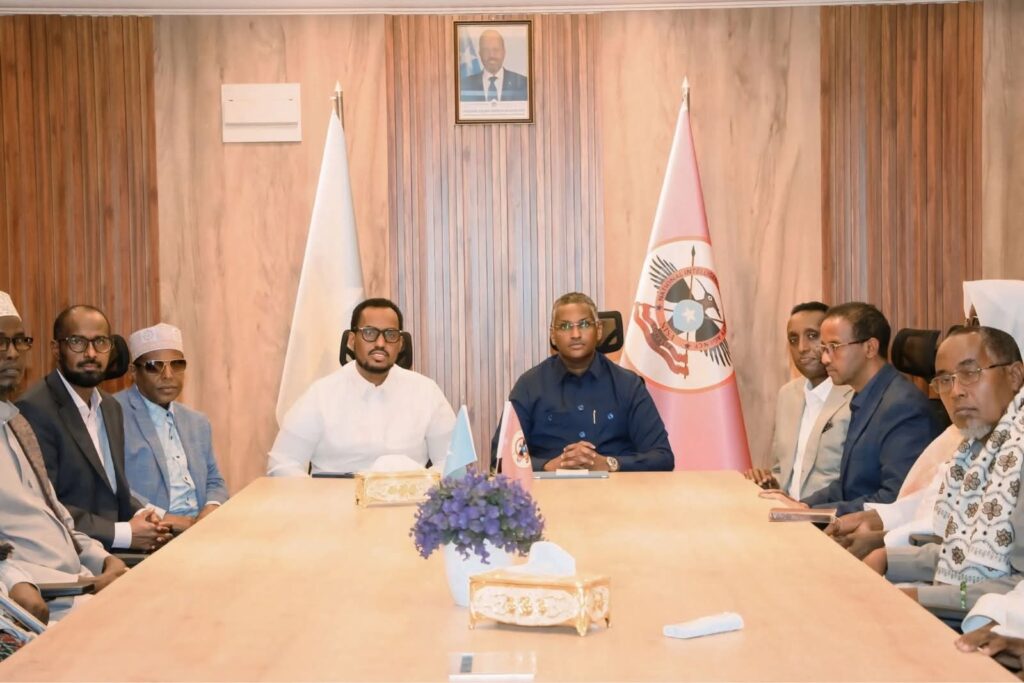


MOGADISHU (Kaab TV) – Somalia’s National Independent Electoral and Boundaries Commission (NIEBC) Chairman, Abdikarim Ahmed Hassan, has come under scrutiny after attending a meeting in Mogadishu that reportedly focused on rallying support for Galmudug presidential hopeful Libaan Ahmed Hassan, widely known as Libaan Shuluq.
According to witnesses, the meeting brought together Libaan Shuluq, National Intelligence and Security Agency (NISA) Director Mahad Salad, traditional elders, and other participants to discuss the upcoming political transition in Galmudug and strategies for building support for Libaan’s candidacy.
The presence of the electoral commission chairman at the gathering has sparked controversy, with some political actors arguing that his participation raises questions about the commission’s impartiality. Critics contend that the head of an independent electoral body should avoid activities that could create the perception of favoritism toward any candidate or political faction.
Additional criticism emerged after reports indicated that the flag of National Intelligence and Security Agency (NISA) was displayed at the venue despite the meeting being described as a clan-based gathering aimed at mobilizing support for a specific candidate. Opponents argue that the use of state symbols in a political campaign setting blurs the line between government institutions and electoral politics.
The meeting comes amid growing political maneuvering ahead of the anticipated Galmudug presidential election. Mahad Salad, who had previously been considered a potential contender for the presidency, reportedly withdrew his candidacy in favor of Libaan Shuluq following consultations that sources say involved the president whose term ended Hassan Sheikh Mohamud.
The controversy is unfolding against the backdrop of broader disagreements over Somalia’s electoral process. The Federal Government has been pushing for the introduction of direct elections under a one-person, one-vote system in several regions, including Galmudug. However, the proposal has faced resistance from some political stakeholders who argue that the process lacks sufficient consensus and could deepen existing political divisions.
Relations between Mogadishu and parts of the Galmudug leadership have become increasingly strained over the issue. Supporters of former President Hassan Sheikh’s administration argue that direct elections are necessary to advance democratization and strengthen political participation. Opponents, however, maintain that any electoral process must be based on broad political agreement and managed by institutions that are viewed as neutral by all sides.
The latest controversy surrounding the electoral commission chairman is likely to intensify debate over the credibility and independence of the bodies responsible for overseeing Somalia’s evolving electoral landscape, particularly as preparations continue for future regional and national elections.