


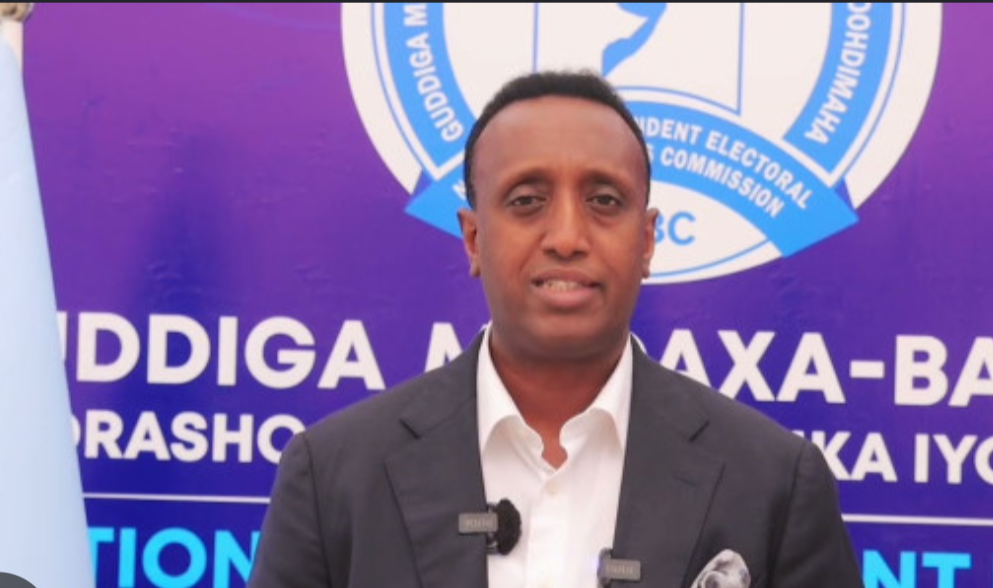


BAIDOA (Kaab TV) – Somalia’s electoral commission has pledged to ensure security, neutrality, and ballot secrecy during the South West State presidential election scheduled for June 10, responding to concerns raised by presidential candidates Sharif Sheikh Aden and Abdiaziz Osman Jawari over the credibility of the process.
The commission’s statement followed a press conference held Tuesday by the two candidates, who questioned the transparency and fairness of the election and warned against any interference that could compromise the integrity of the vote.
The candidates called for a free and transparent election, expressing concern about possible pressure on lawmakers and reports suggesting that legislators could be asked to photograph their ballot papers after voting. They described such practices as unacceptable and contrary to democratic standards.
The candidates also questioned the role of Speaker of the House of the People Sheikh Aden Mohamed Nur Madobe, who is simultaneously contesting the South West State presidency.
According to the opposition candidates, Madobe should temporarily step aside from his parliamentary leadership role while participating in the regional presidential race to avoid potential conflicts of interest and ensure fairness.
In response, the electoral commission said security at the election venue would be managed by the commission together with special forces that are independent of all candidates contesting the presidency.
The commission further stated that a neutral election venue had been prepared in accordance with Article 74, Paragraph 2, of the electoral law, ensuring equal access for all candidates.
To guarantee ballot secrecy, lawmakers were informed that mobile phones and electronic devices would not be permitted inside voting booths.
The electoral body emphasized that lawmakers must comply with the law, cast their votes confidentially, and avoid actions that could undermine the secrecy of the ballot, citing Articles 3 and 56 of Electoral Law No. 28 of 2024.
The electoral commission itself remains a subject of political controversy in Somalia. The body was appointed by the Federal Government led by former President Hassan Sheikh Mohamud as part of preparations for the country’s electoral process. However, several opposition politicians and some regional state administrations have rejected the commission’s legitimacy, accusing the federal government of forming it without broad political consensus.
Opposition groups argue that the commission lacks neutrality and could be used to influence future elections in favor of the federal leadership. Some federal member states have also voiced concerns over the structure and independence of the commission, warning that disputes surrounding the electoral body could deepen Somalia’s ongoing political tensions.
Hassan Sheikh Mohamud has also faced growing accusations of undermining Somalia’s electoral credibility after refusing to step aside at the end of his constitutional term and pushing forward with controversial electoral arrangements rejected by opposition groups and several regional administrations. His government’s appointment and control of the electoral commission has fueled further mistrust, with many questioning the credibility of promises of “free and fair elections” from a commission formed under an administration accused of extending its own mandate and centralizing power over the electoral process.
Opposition figures say it is ironic for an electoral commission appointed under his leadership to promise free and fair elections while questions over political legitimacy and electoral transparency remain unresolved.
Meanwhile, campaign speeches by South West presidential candidates are expected to take place in Baidoa after previously being postponed.
Lawmakers in South West State are scheduled to elect the regional president on June 10 in a closely watched contest attracting significant attention from the Federal Government, regional political actors, and international partners monitoring Somalia’s political transition.