

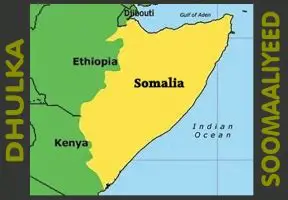

In recent years, Somalia has occupied a prominent position in the strategic rivalry unfolding across the Horn of Africa and the Red Sea, as both regional and international powers have intensified their political, security, economic, and military ties with Mogadishu and other Somali actors.
A primary driver of Somalia’s geopolitical significance is its strategic location.
The country boasts a long coastline stretching along the Indian Ocean and the Gulf of Aden, and lies in close proximity to the Bab al-Mandab strait, which connects the Red Sea to the Gulf of Aden—a vital maritime chokepoint for international trade and shipping routes linking Asia, Africa, and Europe.
This positioning has made Somalia a focal point for global powers seeking to project influence over Red Sea security, port development, maritime trade corridors, and regional politics in the Horn of Africa.
Research and analytical reports indicate that Turkey, the United Arab Emirates, Egypt, Saudi Arabia, Qatar, Ethiopia, and Israel all maintain distinct strategic interests in Somalia and the broader region.
Turkey remains one of the Federal Government of Somalia’s closest allies, particularly in security, military cooperation, economic development, and diplomacy.
Ankara has long supported the restructuring of Somali state institutions, military training, and defense partnerships.
The European Union Agency for Asylum (EUAA) noted that Turkey has further reinforced its security footprint in Somalia, with verified deployments of Turkish ground forces participating in counter-operations against Al-Shabaab in 2026, alongside the delivery of fighter jets, military helicopters, and armored vehicles.
Turkey also spearheaded mediation efforts between Somalia and Ethiopia following the diplomatic fallout from the 2024 Ethiopia-Somaliland memorandum of understanding.
The Ankara Declaration paved the way for bilateral discussions, establishing that any potential maritime access for Ethiopia must be pursued through an agreement respecting Somali sovereignty.
Meanwhile, Egypt and Ethiopia represent a central axis of regional competition in the Horn of Africa.
While their long-standing dispute has primarily centered on the Grand Ethiopian Renaissance Dam (GERD) and Nile water management, tensions have more recently extended to Red Sea security and maritime access.
Egypt has significantly deepened its diplomatic and defense ties with Somalia.
Building on a bilateral military cooperation agreement signed in 2024, Cairo continued its military assistance to Somalia in 2026, including contributions to the African Union Support and Stabilization Mission in Somalia (AUSSOM).
The Egyptian Ministry of Foreign Affairs has repeatedly reiterated Cairo’s unwavering support for Somalia’s unity, sovereignty, and territorial integrity.
The EUAA reported that Egypt deployed more than 1,000 troops to Mogadishu in 2026 to participate in AUSSOM, while Somalia and Egypt further reinforced their training and security institutional cooperation.
This is critical to understanding regional dynamics because Cairo remains particularly concerned about Ethiopia’s growing regional influence and Addis Ababa’s ambitions regarding maritime access.
Ethiopia has long-standing security and economic interests in Somalia.
Ethiopian forces have operated in Somalia for years—particularly in the fight against Al-Shabaab—and Ethiopia has historically been a major troop-contributing country to African Union missions in Somalia.
However, bilateral relations entered a severe crisis following the 2024 agreement between Ethiopia and Somaliland, which Mogadishu viewed as a direct threat to its sovereignty and territorial integrity.
Although Turkey facilitated mediation between Somalia and Ethiopia, the issue of Ethiopia’s quest for sea access remains one of the most sensitive friction points in the Horn of Africa.
The Institute for Security Studies (ISS Africa) noted that Ethiopia continues to seek reliable maritime access, while Somalia insists that any commercial port arrangement must respect its sovereignty and require its official consent.
The United Arab Emirates has historically exerted significant economic and security influence in Somalia, notably through operations at the ports of Berbera, Bosaso, and Kismayo, alongside localized partnerships with various regional administrations.
However, relations between Mogadishu and Abu Dhabi deteriorated sharply in 2026.
In January 2026, the Federal Government of Somalia announced the termination of all bilateral agreements with the UAE, encompassing port management, security, and defense pacts, citing imperatives related to national sovereignty and territorial unity.
Meanwhile, analytical reports indicate that the UAE maintains enduring commercial and strategic interests connected to Red Sea ports and trade corridors in the Horn of Africa, particularly Berbera and its commercial engagement with Ethiopia.
Consequently, relations between the UAE and Somalia have shifted into a markedly different phase, characterized by visible diplomatic friction.
Saudi Arabia has similarly stepped up its engagement with Somalia, focusing on regional security and political cooperation.
Riyadh maintains vital strategic stakes in the security of the Red Sea and the Gulf of Aden, as the safety of these critical waterways directly impacts the Kingdom’s trade routes and national security.
Somalia and Saudi Arabia are likewise among the nations that have jointly addressed matters concerning Somali sovereignty and the situation in Somaliland.
As reflected in joint communiqués issued in 2026, Saudi Arabia, Egypt, Turkey, Qatar, and Somalia have repeatedly aligned their positions on preserving the unity and territorial integrity of Somalia.
Qatar also maintains close political and economic ties with Somalia.
Doha has long provided support to the federal government, contributing to key development projects and diplomatic engagements vital to Somalia.
Furthermore, Qatar stands among the nations that have explicitly backed Somali unity—particularly following Israel’s recognition of Somaliland in December 2025.
Qatar, alongside other regional partners, condemned the move while reaffirming its firm commitment to upholding Somalia’s sovereignty and territorial integrity.
One of the most consequential developments altering the geopolitical calculus of the Horn of Africa was Israel’s official recognition of Somaliland on December 26, 2025, as reported by the Somali government.
Mogadishu fiercely opposed the decision, denouncing it as an infringement upon its sovereignty and territorial integrity.
A broad coalition of nations, including Egypt, Turkey, Qatar, and Saudi Arabia, joined in collective condemnation of the recognition.
This development has firmly placed the status of Somaliland and Somalia at the center of wider international debates concerning Red Sea security, port competition, and Ethiopia’s pursuit of maritime access.
The United States maintains a robust security relationship with Somalia, centered primarily on counter-terrorism operations against Al-Shabaab and support for Somali security forces.
Washington is also involved in broader international initiatives bolstering Somali security architecture and the AUSSOM mission.
However, the U.S. role is distinct from intra-regional rivalries.
Washington’s primary equities involve counter-terrorism imperatives, Red Sea security, freedom of navigation, and regional stability in the Horn of Africa.
Consequently, U.S. engagement in Somalia is not driven by port competition or commercial rivalry, but rather anchored in security cooperation and the ongoing war against Al-Shabaab.
Djibouti also plays a crucial role in regional dynamics, though its strategic position differs from those of Ethiopia, Egypt, or the UAE.
Situated strategically near the Bab al-Mandab strait, Djibouti hosts multiple military bases belonging to global powers, and its port facilities have historically served as a primary trade gateway for landlocked Ethiopia.
As Ethiopia explores alternative maritime corridors, these shifts directly impact the economic and strategic calculations of Djibouti and other regional actors competing for influence over Red Sea ports.
Available information indicates that Somalia is caught in an intensifying competition for influence, though there is insufficient evidence to classify the entire country as a direct “proxy battlefield” where foreign powers are engaged in open warfare.
The situation is far more complex and multifaceted than a binary alignment between single camps or coalitions: Turkey focuses on strengthening relations with the central government and building state military capabilities; Egypt deepens its partnership with Mogadishu while actively countering Ethiopian strategic moves; Ethiopia seeks secure maritime access and border stability; the United Arab Emirates pursues commercial port and trade interests; Saudi Arabia and Qatar maintain broader regional political and security stakes; Israel has enacted moves regarding Somaliland; and the United States prioritizes regional counter-terrorism and security cooperation.
The African Union Support and Stabilization Mission in Somalia (AUSSOM) serves as a prime illustration of how these overlapping interests intersect.
The mission requires sustained multilateral financing, troops, and international backing, drawing in multiple external actors with divergent agendas.
The European Union Agency for Asylum (EUAA) has noted that AUSSOM continues to navigate funding constraints, even as various countries forge bilateral defense and security pacts inside Somalia.
Consequently, modern Somalia is no longer defined solely by the domestic conflict between the federal government and Al-Shabaab.
It has simultaneously emerged as a central theater in the broader geopolitical realignments of the Horn of Africa and the Red Sea corridor.
The core of this multi-layered rivalry revolves around several critical factors: determining influence over the federal government, securing strategic security partnerships, controlling commercial ports and maritime access, managing bilateral tensions between Ethiopia and Somalia, and navigating the disputed status of Somaliland.
Crucially, the objectives of external actors are far from uniform.
Some prioritize counter-terrorism and security, others focus on port management and commerce, while others tie Somalia directly into wider Red Sea and Nile-basin geopolitical competitions.
As a result, Somalia currently navigates an intricate crosscurrent of international cooperation, strategic rivalry, and regional diplomatic friction.
The ultimate challenge moving forward will be how the federal government manages these diverse external relationships while safeguarding national sovereignty and independent decision-making.