


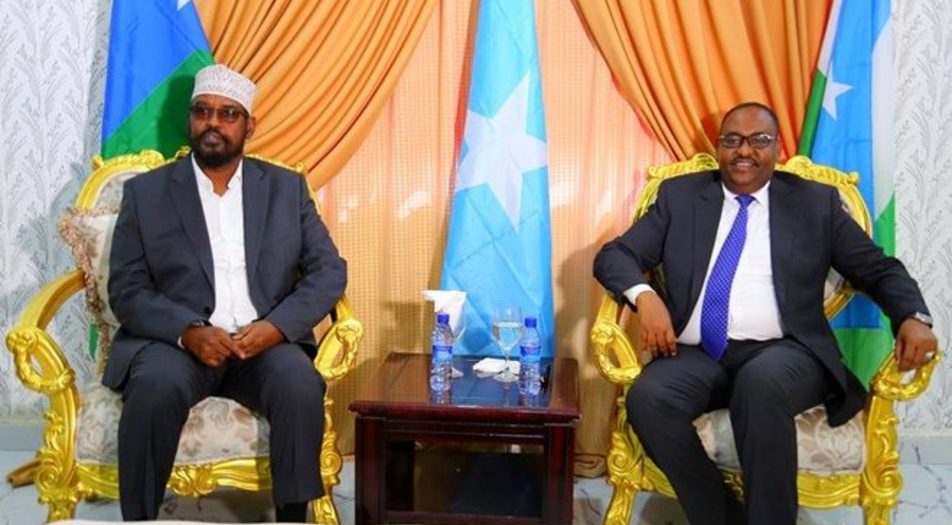


Somalia is once again facing a sensitive political period, as the federal government strives to implement a one-person, one-vote electoral system, while Puntland, Jubaland, and elements of the opposition oppose the manner in which the electoral process and constitutional amendments are being conducted.
Somalia’s disputed electoral commission announced on October 15, 2026, that the presidential election is scheduled for May 15, 2027, while the elections for the two houses of Parliament are set for April 15, 2027.
However, the announcement of the schedule does not signify that all Somali political stakeholders have reached a consensus on how the election should be conducted.
The ongoing dispute extends beyond the voting format. It touches upon the authority of the central government, the rights of federal member states, constitutional legitimacy, and the future of Somalia’s federal system.
The federal government argues that a one-person, one-vote election provides citizens the opportunity to directly elect their representatives, thereby eliminating reliance on the indirect system in which delegates and clan elders played a dominant role.
On the other hand, Puntland and Jubaland oppose the approach being taken toward political reforms, arguing that major national decisions cannot be reached through a process lacking broad consensus.
Some opposition figures support the principle of direct voting but maintain that agreements must first be reached on the regulations, administration, and framework of the election.
If the election is held without the participation of Puntland and Jubaland, questions could arise regarding political representation and the acceptance of the results.
The federal government may insist that the election aligns with its plan and approved regulations, whereas opposing factions could challenge its legitimacy or the process through which it was conducted.
Such a situation could create two opposing camps: a central government claiming to have successfully conducted an election, and certain regional administrations refusing to recognize the framework or its outcome.
If the dispute remains confined to that realm, it may be resolved through dialogue and political consensus.
However, should it spill over into security affairs, military forces, and regional administration, it could further strain relations between the central government and federal member states.
There is also the risk that political discord could disrupt ongoing operations against Al-Shabaab.
When the central government and regional administrations become absorbed in political rivalries, security cooperation risks weakening, potentially granting armed groups opportunities to exploit these divisions.
Somaliland, meanwhile, occupies a position distinct from that of Puntland and Jubaland. It declared independence in 1991 and maintains its own administrative and electoral institutions.
Conversely, the Federal Government of Somalia considers Somaliland an integral part of Somali territory.
Consequently, Somaliland’s absence from federal elections is bound to the broader sovereignty dispute, rather than merely a disagreement over voting procedures.
The question of whether Somalia could fracture requires careful analysis. Intense political friction does not automatically result in a formal partition of the country.
It is possible for Somalia to legally remain a single state while the central government and regional administrations experience progressively deteriorating relations, conflicting directives, and diminished security cooperation.
The future of Somalia will depend heavily on how its political leaders navigate this conflict.
Should the federal government, Puntland, Jubaland, and the opposition reach agreement on electoral rules, voting administration, and dispute resolution mechanisms, the election could serve as a constructive step toward strengthening public participation.
However, if the parties insist on their rigid positions without establishing a joint framework, the election could become yet another factor that deepens the political divide in Somalia.
That could damage trust in institutions, impair security cooperation, and undermine efforts to build a federal government capable of operating cohesively across the country.
A one-person, one-vote election could present an opportunity for citizens to gain a direct voice, but its political success does not depend solely on opening polling stations.
It will also depend on reaching consensus on the electoral process, safeguarding representation for people across different regions, and resolving disputes through dialogue.