




Mogadishu (KAAB TV) – Somalia’s government is increasingly turning to investment‑led growth as a central pillar of its economic strategy.
Key elements include:
A shift from crisis‑management to longer‑term investment in infrastructure, human capital, private sector development and climate‑resilient growth.
Recognition that private sector investment (including diaspora investment and foreign direct investment) must play a major role in generating jobs, scaling up trade, and lifting growth.
At global forums, Somalia is emphasising the need for more inclusive, flexible and “investment‑friendly” financing from multilateral banks and reform of global financial architecture (so that fragile states like Somalia can access capital, not just aid).
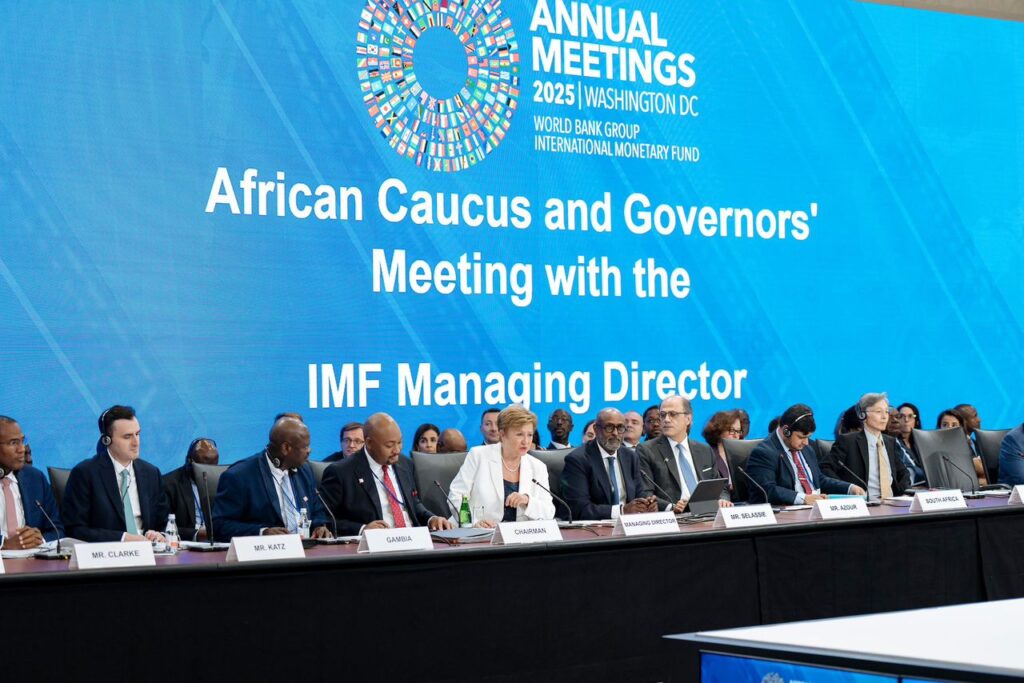
At the 2025 Spring Meetings of the IMF/World Bank, Somalia’s delegation emphasised its reform path, alignment of project pipelines with national priorities (infrastructure, education, health, social protection) and institutional strengthening (e.g., of the central bank, public financial management).
Fragile but improving macro context: Having reached the “Completion Point” under the HIPC initiative and secured significant debt relief, Somalia is in a transition phase. Investment‑led growth helps move from dependency on aid to more sustainable growth.
Untapped potential: With a young population, abundant coastline, large diaspora, and strategic location, Somalia has many opportunities — but they require investment, infrastructure, and private sector activity.
Reform momentum: The government is undertaking reforms to improve the business climate (private sector, governance, regulatory environment) as shown by agreements with the International Finance Corporation (IFC) to advise energy, ICT and industrial infrastructure sectors.
Linking investment to resilience: Somalia is highly vulnerable to climate shocks (droughts, floods). The World Bank‑supported reforms aim to increase climate‑smart investments (green energy, resilient agriculture, micro‑finance in vulnerable communities).
In July 2024, the World Bank approved a major $125 million IDA grant (Development Policy Financing) for Somalia that explicitly targets increasing private‑sector / climate‑smart investment, boosting revenue mobilisation and improving public financial management.
Why This Approach Makes Sense for Somalia
Here are several reasons why focusing on investment‑led growth is especially appropriate for Somalia:
What Somalia Is Asking from the World Bank &Development Partners
In August 2025, the World Bank approved a second DPF of similar size supporting reforms in renewable energy, micro‑finance, fisheries and broadband — creating the conditions to attract private investment.
Major Recent Milestones
Some of the significant outcomes in this space include:
July 2024: The Board of the World Bank approved a $125 million IDA grant for Somalia focused on revenue mobilisation, debt management, private‑sector investment and climate‑smart growth.
August 2025: A second DPF of $125 million was approved to continue reforms and create the environment for private investment, renewable energy, microfinance, fisheries and broadband expansion.
Somalia’s Finance Minister engaged in high‑level talks at the Spring Meetings of 2025 to deepen collaboration with the World Bank and align project pipelines with national priorities.
Somalia used donor / multilateral forums to push for reform of global financial architecture (so investment flows can reach fragile states) and access to fairer global finance.
Key Challenges /Risks
While the investment‑led growth agenda is promising, there are important caveats and challenges:
Fragile institutional and security environment: Somalia still faces significant governance, security and institutional capacity constraints which can hamper investment and implementation of reforms.
Climate vulnerability: With high exposure to droughts, floods and climate shocks, investment needs to factor in resilience — otherwise returns may be undermined.
Private sector hesitancy: Investors (local or foreign) may be wary due to past instability, weak financial systems, lack of clarity in regulations or enforcement, weak infrastructure, shortage of skilled labor.
Coordination across donors and reforms: Aligning multiple reform efforts (tax, public finances, investment climate, energy, digital infrastructure) and donor support takes strong coordination.
Ensuring investments lead to inclusive growth: It will be critical that investment doesn’t just flow to narrow sectors but results in job creation, especially for youth, and equitable benefits including for women.
Maintaining momentum: Pushes for reform often face political or implementation fatigue; sustaining the momentum will be crucial.
Somalia’s advocacy at the World Bank/IMF meetings reflects a strategic shift: from receiving aid toward driving investment‑led growth, backed by reforms and global partnerships.
Through aligning with its national transformation agenda, engaging with multilateral institutions such as the World Bank, and reforming its investment climate, Somalia is positioning itself to tap its potential.
However, as with all fragile states, success depends heavily on institutional capacity, security, resilience to climate shocks, and actual translation of investment into real economic outcomes (jobs, productivity, exports).