

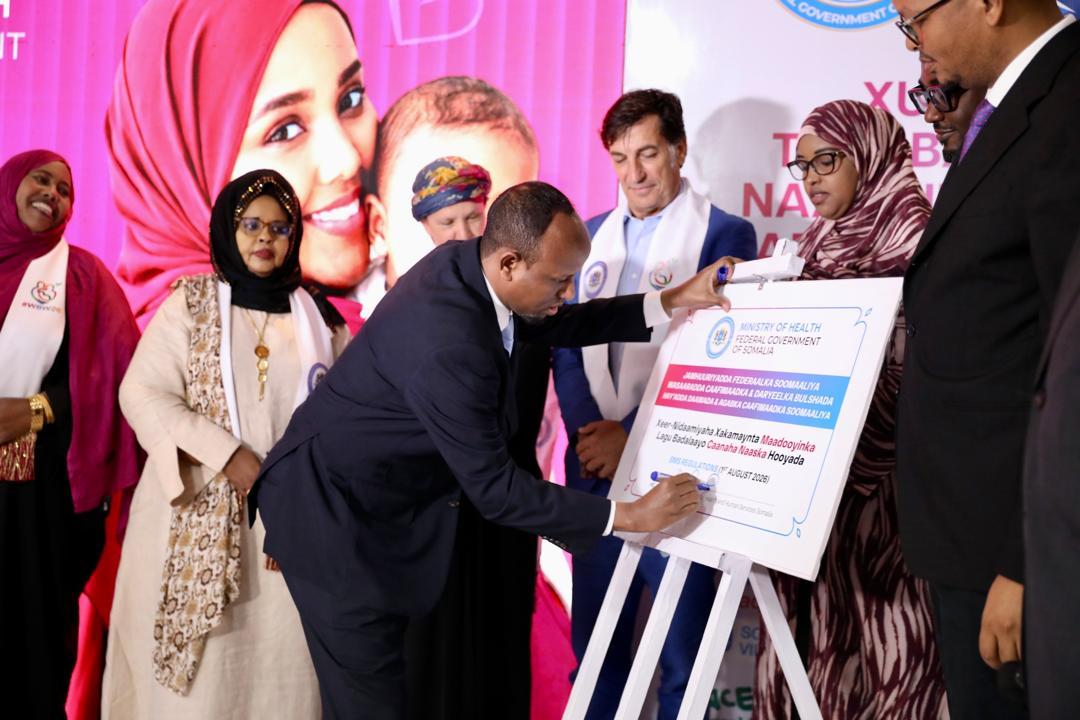

The Federal Government of Somalia has launched new Breast-milk Substitutes (BMS) Regulations aimed at protecting breastfeeding and improving child nutrition outcomes as the country marked the start of World Breastfeeding Week 2026.
The regulations were officially signed and launched by the Federal Ministry of Health and Human Services (FMoH), in partnership with the United Nations Children’s Fund (UNICEF), the World Health Organization (WHO), and other partners during a national event held to commemorate World Breastfeeding Week.
The adoption of the BMS Regulations marks a significant milestone in Somalia’s efforts to promote, protect, and support breastfeeding by regulating the marketing and promotion of breast-milk substitutes in line with international standards.
The new framework seeks to protect families from inappropriate commercial influence and ensure mothers have access to accurate information and support to make informed infant feeding choices.
The launch coincides with the global observance of World Breastfeeding Week, held from 1–7 August under the theme: “Breastfeeding for a Sustainable Start in Life: Strengthen What Works.” The theme highlights the importance of expanding proven interventions, strengthening health systems, and improving community support to help mothers successfully breastfeed.
Breastfeeding is widely recognised as one of the most effective and affordable interventions for improving child survival, nutrition, health, and long-term development. Early initiation of breastfeeding within the first hour after birth, exclusive breastfeeding for the first six months, and continued breastfeeding alongside appropriate complementary feeding up to two years and beyond are proven to reduce child illness and deaths.
However, Somalia continues to face challenges in achieving optimal breastfeeding practices.
Around 60 percent of newborns are breastfed within the first hour of birth, but only 34 percent of infants under six months are exclusively breastfed.
Continued breastfeeding also declines to 49 percent at one year and 40 percent at two years, representing missed opportunities to improve child health and nutrition.
The government and partners said the new regulations build on ongoing efforts to strengthen Infant and Young Child Feeding (IYCF) programmes, train health workers and community health workers, expand breastfeeding counselling services, and support mother-to-mother support groups across Somalia.
They called on government institutions, health professionals, employers, civil society organisations, development partners, community leaders, and families to strengthen efforts to create an environment where mothers can breastfeed successfully.
The priorities include enforcing the new BMS Regulations, expanding quality breastfeeding counselling services, promoting maternity protection and breastfeeding-friendly workplaces, improving monitoring and evidence-based programming, and engaging fathers, families, and communities in supporting breastfeeding.
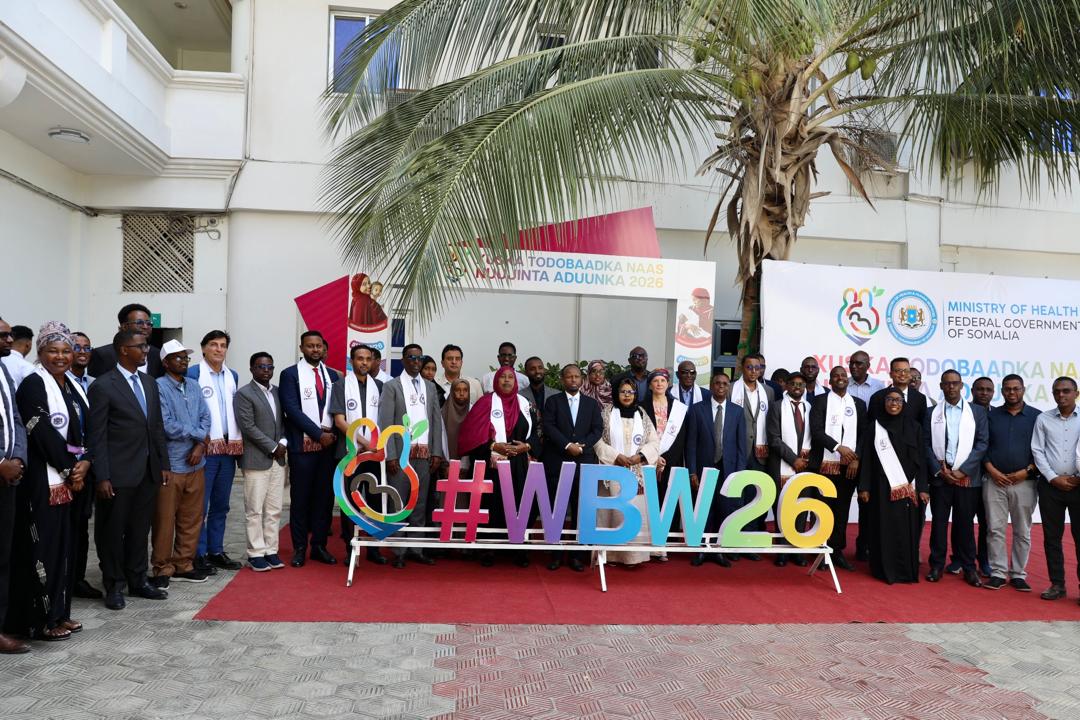
Speaking at the launch, Somalia’s Minister of Health and Human Services, Dr. Ali Haji Adam, described the regulations as a historic step in protecting children’s health.
“Breastfeeding is one of the most effective interventions for ensuring children survive, grow, and thrive. As we commemorate World Breastfeeding Week 2026, we reaffirm the Government’s commitment to creating an enabling environment where every mother receives the support she needs to breastfeed successfully. The signing of the Breast-milk Substitutes (BMS) Regulations marks a historic milestone in Somalia’s efforts to protect, promote, and support breastfeeding and safeguard every child’s right to the best possible start in life.”
UNICEF Representative in Somalia Sandra Lattouf welcomed the adoption of the regulations, saying effective implementation would now be critical.
“The adoption of Somalia’s Breast-milk Substitutes Regulations is a major step towards protecting breastfeeding, which saves lives by providing infants with vital immunity and optimal nutrition. The priority now is effective implementation, with strong monitoring, enforcement, and support for families to ensure mothers are protected from inappropriate marketing of breast-milk substitutes. UNICEF is committed to supporting the Government of Somalia to put these regulations into practice through stronger health systems, quality counselling, and community-based support so that every child has the opportunity to thrive.”
WHO Representative to Somalia Dr. Kamil Mohamed said breastfeeding remains a key public health priority.
“Breastfeeding is a priority of public health and one of the most cost-effective interventions for improving maternal and child health. WHO remains committed to supporting Somalia in implementing evidence-based policies and strengthening health systems that protect, promote, and support optimal breastfeeding.”
As Somalia marks World Breastfeeding Week 2026, health authorities and partners urged renewed commitment from families, communities, policymakers, and the private sector to ensure every mother receives the information, support, and protection needed to breastfeed successfully, giving every child the healthiest possible start in life.